Monday, November 14, 2005

Lost & Found

Har Har!
Found by Steven Holt in Pismo Beach, California

Steven found this at Ocean View Elementary School in Pismo Beach. I think we'd all like to give a note like this to someone.

The folks at Found collect FOUND stuff: love letters, birthday cards, kids' homework, to-do lists, ticket stubs, poetry on napkins, telephone bills, doodles - anything that gives a glimpse into someone else's life. Anything goes...

Lose yourself at Found Magazine

That's Right,

HMK

Sunday, November 13, 2005

Not Just Another USB Flash Drive


Wow. Now you can actually turn your iBook into a digital TV and DVR. It’s the world’s most portable USB plug-n-play Freeview (DVB-T) receiver. You’ll now have the power to enjoy crisp, clean digital television from wherever your laptop can go.

The Mobix allows you to pause and rewind live digital TV, or record your favorite programs in advance so you can watch them later at your leisure. Sweet.

Source: Stuff Mag UK

Saturday, November 12, 2005

Japanese Superstitions


In Japan there are certain things one does not do because they are thought to cause bad luck. A few examples are:

*The number four:
The number four is considered inauspicious because it is pronounced the same as the word for death (shi). Therefore, one should not make presents that consit of four pieces, etc. In some hotels and hospitals the room number four is skipped.

*Stick chopsticks into the rice:
Do not stick your chopsicks into your food generally, but especially not into rice, because only at funerals, chopsticks are stuck into the rice which is put onto the altar.

*Give food from chopstick to chopstick:
This is only done with the bones of the cremated body at funerals.

*Sleeping towards the North:
Do not sleep towards the North beacause bodies are laid down like that.

*Funeral Car:
If a funeral car passes you should hide your thumb.

*Cut nails at night:
If you cut your nails at night, you will not be with your parents when they die.

*Lie down after eating:
If you lie down immedeately after eating, you will become a cow.

*Whistle in the night:
If you whistle in the night, a snake will come to you.

*Black cat:
There are also some imported superstitions such as the believe that black cats crossing the street in front of you cause bad luck.

In many shrines, temples and souvenir shops, amulets are sold that are supposed to bring luck, safety or good fortune. There are amulets for money, health, love, success on exams, safety on the streets, etc. Small pieces of paper (omikuji) that predict your future are also available. These pieces of paper are tied around the branch of a tree after reading; either to make the good fortune come true or to avoid the predicted bad fortune.

Good Luck!

HMK

Friday, November 11, 2005

Ad Of The Week


"More than 100 million children live on streets. And eat off it."
Unicef: Springer & Jacoby, Hamburg

Thanksgiving is only a few days away. Count your blessings.

That's Right,

And check out the awesome Sidewalk Art - talk about a potential cool campaign!

HMK

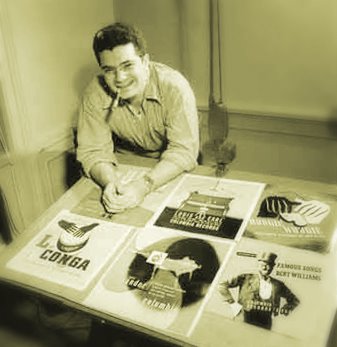
The Man Who Invented Album Covers


Most people who have bought any musical recordings over the past 60 years might have assumed they always came in covers, or sleeves, or jackets, that featured a colorful graphic designed to enhance the lure of the music.

They didn't. Album covers had to be invented. This was a task that largely fell to a Brooklyn kid named Alex Steinweiss.

Before Steinweiss entered the business in the 1930s, most 78-rpm records, the only kind that existed, were sold in plain brown sleeves, flimsy pieces of paper with a large round cutout so the label would show through. If the record company was ambitious, it might list other releases on the paper, as a kind of promotional afterthought.

This changed slightly around 1935, when record companies began bundling several 78-rpm discs in one package, with a cardboard outer jacket. An "album," this was called. But even then, to keep costs down, companies would mostly just stamp the name of the artist on the front.

Then in 1939, Columbia Records hired Steinweiss, a 22-year-old design whiz kid, to become its art department.

Technically, Steinweiss would recount in his 2000 autobiography, "For The Record," that he was hired to create catchy ads and promotional posters for store displays. But he had his eye elsewhere. The company was wasting its greatest promotional opportunity, he argued, by blandly stamping a name on the front of albums. They looked like tombstones, he said. Why not make 'em sing?

So he invented the album cover.

His bosses liked his designs from his very first project, a Rodgers and Hart collection. But what sold them wasn't art, it was numbers. After he redesigned the cover for an album of Beethoven's Ninth, sales rose 894% in six months.

That won him the green light to create cover designs for everything from Bartok to Broadway to Bessie Smith.

His designs were influenced by the art schools with which he had worked, but they were also his own: stylized images with clean lines and bold colors that often exaggerated some feature to highlight what Steinweiss, himself a deep fan, felt was the essence of the music.

For an album of boogie-woogie piano, he drew a keyboard played by two huge hands, one black and one white - a subtle but unmistakable acknowledgment that boogie-woogie brought together both sides of a racially divided country.

For a Kostelanetz recording of George Gershwin's "Rhapsody In Blue," he drew a small piano under a small street lamp, with a huge silhouette of a city skyline towering behind.

He did all this, moreover, with tools that were as primitive as 78-rpm records. Steinweiss worked with rulers, T-squares, pencils, paste and glue on a drawing table. He could use photographs only sparingly because they were expensive to reproduce, and printing technology severely limited his color palette.

But he didn't care. He knew exactly what he was doing because he'd been working up to doing it all his life.


Steinweiss was born March 24, 1917, on the lower East Side, the son of Eastern European immigrants who moved to Brooklyn when his father, Max, became established as a women's shoe designer and mother Betty as a seamstress. Max immersed young Alex in opera and classical music and in 1930 he enrolled at Abraham Lincoln High, where his visual-arts teacher was Leon Friend, a key figure in galvanizing a generation of graphic designers who would one day define the look of everything from pop culture to advertising.

Friend's students were known as "The Art Squad," and after Steinweiss graduated from Lincoln and then Parsons, he became one of the bright lights. He worked under various design stars and became somewhat well-known, though hardly rich. By the late 1930s, he was making just $30 a week, barely enough to support himself and his new bride, Blanche Wisnipolsky, whom he married in 1938 after a six-year courtship that began when they met at Brighton Beach.

Columbia hired Steinweiss as part of a bold marketing push that included selling 78-rpm albums for $1 instead of $2. Steinweiss' bold designs, the label hoped, would get this campaign noticed.

It did, though he soon turned his brush to a more-urgent cause: winning World War II. After he enlisted, the Navy decided he would be more valuable behind an art table than an anti-aircraft gun and he spent the war in New York turning out informational and morale-boosting posters.

One showed a group of black Navy recruits with the message: "Advance through training: Skill commands respect." Another said: "Hands off the Americas," and showed the body of a bloody-handed Nazi hanging from a scaffold.

When Steinweiss returned to Columbia after the war, engineers were finishing up the development of 331/3-rpm records, which soon would be sold in 12-inch jackets, which for his purposes simply meant a bigger canvas.


By now, every label had followed Columbia's lead and given their albums designed covers. Steinweiss began to freelance, and in 1954 he left Columbia. He worked in music, advertising, magazines and other design areas before retiring in 1972 to concentrate on his own art.

He was still around when album covers were downsized to compact disk and cassette covers, which he and other connoisseurs felt negated much of the impact. But, meanwhile, it helped build and sell the modern music biz.

You can find more info on Steinweiss here as well as this sweet little flash presentation from the Eisner Museum

Thanks to David Hinckley for help with the above.

That's Right,

HMK

Thursday, November 10, 2005

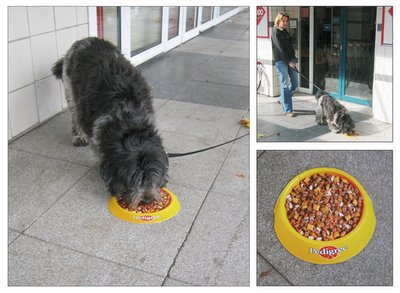
Pedigree Concept


Pedigree

Pedigree made stickers in the shape of a dog barge with the scent of delicious Pedigree dog food. They placed them on floors in front of pet stores and supermarkets so passing dogs could go nuts and show their owners what they really want.

Made by Tequila Amsterdam.

Fast Cities


Fast Company's November issue is spotlighting 15 up-and-coming hubs for creative workers--places that draw people who are talented, tech savvy, and tolerant.

Meet the home of your next big opportunity.

Not so long ago, some techies proclaimed that communications technology and the Web would make geography irrelevant. In fact, the opposite is true: Talented people keep congregating in cities because they understand intuitively that working with other talented people spurs them to be even more creative.

For the first time, people aspire--even expect--to do work they love and to live in a community where they can be themselves. At the same time, the world of work has become increasingly temporary and insecure. As a result, talent is shifting to regions that offer dense concentrations of other talented people, tolerance of differences, and a great quality of life. These are the places that lure what Richard Florida, the Hirst Professor at George Mason University's School of Public Policy, calls the "creative class." They're scientists, engineers, artists, cultural creatives, managers, and professionals, who together comprise more than 30% of the total U.S. workforce and nearly half of the economy's wage and salary income.

The country's epicenters of such talent--San Francisco, New York, Los Angeles--are well-known. To find out which up-and-coming places show the highest rates of creative-class growth--the country's truly fast cities--we drafted Florida and his crack team of data crunchers, led by Kevin Stolarick, assistant professor with the Information Systems Program at Carnegie Mellon University. They identified the seven U.S. cities with populations between 1 million and 5 million and the three cities between 400,000 and 1 million that have offered the most potent mix of talent, technology, and tolerance in recent years. To top it off, we found a member of the creative class in each emerging city to tell us what's appealing about where they work and live.

Florida, the author of The Rise of the Creative Class (Perseus, 2002) and The Flight of the Creative Class (HarperBusiness, 2005) asserts that for 60 years, the United States had much of the world's talent pool to itself. But now, his research shows that the creative class has gone global. U.S. cities are competing with Dublin and Helsinki for creatives. And so we also asked Florida to pick five international cities that are winning chunks of the world's talent pool. Maybe one of this new generation of Fast Cities, in the United States or abroad, is the next San Francisco. You won't know until you make it happen.


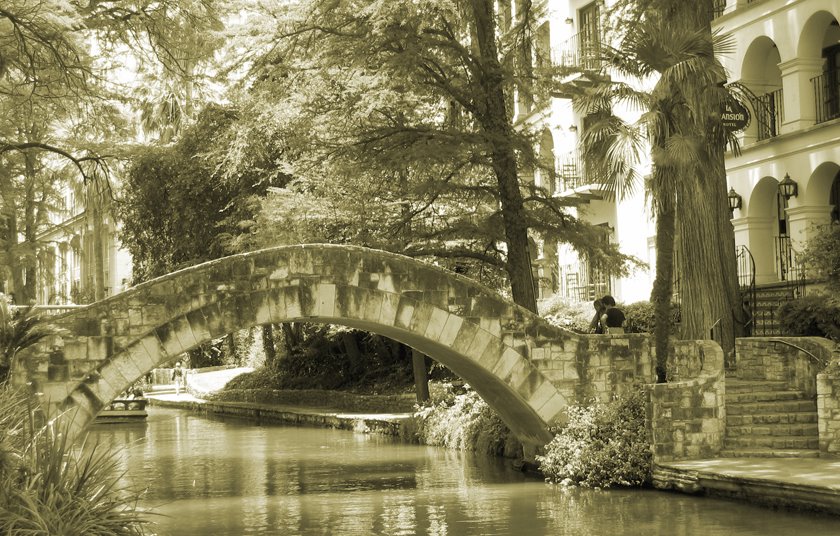
San Antonio, Texas
Lea Ann Champion arrived in San Antonio five years ago, and she immediately fell for the Alamo city. Coming from the Bay Area, the SBC executive found San Antonio to be affordable, family-friendly, and blessed with a rich Hispanic culture. Those same city selling points helped her recruit top entertainment-industry folks from New York and Los Angeles to Project Lightspeed--SBC's initiative to bring IP-based voice, video, and data to the home--which she heads up as senior executive vice president of IP operations and services. "It's been easy to attract amazing talent," says Champion, who's drawn more than a dozen team members from outside San Antonio. In the five years she's been there, Champion, 47, has watched as San Antonio's economy has diversified away from the military, adding tourism, manufacturing, and high-tech jobs. She expects the SBC-AT&T merger only to add more. "I already see the effects of [SBC] attracting other companies to locate their key personnel here in this city," she says. "There's truly a pulling effect going on." -JM

Cornerstones: SBC, the Baby Bell about to swallow its mama, AT&T, will become the largest telco when the merger goes through. Artpace is one of the country's most respected contemporary arts residences.

Caveats: San Antonio is diverse, thanks to its Hispanic population, but there's not much melting of the pot going on. Its "integration" measure, which looks at how well ethnic groups are dispersed, is the lowest of our U.S. cities.


Sacramento, California
Sandra Gonzalez grew up in a family that picked fruit throughout California. "I got into the wine business by osmosis," she says. But it was during her 10 years working for the Wine Institute, a California trade association, that she came to realize that wineries were doing little to cater to Latino customers. In 2002, she founded Vino con Vida ("wine with life"), a wine-education company, to change that. Gonzalez, 36, has worked with such wineries as Round Hill Vineyards, writes for trade publications, and appears at industry events. She picked Sacramento rather than San Francisco because it's between some of the largest wine-producing regions and because "Sacramento represents a lot of the changing demographics in the country." Living in the state capital also helps her stay attuned to new legislation that could affect the wine industry. And as California goes, so goes the country. As Gonzalez says, "I don't think people realize the impact that Sacramento has on the world." -Michael A. Prospero

Cornerstones: Between 1999 and 2003, the average annual growth rate of the creative class demographic was 4.3%, one of the highest upticks of our 10 U.S. cities. The University of California, Davis, in the midst of California's wine region, is a worldwide center for viticulture and food-science research. Lake Tahoe, Yosemite, and Napa are all within a few hours' drive. Daniel Libeskind is building a condo tower downtown.

Caveats: Plans to revive Sacramento's downtown entertainment options are admirable but have seen years of false starts.

Phoenix, Arizona
When the New York ad agency that Louie Moses worked for opened a Phoenix office and shipped him out to work there, "it was kind of like being sent to Siberia," he recalls. But within a couple of years, the Pittsburgh native came to like Phoenix's desert sunsets and red-rock mountains, and at the young age of 23, he opened his own ad shop, Moses Anshell, in the Valley of the Sun. "I remember thinking, This is the perfect place for an artist. You can think freely, and you have time to open your mind to new ideas." More than 20 years later, Moses, 45, runs his agency--which expects $69 million in billings in 2005--from a converted 1920s warehouse in Phoenix's revitalized downtown. With clients such as the Arizona tourism board, creative director Moses is helping to tell others what he already knows: Phoenix, now the fifth-largest city in the country, is a lot hotter than Siberia. -Jena McGregor

Cornerstones: That biotech cluster in the middle of downtown is no mirage. In March, the city opened the Phoenix Biomedical Center, a 28-acre campus that already houses both the Translational Genomics Research Institute and the International Genomics Consortium. Phoenix's tourist and convention attractions--Sedona's red rocks are just two hours away, and Scottsdale's galleries, golf courses, and spas are even closer--aren't bad for the locals, either.

Caveats: Metro Phoenix's population, currently 3.5 million, is one of the fastest growing in the country. With nearly 5 million more people expected in the next 25 years, smart planning will be crucial to prevent boom from becoming bust.

Salt Lake City, Utah
A few years ago, Shawn Nelson was driving between two of his funky furniture-design stores in Los Angeles when, in his words, "I went insane on the 405 freeway." The 28-year-old founder and CEO of LoveSac, who had lived in Taiwan and Shanghai (he speaks fluent Mandarin), decided to move back to his hometown of Salt Lake City. It wasn't crazy at all: A large number of former Mormon missionaries, like Nelson, return to Salt Lake, ensuring a steady supply of educated, bilingual workers for his 75-store, $30 million company. That's especially helpful when your manufacturing is in Mexico and your material comes from China. The abundance of four-season outdoor activities at hand--skiing, mountain biking, boating--doesn't hurt, either. Nelson is establishing LoveSac as a "hard-core leisure" brand. That thinking almost certainly endeared him to Sir Richard Branson, helping Nelson win Branson' s reality show, The Rebel Billionaire. -MP

Cornerstones: Between 1997 and 2004, the number of women-owned firms in the metro area increased 36%. The money local VCs have available to invest in the past five years has grown from $75 million to $700 million. The Sundance Film Festival hosts some screenings here each January.

Caveats: Florida's "Gay Index," which measures an area's gay population as an indicator of its tolerance--and therefore the talent it attracts--ranks SLC second lowest of our 10 cities.


Raleigh-Durham, North Carolina
When Ryan Wuerch's Nashville-based software company acquired a small Raleigh, North Carolina, firm last year, he naturally thought he'd move the headquarters of the merged mobile software company to Tennessee. But then his wife reminded him how frustrated he always was at the lack of top-notch tech talent in Nashville and suggested he think about Raleigh. "I knew what [a fertile talent region] looked like, and that was the exact feeling I had when I went to Raleigh," he says, noting the city's deep educational resources. Since the merger, his company, Motricity, has grown from 46 to almost 300 employees, and in turn is moving from Research Triangle Park to downtown Durham, where it will call home a 100-year-old converted tobacco-factory complex with restaurants, waterfalls, Wi-Fi, and jazz bands. "People want to work in a place where they feel inspired," says Wuerch, 38. "That means not only being in a creative city, but being in an environment where creativity can take on a new shape." -JM

Cornerstones: The area has the highest patent-growth rate (17.5%) of our 10 cities and is home to three prestigious research universities: Duke, UNC, and NC State. It's becoming a hub for medical-device companies. And the biggest job surge between 1999 and 2003 wasn't in computers or medicine but in knowledge professions like education and consulting. The creative-class community--nearly 40% of the population, the highest among all our cities--is fueling downtown renaissances in both Raleigh and Durham.

Caveats: The Triangle's traffic snarls are mounting. A commuter rail system between Raleigh and Durham is coming eventually, but the state recently cut the region's transportation funding by $300 million over the next six years.

San Diego, California
Born and raised in Montreal, Jennifer Luce, 45, started her architecture firm Luce et Studio in San Diego. Why? With the ocean, desert, and mountains all nearby, "there are so many contrasting images," she says, "so to build in that environment is very exciting. It's one of the most diverse landscapes I've ever encountered." Her 15-year-old, eight-person firm has done mostly corporate work, particularly for Nissan, garnering seven architecture awards and $2.3 million in revenue last year. Now Luce wants to do municipal projects, such as helping to redefine San Diego's public spaces. "It's a growing city," she says. "And we're there at the perfect time to help formulate a physical identity for the place." -MP

Cornerstones: Last year, the city pulled in more VC funding than Los Angeles. Per capita, there are more biotech companies here than in any other city in California--something that only stands to increase as the state rolls out its $3 billion stem-cell initiative. Locals have adopted the trendy bars and shops in the revitalized Gaslamp Quarter, prompting city planners to invest in further downtown developments like Petco Park.

Caveats: San Diego isn't cheap; geographic constraints keep property values high in the city. The New York Times branded San Diego "Enron by the Sea" last year after a raft of investigations and financial problems in city government.

Portland, Oregon
Jeffrey Butters sold his Xterra SUV a little over a year ago. "It was senseless driving into downtown Portland," he says of his commute to work that now takes 12 minutes on his bike. A native of Oregon, he and several members of his family founded the Butters Gallery--an international contemporary-art gallery that has showcased everything from gold-leafed cow dung to sophisticated modern sculpture and paintings--in 1988. "Maybe five or six years ago people would've been surprised to find a modern gallery like ours in Portland, but not today." Butters, 42, is an artist as well as a gallery owner and has his own downtown studio for painting. His passion for the city matches his passion for art. "I think we've developed a sense of city pride that revolves around being creative," he says. "The city is a wonderful, vibrant place to be." -Lucas Conley

Cornerstones: The Pearl District, an 80-year-old warehouse area, has seen more than 50 residential and commercial projects in just over a decade, transforming it into a hip place to live. It's a mix of 19th-century industrial buildings and modern condos and art galleries. Home to the largest wooded city park (Forest Park) in the country, the Portland area is lush with outdoor opportunities.

Caveats: As real-estate prices continue to rise, residents have been fleeing to the suburbs. Big-box stores such as Pier One have been cropping up on the fringes, drawing shoppers from inside the city and stalling development of the downtown shopping district.

Madison, Wisconsin
Brian Vandewalle knows what Madison, Wisconsin, has to offer better than anyone. The founder of an eponymous urban-planning firm, he helped develop "The Healthy City," a report by the Madison mayor's office mapping out a progressive development plan for the community. Recommendations include linking two local assets, bioscience and agriculture; creating more space for the arts; and working with developers to produce live-work neighborhoods. "The idea is to study each of these layers," says Vandewalle, "and try to develop a comprehensive model." It's a model that Vandewalle, 56, thinks will let Madison entice the University of Wisconsin's 41,000 students, nearly 30% of whom are pursuing advanced degrees, to put down roots here. -MP

Cornerstones: A progressive-minded enclave where unemployment is a rock-bottom 2.5% and the creative class continues to expand at an average of 7.8% a year. Madison owes much of its success to the 26,000 people who work in high-tech fields--a number that's growing every year. The vast majority of Wisconsin's recent $750 million biotech initiative will wind up here.

Caveats: Local business owners describe Madison's city council as an "indecipherable bureaucracy" of red tape.

Tuscon, Airzona
Dr. Shibin Jiang knew he was in the right place when he moved to Tucson to work at the University of Arizona's Optical Sciences Center in 1996. It was a big change from North Carolina (especially the weather), but the work was too appealing. "We call Tucson 'Optics Valley,' " he says. "If you're an optical engineer, it's the best place in the country to be." By 1998, Jiang, now 40, had cofounded NP Photonics, a company that makes advanced fiber-optical lasers used by the Department of Defense and scientific researchers to monitor conditions deep beneath the sea. As for the weather, it's now one of Jiang's favorite parts of life in the Southwest. "I travel to the DC area a lot, and it'll be snowing and raining and cold," he says. "When I get on the plane back to Tucson, I'm so glad to come home." -LC

Cornerstones: Technology companies have transformed Tucson into the fifth-fastest-growing high-tech community (in terms of goods and services) in the nation. Recreation is also serious business: The city's spas, golf courses, and desert retreats account for more than $1.5 billion in leisure and hospitality spending. Nearly a third of Tucson's 900,000 metro residents were born in Mexico, giving the city significant cultural diversity.

Caveats: The large population of immigrant workers means one in five here still lives in poverty. Urban sprawl is taxing the city's infrastructure; local authorities have identified some $3 billion in much-needed transportation improvements.

Colorado Springs, Colorado
"Software companies actually exist in Colorado Springs?" That's what new clients of XAware invariably ask its CTO and cofounder, Rohit Mital. He understands their disbelief. His first visit here came as a Columbia University electrical engineering PhD candidate, applying for a job with Hewlett-Packard. He headed back that same day, even though HP had paid for the weekend. But after MCI moved part of its IT force here in 1992, things changed, and Mital founded XAware with a former MCI executive in 1999. "The technical force we needed was available," Mital, 42, says. So was the customer base for this integrator of complex computer systems. The big defense contractors, including Lockheed Martin, Northrop Grumman, and Raytheon, were XAware's bread and butter for the first couple of years. Since then, his company has been able to build on the products it developed for those contractors and pitch them to the insurance and financial-services companies it almost exclusively serves today.
-Jennifer Vilaga

Cornerstones: Lockheed Martin, Boeing, and Northrop Grumman, the nation's top-three defense contractors, all have offices here, and it's also the home of the Air Force Academy. They're magnets for talent and create opportunities for startups. Residents here enjoy 300 sunny days a year. The 14,110-foot Pikes Peak acts as a scenic backdrop.

Caveats: The reliance on the military means a pinch on the local economy whenever troops ship out. This largely Christian conservative city's Gay Index score, at less than 70% of the U.S. average, hints at low tolerance.

From: Fast Company, November 2005 By: Bill Breen

Wednesday, November 09, 2005

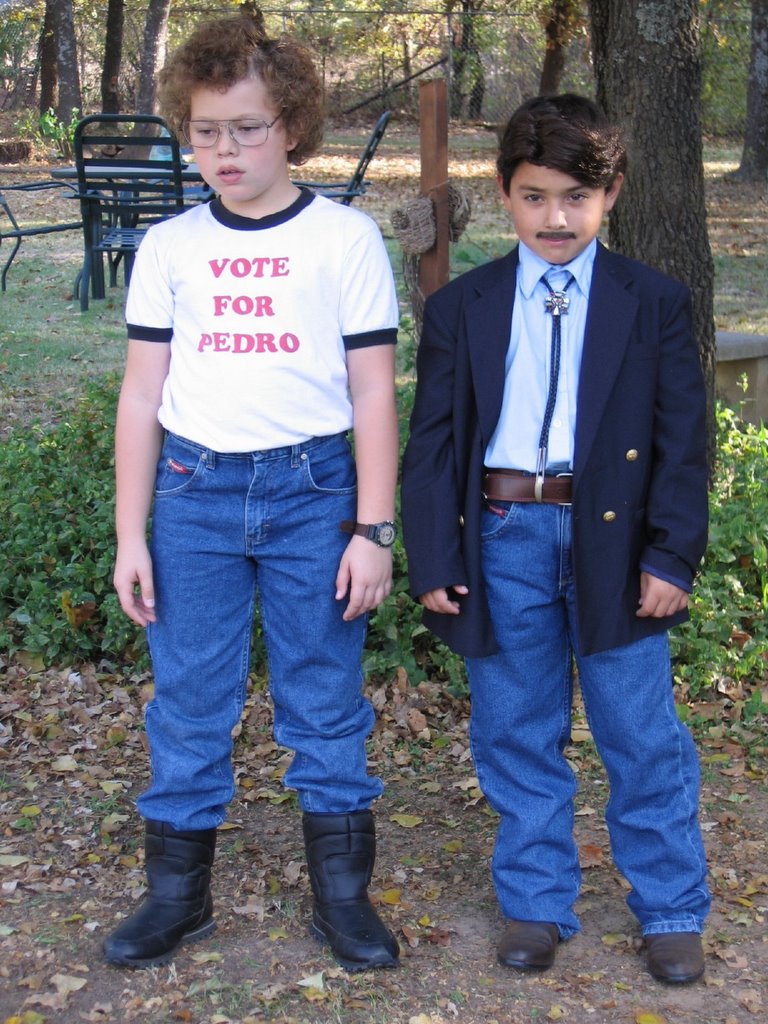
Best Halloween Costume Ever!


And if you like this you'll love This!


That's So Right!

HMK

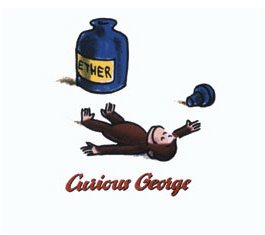
Curious? Buy George!


You know you want one of these T-Shirts! I do!

Getting one is as easy as 1-2-3 Alphabets!

That's Right,

HMK

That's What It's All About

Customer Satisfaction!

David Pogue has some rules for electronics makers who want some consumer love this holiday season (and beyond).

Worship at the altar of good design and make customer satisfaction your religion. These should be your commandments.

I. Thou shalt not entomb thy product in indestructible plastic.

II. Thou shalt hire native English speakers to translate thine instruction manual.

III. Thou shalt not hype irrelevant specs.

IV. Thou shalt not charge tech-support fees for thine own mistakes.

V. Thou shalt not participate in rebate rip-offs.

VI. Thou shalt not hide from thy customers.

VII. Thou shalt remember the customer's phone number.

VIII. Thou shalt not prevent "zeroing out" of thy phone-mail maze.

IX. Thou shalt not hog the power strip.

X. Thou shalt not plan obsolescence.

Amen,

HMK

Monday, November 07, 2005

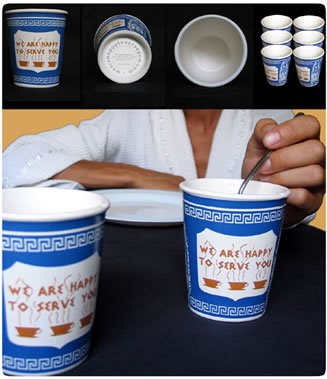
Ceramic NY Cup


Alright, as promised. Everyone's been asking about my cool NY coffee cup. Talk about the perfect affordable gift. And it really does make coffe taste so much better!

Here's the hook up for the best deal on the Ceramic NY Cup


Tish, Bill, Brian, Jackie, Chris and Alex - You're Welcome.

That's Right,

HMK

Sunday, November 06, 2005

"Switch On"


That's Right. Coffee via text message.

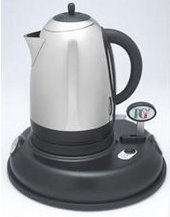
Tea makers PG Tips have joined forces with mobile phone company Orange to create the world's first SMS enabled kettle.

All you do is text the words "switch on" - even when you're on the way home from work - and the water will be on the boil by the time you get to the kitchen.

Called the ReadyWhenUR, the silver and black kettle is fitted with a radio receiver programmed with your mobile number, an electronic circuit and a tiny set of mechanical levers.

PG are hailing it as the greatest thing since the Teasmade.

The high-tech gadget - inspired by animated inventors Wallace and Gromit - will be on sale from January.

Bad news is you still have to remember to fill the kettle with water - and actually make the tea or coffee. And it will set you back around £100.

100 British Pound = 177.680 US Dollar

Orange you glad you got text messaging?

HMK

Saturday, November 05, 2005

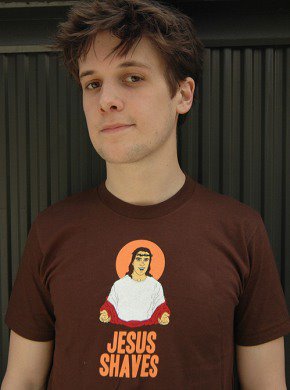
Jesus Shaves!


Waring: Some images may be offensive to those with no sense of humor.

You've got somebody on your list that will love a shirt from Busted Tees.

I Guarantee It,

HMK

Friday, November 04, 2005

iF001: Irregular Frequency


Stage One Is Go!

Ok ya'll - SharkThang.com. is officially up and running.

Basically, just click around and explore what little there is to date.

The best part, and the sole purpose of this post, is the fact that you can now download the first episode of iF: Irregular Frequency!

Simply click on the radio to listen to a sample the podcast.

Click here for the iF001 Podcast Setlist

Anxious to hear any and all feedback.

Enjoy!

Your Pal,
HMK

Ad of The Week

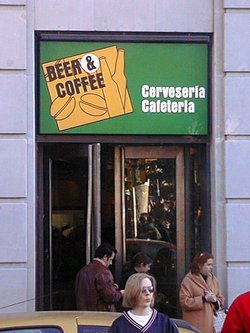
Hmmm. Coffee Beer...


Dig the latest from those ingenious Swiss dudes: Coffee-beer, a “fermented coffee beverage” that has been patented in every major market around the world by Nestac (part of the Nestle empire). Coffee Beer is your basic super-caffeinated liquid that pours like a beer but smells like coffee. No alcohol included. To make it, coffee beans are roasted and the chemicals that contain the natural aroma are collected in a cryogenic condenser and then converted to coffee oil. The rest of the roast are ground into powder, mixed with yeast and sugar and fermented for 4 hours at 22 degrees Celsius. This way, the yeast still metabolises but doesn’t convert to alcohol. They then mix the oil in with the liquid and nitrogen and that is injected to make foam. Hmmm. Coffee beer...


Lots of other cool stuff at NewScientist.com.
Rumour has is they're working on Green Teaquila.

Not really. I just made that up. Sorry for wasting your time.

That's Right,

HMK

Thursday, November 03, 2005

Viral Marketing: Top 10+ Tips

1. Don't obsess over producing meaningful metrics for viral campaigns. The tracking numbers can only provide a general estimate of what's going on.

2. Don't try and compare a viral campaign with, for example, banners. A banner view is passive, while a video clip view involves a proactive, involved experience. And there's also the added benefit of third-party endorsement through download site editorials and comments made by people as they pass on the creative.

3. Achieve critical mass as quickly as possible by seeding all the bigger sites. This is particularly important if you're trying to create word-of-mouth buzz before a more formal marketing campaign.


4. The best way to ensure prominent and positive coverage at relevant sites, and a higher pass-on rate, is through quality. Content is king!

5. Get immersed in the scene. The insider view gives you a better understanding of what viral content works and helps you develop relationships which will keep you in good stead when it comes to seeding material.

6. Find advocates, people who run a community or are linked to other communities. People who are online influencers, yet not necessarily regarded as influencers offline.

7. Learn to let go. Once the viral content is out there, you have little control over how it's presented, which can be hard for brand managers to accept. It's another reason for ensuring high quality.

8. Avoid looking like a marketing campaign. Viral does not need to look like TV advertising, as there is resistance to forwarding if perceived as advertising.

9. Ensure the viral effect is not geographically limited if you want to hit a global audience. Go for a universal theme, situation or truth people can relate to.

10. Feature an entertaining concept which the viewer enjoys interacting with.

Henry Cowling, The Viral Factory
The Viral Factory


1. Be original

2. Rip-off something that’s already been successful.

3. Be topical. Latch on to what everybody’s talking about.

4. Don’t insult the audience’s intelligence.

5. Don’t get sued.

6. Do something with fluffy animals. Everyone loves these.

7. Make influential friends in the advertising industry.

8. If you’ve run out of ideas, put tits in it. If you can’t use tits, try violence. If you can’t use violence, use David Hasselhoff.

9. Umm... a song is always nice.

10. That’s it. Nine ideas is already way more than most virals have.

Chris Hassell
DS. Emotion


1. Make it funny (You have to piss yourself laughing at it)

2. Make it topical

3. Make it relevant

4. Make it risky

5. Make it fun (games etc.)

6. Don’t send it out if it’s crap

7. Don’t make it some sort of complicated file that people need to install

8. Target initial sites/audience correctly

9. Test it on your friends

10. You could, ahem, pretend it’s been developed by a brand – bound to get lots of coverage.

Rob Wakeman
Bore Me


1. Start by trying to copy someone else’s idea. Often, when you get underway, the result turns out differently and you’ll end up going off at tangents, because it’s being filtered through you.

2. Who or what do you like to make fun of?

3. Is there something that makes you angry?

4. Try altering the state of your mind a little!

5. Use a digital camera or video camera to spontaneously capture things in everyday life – these can be unusual or ordinary things. Ordinary things can always be manipulated digitally later – it just takes imagination.

6. Combine things that don’t normally belong to each other.

7. Try to push the envelope a bit – take risks.

8. Think naughty.

9. Ask yourself: would people want to forward your idea to their friends?

10. Don’t take too long. Great jokes don’t seem so funny after staring at them for four hours.

Big Gracias to: Danny Phantom and Will Jeffery at
Maverick Media

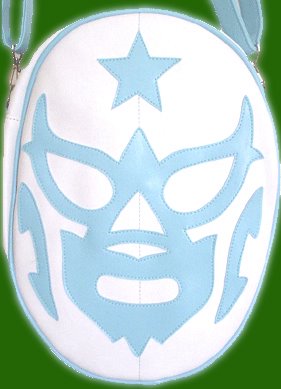
Holy El Santo!


Check out these handmade gifts from Luchadore Lucha Libre Handbags and more!

That's Right,

HMK

Wednesday, November 02, 2005

Vente Coffee Of The Day: 10% Half&Half + An Equal Por Favor


Finally. A way to ensure The Perfect Cup every time!

Now all we need is the right PMS chip to make it flawless.

Ok kids. Only 52 Days and counting!

That's Right,

HMK

Tuesday, November 01, 2005

It's Here!


It's here! Download The Official iLounge Holiday Buyers Guide! If you're like me, and you're into all things audio and mp3 or know anyone that does you'll absolutely love the indepth and insightful approach to what's cool in the world of 3rd party iPod gear.

iLounge.com.

That's Right.

HMK

Anchors Away!


Ok, Halloween is officially DUN. It's time to check out some items that'll be sure to please those who dig the finer, less commercial "must haves" of the upcoming givin'/gettin' Season.

The original Vintage, Sailor Jerry offers some killer throw back goodies that are perfect for the hard to shop for nocturnal crowd. Buy the set and give'em to four of your closest beer buddies. Although they're not cheap, these pint glasses are the real deal (not bogus knockoffs) and can be found in Housewares at the official Sailor Jerry site.

Business Weeks also got a nice Tech Buying Guide that'll work while we wait for the new iLounge guide...


Cheers,

HMK

Monday, October 31, 2005

Happy Halloween!

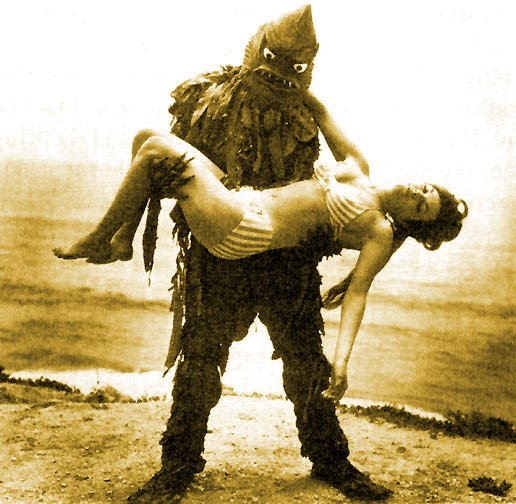
The Beach Girls and the Monster: 1965

Sea, Sand And Slaughter!

A group of young people are hanging out at Malibu Beach, California, dancing and surfing, when one girl plays a trick on her boyfriend by putting sand on his hot dog. She runs away, and he chases her, but she hides behind a rock; looking around, she spies a cave and approaches it when suddenly a seaweed-covered fish-man emerges from the darkness and claws her to death. Her body is discovered by one of her friends, who screams and alerts the police, who notice a track of large footprints in the sand - could they have belonged to the monster? The cops call on oceanographer Dr Otto Lindsay (Jon Hall) to examine the prints, and he deduces a sea creature is responsible - and it could strike again...

This sun-drenched horror in underwhelming black and white was written by Joan Gardner, and it apparently worked on the premise that what the craze for Beach Party movies really needed was a visit from the Creature from the Black Lagoon. The monster is a man in a bug-eyed rubber suit, but possibly gives the best performance in the film considering the modest amount he is required to do - the rest of the cast make Frankie Avalon and Annette Funicello look like Sir Laurence Olivier and Katharine Hepburn. As the director and star, Jon Hall seems to be making a doomed attempt to break back into the matinee idol position he once held, but he is hampered by the ridiculous script.

If you're on the look out for fun in the sun, then you'd be advised to look elsewhere, because too much of the short running time is caught up, not with tracking the sea beast, but with Dr Lindsay's domestic problems. He is married to his second wife, Vicky (Sue Casey), a bitchy woman who is unsatisfied by her husband's advances and even flirts with her stepson, Richard (Arnold Lessing). Richard is causing Otto trouble too, being reluctant to join the family business in oceanography and preferring to enjoy himself on the beach. Overreacting Otto tells the police that he despises the beach kids, who are capable of anything, including murder!

Living with Otto and his family is Mark (Walker Edmiston), an intense sculptor crippled previously in a car crash who is obsessed with Vicky, and is making a bust of her. What isn't clear at the start is that the film is a whodunnit, and someone is responsible for sending out the monster to cause mayhem - could it be Mark, who made a small mermaid statue of the first victim? Judging by the tone of kids just wanting to frolic and adults (one in particular) wanting them to take life more seriously, maybe we should be looking elsewhere for the culprit. However, the soap opera antics of the main characters make you wonder whether the kids might have the right idea.

Although just over an hour long, there's quite a bit of padding, and of course, surf music. The producers like the main title theme so much that they use it at every opportunity, and whenever the beach bunnies are seen dancing, it's that same piece of music jangling away on the tape recorder. There are other songs, including bongo-heavy one which the cast mime to while fooling around with the contents of the local joke shop, and the lighthearted (considering their friend has been murdered) "Monster in the Surf", complete with join-in clapping and whooping. There's also some actual surfing footage crowbarred in, obviously not performed by any of the actors. The Beach Girls and the Monster just about gets by on campy appeal, but not much else, and it's a pity they couldn't afford to shoot it in colour to brighten it up. Music by Frank Sinatra Jr.

Sunday, October 30, 2005

What's Behind Halloween?

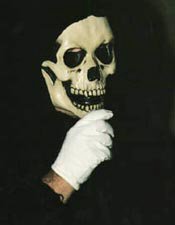
Halloween costume at a deaf social club, photo by Stephanie A. Hall

Where Our Weird Rituals Originated

Halloween, perhaps our weirdest annual celebration, is even stranger than it seems. Unlike the Fourth of July and Thanksgiving, it is neither patriotic nor historical, yet it is celebrated nationally. Unlike Christmas, Easter or Passover, Halloween is not associated with a particular religion. Yet it weaves spirituality, death and religious beliefs into our present and historical imaginations.

Halloween is hugely popular, infused with its own set of immediately recognizable symbols, rituals and stories. Yet most Americans have little, if any, sense of the hidden meanings and motives of the event in which they so enthusiastically participate.

Even its origin is complex and uncertain. Many Americans have heard rumblings that Halloween is a "pagan" or pre-European-Christian holiday with roots in Celtic traditions. A common and slightly elaborated version of this notion holds that Halloween is a descendent of the Celtic Samhain festival, which, on November 1, marked both the Celtic New Year and the day during which dead souls were believed to revisit Earth.

But the name "Halloween" has distinctly Christian origins. In efforts to stop seemingly non-Christian celebrations, the Roman Catholic Church incorporated Samhain festivities into the Christian calendar.

In 731 A.D., November 1 was declared All Saints' Day (All Hallows Day). October 31 thus became All Hallows Eve, in time shortened to "Halloween." Even with the encouragement of activities such as masquerading pageants of saints and the further, complicating step of adding Nov. 2 as All Souls Day to the church calendar after the year 1000, some "non-Christian" elements survive in Halloween.

Some elements, however, have a distinctively Native American heritage. One key symbol-the pumpkin-was unknown to Europeans before Columbus. But it was part of the sacred trinity of native American foods: squash, beans and maize, which appears in the form of candy corn and the corn shocks that decorate front porches. The original European version of the jack-o'-lantern was a turnip.

Some students of the holiday maintain that trick-or-treating is linked to Irish Samhain traditions and thus became popular about the time that the Irish began immigrating to the United States in large numbers. Presumably during Samhain, people opened their doors and provided food to the wandering dead, so people eventually started dressing like wandering dead souls and demanding food.

Others suspect that the custom was introduced to replace, or at least mitigate, the pranks or even destruction that typically accompanied the holiday even in the most conservative rural communities.

In Hoxie, a town of 1,500 in northwest Kansas, senior community members recall that, in the old days, "a certain number of outhouses became horizontal," when loose items such as garden hoses, trash cans and lawn furniture were dragged onto Main Street to block traffic the next morning.

However, trick-or-treating may be a relatively recent phenomenon coinciding with population shifts from rural to urban and suburban environments. It is, after all, difficult to go door to door when the doors are miles apart. Despite popular laments that Halloween is no longer the holiday "it always has been," folklorist Tad Tuleja argues that trick-or-treating may have developed during the 1930s as a means to control young people's Halloween night pranks.

The words "trick or treat" apparently were not in use until 1941, when they first appear in files of Merriam-Webster, Inc., after being used as the title of a poem in The Saturday Evening Post. According to the Oxford English Dictionary, the phrase "trick-or-treating" first appeared in The Sun in Baltimore in 1950. But the practice may be considerably older.

Finally, many students of folklore see in Halloween a connection to England's Guy Fawkes Day, the Nov. 5 commemoration of a foiled attempt to blow up the king and Parliament in the Gunpowder Plot of 1605. Guy Fawkes Day features bonfires, children soliciting "a penny for the guy" and pranking.

Halloween also may be related to early American harvest festivals, with apple bobbing, hayrides, and many local variations of games to divine the identity of a future mate. Those games probably derive from traditional beliefs in Britain and Ireland that spirits loosed on Halloween made the day particularly good for augury.

Connections to death, disorder, endings and to what Western traditions take to be the separate and set-apart world of the spirits all are consistent elements in tales about Halloween's origin.

Cultural anthropologists, who study the forms and meanings of human culture, have found that among the most intriguing meanings of Halloween are those listed below, each of them a window into the cultural and social dynamics of the country.

Dark Harvest

The quintessential symbols of Halloween fall into three major categories. Symbols of death include graveyards, ghosts, skeletons, haunted houses. Symbols of evil and misfortune are witches, goblins, black cats. Symbols of harvest are pumpkins, scarecrows, corn shocks and candy corn.
The first two categories tap deep, irresolvable, pan-human dilemmas. Ways of dealing with and symbolizing death and evil are represented in some of the earliest archaeological remains of human ritual activity. One traditional means of facing the reality of death is to view it as a transition and to continue a relationship with the dead

Hence the various rituals for keeping the departed involved in the present world through seances, graveside visits, prayer or other communication. Ideas about an afterlife or notions of ghosts and vampires also can be understood as attempts to challenge the finality and fear surrounding human mortality.

Ritual Reversals

Cultures have ways to challenge death but have a hard time beating it. Likewise, no culture has eliminated misfortune and evil, though humans keep trying. Typical American methods are control and avoidance-locking up, shutting out, buckling up, watching out, staying away.
Yet on Halloween, scary things suddenly are embraced wholeheartedly, brought to front porches and displayed. And children, those innocents whom we most want to protect from death and danger, are an integral part of the annual ritual.

At Halloween, Americans are doing something that all human beings do—confronting the unknown with special symbols and rituals.

For a while, we pull these fearful and painful realities into a relatively contained and public context. We share them with our children. We create a special and safe moment during which danger and death, skeletons and strangers can safely be part of our experience. Then we lock our doors again and return to our everyday, safe American lives. Halloween reverses the usual order of many things in many ways.

Anthropologists have analyzed rituals of reversal in settings around the world. Days when the living walk around as if dead, and the dead are thought to walk around as if living, are not that unusual. In fact, Halloween can be seen as the American inversion ritual par excellence.

During rituals of inversion, people can violate otherwise solid social codes. Less powerful people can break the rules, reverse the order of expected actions, flaunt otherwise unacceptable ways of dress or behavior or reverse the usual roles of parent-child, boss-worker, male-female.

Thus, it is common to see groups of children "threatening" adults for candy. Everyday people don masks of the famous. Adults dress like children and children like adults. Pranks and mockery ordinarily not allowed become commonplace.

In the past, many anthropologists focused on the conservative functions of rituals, considering the reversals a sort of social pressure-release valve. In this view, the Halloween ritual means something like:

"Let the children eat as much candy as they want, let the poor be rich, let the dead walk the Earth, let us get scared out of our wits and let us make fun of those we usually must respect. Afterward, we'll be better able to cope with, and settle for, our usual lives."


Celebrating youngsters create their own pumpkin patch. (The Post)
But that doesn't get at the power of ritual to make everyday life different.

More recently, anthropologists have shown that maintaining the status quo is not the only result of rituals of reversal. The rituals can actually reshape the usual order of things.

For instance, the gay community has actively used the holiday to assert a new and more visible social presence and power. The fantasy elements of masquerade, which temporarily permit one to be virtually whomever he or she wants to be, can foster true personal liberation and change. Playing a Halloween prank on a too-serious boss may change the tone of the office after the holiday.

The ritual reversals of Halloween also have potential power for children, serving as an opportunity to go to the door of the spooky house, visit a graveyard or visit the otherwise not-too-friendly neighbor.

Nevertheless, Halloween is still profoundly about sociability and norms. Reversals must fall within socially prescribed boundaries. Pranks and jokes are not supposed to cause permanent harm. Children are expected to say thank you at the door. Halloween can reinforce neighborliness and pro-social behavior.

Horror Stories

The symbols and rituals of Halloween link disorder and danger with cultural ideas about order and safety. But chaos still lurks, in reality or, much more often, in durable legends.
Virtually everyone has heard at least one story about poison or razor blades in apples, hypodermics in candy or dangerous items in grab bags. Each year, these stories are revived, and precautions are taken. Some call for an end to trick-or-treating, many parents allow children to visit only homes of people they know and many hospitals provide free candy X-ray service. Every year, new horror stories emerge, and old ones are retold.

Many social analysts have reasoned that these stories, while often thought true, are really examples of "urban legends" in the making, much the same as accounts of giant alligators in city sewers or rodents in soft-drink bottles. Horrible Halloween incidents occur occasionally. But how many people have firsthand evidence of someone hurt by Halloween candy? Seen in context, our fears about dangerous treats often seem more like ritual retellings than strictly rational worries.

Shopping malls and many schools now offer a "safe" alternative to neighborhood trick-or-treating so children will not be exposed to presumed danger. Local customs have changed accordingly. A resident of Severn, Md., says that "no one hands out any homemade items or home-filled treat bags, knowing that, when the children get home, their parents will" trash those items.

Strictly speaking, however, one should have no more reason to trust mall shopkeepers, whom the family does not know personally, than to mistrust people a few blocks away in another neighborhood. But the warnings and annual repetition of horror stories are expressions of society's profound belief that the world is a scary place for children, who need protection, especially from individual, unaffiliated strangers.

The Market for Fright

As a result, tension often is genuine between the trick-or-treat tradition and increasingly mobile, unstable neighborhoods with perceived "stranger danger." The marketplace has jumped to deal with such fears by minimizing the unknown.
For example, every Burger King restaurant looks alike and every "treat" dispensed there is exactly what parents expect. So a Burger King executive told a food-industry trade magazine last year that "increasingly, it is more of a challenge for parents to provide a controlled, safe, fun experience. And taking kids to Burger King to get a Halloween-themed toy is . . . a safe alternative for kids."

Recently, retailers have offered worried parents free bagels in Pittsburgh, 99-cent "monster eyes" with purchase of a Taco Bell meal and glow-in-the-dark treat buckets from Jack in the Box. All are part of what makes Halloween a $2.5 billion bonanza for retailers.

Moreover, this is part of a larger message. Through Halloween safety reminders and sponsored activities, children are taught that schools, hospitals, organizations and retail establishments have their interests at heart while individuals in homes do not.

What effect such beliefs might have on American culture remain to be seen. But they accord nicely with one of the two major contemporary shifts in American Halloween celebration. One is a transformation of the homemade neighborhood character of the event to one framed by institutions, corporations and consumer culture.

Because both adults and children participate and because the event involves decorations, candy, costumes and many other consumer products, Halloween is a marketer's dream, reported to be the fastest-growing retail season. Market researchers say 78 percent of households distributed treats in 1996. Halloween ranks as the leading holiday for U.S. candy sales, ahead of Christmas for the $20 billion annual U.S. confection industry.

Tita Rutledge, owner of a Baltimore costume shop, says the two weeks surrounding Halloween generate one-third of her store's total annual income. House and party decorations sell briskly nationwide. Holiday packaging, on cereal, for instance, and product tie-ins from costumes to coupons increase every year. "Slasher" movies light up the marquees; mock haunted houses for neighborhood fun or organizational profit pop up from coast to coast.

Adults

The second major trend in U.S. Halloween customs is an increasing tendency to regard the holiday as one also for adults. Halloween has joined New Year's Eve and Super Bowl Sunday as the most popular party dates for American adults. As one shop owner summed up the situation: "Halloween is becoming more of an adult holiday. Parents don't want their kids out trick-or-treating, so they have more time for themselves."
Anthropologists expect customs and cultural traditions to change over time. Baltimore provides an interesting nearby example of the way Halloween seems to be melding with other, primarily adult, events.

One is the Maryland Renaissance Festival, now in its 22nd consecutive year. The festival, which occurs on weekends for two months preceding Halloween, encourages costuming, and some buying and renting by adults is done for the festival. Another such event is a local novelty, the Halloween wedding.

Rutledge describes outfits she made for a Halloween wedding last year. The bride wore a red velvet dress a la Queen Isabella of Spain, and the groom wore matching doublet and tights. The father of the bride was festooned in a blue velvet tunic, tights and boots. The bride's mother appeared in a yellow underdress with blue brocade top. The noble nature of the costume choices made a good fit for a wedding, where high style and ceremonial dress are already the rule.

A manager at Baltimore's A&M Costume Gallery also cites increased Halloween wedding business, though she describes the typical mode as bride and groom dressed in conventional white while guests are costumed for Halloween.

Rutledge also describes a Cinderella Halloween wedding featuring glass slippers and gold painted pumpkins.

Over time, will such intermingling and merging of celebrations result in new Halloween stories? Will researchers soon examine evidence and imagine that Halloween was the Celtic time for marriages? Will we see a direct connection between "who-will-I-marry?" divination games once popular as a Halloween activity and Halloween wedding parties?

New forms of Halloween seem to be burgeoning, particularly in urban areas where anthropologists often seek rapid cultural change.

Halloween is a continually fascinating aspect of the constantly changing social world and of human's seemingly boundless capacity to invent traditions, confront danger and death in novel ways and remake symbols to fit new realities.

Special to The Washington Post: Wednesday, October 14, 1998

Thanks to Ken C. Erickson, an anthropologist, is director of the Center for Ethnographic Research at the University of Missouri at Kansas City. And Patricia Sunderland is an anthropologist with B/R/S Group, Inc., a consumer research firm.

Saturday, October 29, 2005

What The Devil?


Ok kids, two more days till Halloween. A Helluva time to visit Deviled Ham. A blog dedicated to depictions of Satan in pop culture.

HMK