Tuesday, December 06, 2005

Meet Judy


E-Tailers Try New Holiday Tricks

E-Tailers are tapping blogs, social-networking sites, and GPS technology to lure shoppers. I really learned someting from this. Darcey Howard needed an idea. The Seattle image consultant wanted to find a business gift she could give clients -- something stylish, yet appropriate for more than one person. So she went to Judy's Book, a social-networking site that lets people stay in touch with friends or business associates, and asked for input from the members of her network, mostly other marketing pros. They recommended the Dangle, a $35 portable handbag holder that sits on a tabletop, letting women avoid plopping their Coach (COH) and Gucci bags on the floor. Howard was sold -- on the Dangle and on using the Net for smarter shopping. "You can spend a lot of time there, reading things and finding stuff," she says.

It's not only a merry Christmas on the Web this year, it's also an innovative one. Forrester Research Inc. (FORR ) says online retail sales this holiday will surge 25%, to $18 billion. The increasingly strong profitability of Net commerce is giving retailers the chance to experiment with a stockingful of new sales and marketing tactics. They're tapping into technologies such as blogs, social networking, and wireless phones to draw shoppers to their sites. "There are a host of new ways to reach out that are more innovative," says Forrester analyst Carrie Johnson.
The experiments are coming from startups to Web giants alike. Yahoo! Inc. (YHOO ) is testing Shoposphere, a networking site within Yahoo! Shopping that offers thousands of reviews, blogs, and shopping lists generated by members. Rob Solomon, a vice-president at Yahoo! Shopping, says relying on users lets Yahoo serve markets too small to command space on its front pages. An example: One member's "Poker Night" shopping list, which tells readers where to find 16 must-haves, from strategy books to green, felt-covered tables. "If you can tap into expertise like that, it's really special," Solomon says.

It can also pay off for smart shoppers. Yub.com, a site with thousands of product reviews, offers visitors cash-back rewards of up to 10% when they make purchases at more than 60 other sites, including Macy's and cosmetics retailer Sephora. Yahoo plans to let people earn cash for posting reviews that lead other users to make purchases.

Sometimes the experiments aren't about closing sales online but about finding new ways to market to harried holiday shoppers. Blog DailyCandy.com offers fashion and beauty tips to the young and hip in eight cities. This fall it launched a newsletter alerting members to deals in their areas. Now companies from Apple Computer Inc. (AAPL ) to Levi Strauss & Co. are lining up to be included in the online mailing, offering DailyCandy members discounts of up to 25%.

Perhaps the biggest potential lies in ventures that want to tie e-commerce to local commerce, which still accounts for about 95% of retail sales. Drawing most of the attention is Google Base, a database service from Google Inc. (GOOG ) that lets people and businesses advertise almost any product or service in a city or region. Already, 14.5 million products are listed on Google Base.


SHOP AROUND THE CORNER
The search giant is but one of many players in the field, however. Startup Cairo.com rounds up local advertising circulars and puts them online to let shoppers know which physical stores in their area offer the best sales. ShopLocal LLC has the same sort of circular information on its site, plus what it claims is the first service for comparing prices at online retailers with those of local merchants. ShopLocal Chief Marketing Officer Dave Hamel says the site has prices from as many as 700 local stores in some cities.

New York's GPShopper Inc., with its S'Lifter service, has attracted attention from retailers as large as Foot Locker Inc. (FL ) S'Lifter lets people use their cell phones to compare prices at nearby stores and get notices of local sales. By next year, the company plans to let consumers fill out wish lists, then use satellite technology to flag them when they walk past a store that has one of the items on sale. "We want to find out how many of these places are being used by our customers," says Raul Vasquez, vice-president for marketing at Wal-Mart.com (WMT ). "We'll work with several of them."

No one pretends to know how much business the new technologies can help Web merchants capture. Still, the experimentation this season is striking, after years when what passed for innovation was bigger pictures of products. The changes are starting small. But if they work, look for a lot more like them for Christmas 2006 and beyond.

From the smart folks at Business Week

Friday, December 02, 2005

Find The Bands!


Here's some awesome gorilla marketing for you from the smart folks over at Virgin: There are 75 bands in this photo - so far we've found 65.

Here's a clue, it's not easy...

Check out a nice big version at the Original Source

And, you'll need a cool computer-world song to loop while you're looking, so dig this!


That's Right,

HMK

Constant Creative Problem Solving


A Day in the Life of Work: Field of Dreams

The secret behind a level playing field at Fenway? Try kitty litter and rubber-tire crumbs.

David R. Mellor Age: 41
Director of Grounds
Fenway Park
Boston, Massachusetts

Baseball runs in the family. My grandfather played in 1902 for Baltimore, and in high school, I hoped to play in the majors. Then a month after graduation, I got hit by a car. My baseball career was over. But in physical therapy, I thought about how I loved being outside, how I grew up taking care of people's lawns, and how I loved baseball. I decided to study horticulture and agronomy and become a groundskeeper.

To take care of the park you grew up worshipping is almost indescribable. During the season, I get up at 4:45 a.m. to check the weather. I'm at the park by 6:30. I spend a lot of time walking the field, looking for dry spots or stressed areas. I keep a log of trouble spots and what we've done about them.

You can't rely on what you learned in a textbook. You have to be creative. In high-traffic areas, where players stand in the outfield, we use rubber crumbs from recycled tires. They cushion the grass so it can take wear and tear. I use green sand and fresh clippings to hide imperfections and pregerminated seeds to make the grass grow faster. We learn how to trick Mother Nature.

When I came to work for the Red Sox in 2001, Joe Mooney, the previous director of grounds, told me that when it rained hard, the Charles River overflowed. The dugouts and camera pits flooded, and sometimes fish washed out onto the field. I thought he was kidding. Then the Saturday before opening day, we got 3 inches overnight. Sure enough, there were eight bass on the field.

After a downpour, my crew uses anything from a pitchfork to help drain and aerate the field to kitty litter to absorb the water. During last fall's playoffs, we even brought in a helicopter to hover above the ground. Whatever it takes, that's what I do. It's just constant problem solving.

Originally appeared in Fast Company Magazine, Issue 83: June 2004

Thursday, December 01, 2005

Tuesday, November 29, 2005

Brilliant! I'll Take 2!


Batteryless Smoke Alarm

No batteries required for this smoke alarm. Instead, it connects directly into ceiling mounted light sockets, automatically recharging whenever the light is turned on. Not bad — it involves less maintenance, and saves batteries from the landfill. The price is $39.95.

From the smart folks at First Street

Monday, November 28, 2005

Ten Rules for Web Startups

Odeo CEO, Evan Williams has some great advice for web-based startups. And he ought to know, having co-founded Blogger, which is now part of Google.


#1: Be Narrow
Focus on the smallest possible problem you could solve that would potentially be useful. Most companies start out trying to do too many things, which makes life difficult and turns you into a me-too. Focusing on a small niche has so many advantages: With much less work, you can be the best at what you do. Small things, like a microscopic world, almost always turn out to be bigger than you think when you zoom in. You can much more easily position and market yourself when more focused. And when it comes to partnering, or being acquired, there's less chance for conflict. This is all so logical and, yet, there's a resistance to focusing. I think it comes from a fear of being trivial. Just remember: If you get to be #1 in your category, but your category is too small, then you can broaden your scope—and you can do so with leverage.

#2: Be Different
Ideas are in the air. There are lots of people thinking about—and probably working on—the same thing you are. And one of them is Google. Deal with it. How? First of all, realize that no sufficiently interesting space will be limited to one player. In a sense, competition actually is good—especially to legitimize new markets. Second, see #1—the specialist will almost always kick the generalist's ass. Third, consider doing something that's not so cutting edge. Many highly successful companies—the aforementioned big G being one—have thrived by taking on areas that everyone thought were done and redoing them right. Also? Get a good, non-generic name. Easier said than done, granted. But the most common mistake in naming is trying to be too descriptive, which leads to lots of hard-to-distinguish names. How many blogging companies have "blog" in their name, RSS companies "feed," or podcasting companies "pod" or "cast"? Rarely are they the ones that stand out.

#3: Be Casual
We're moving into what I call the era of the "Casual Web" (and casual content creation). This is much bigger than the hobbyist web or the professional web. Why? Because people have lives. And now, people with lives also have broadband. If you want to hit the really big home runs, create services that fit in with—and, indeed, help—people's everyday lives without requiring lots of commitment or identity change. Flickr enables personal publishing among millions of folks who would never consider themselves personal publishers—they're just sharing pictures with friends and family, a casual activity. Casual games are huge. Skype enables casual conversations.

#4: Be Picky
Another perennial business rule, and it applies to everything you do: features, employees, investors, partners, press opportunities. Startups are often too eager to accept people or ideas into their world. You can almost always afford to wait if something doesn't feel just right, and false negatives are usually better than false positives. One of Google's biggest strengths—and sources of frustration for outsiders—was their willingness to say no to opportunities, easy money, potential employees, and deals.

#5: Be User-Centric
User experience is everything. It always has been, but it's still undervalued and under-invested in. If you don't know user-centered design, study it. Hire people who know it. Obsess over it. Live and breathe it. Get your whole company on board. Better to iterate a hundred times to get the right feature right than to add a hundred more. The point of Ajax is that it can make a site more responsive, not that it's sexy. Tags can make things easier to find and classify, but maybe not in your application. The point of an API is so developers can add value for users, not to impress the geeks. Don't get sidetracked by technologies or the blog-worthiness of your next feature. Always focus on the user and all will be well.

#6: Be Self-Centered
Great products almost always come from someone scratching their own itch. Create something you want to exist in the world. Be a user of your own product. Hire people who are users of your product. Make it better based on your own desires. (But don't trick yourself into thinking you are your user, when it comes to usability.) Another aspect of this is to not get seduced into doing deals with big companies at the expense or your users or at the expense of making your product better. When you're small and they're big, it's hard to say no, but see #4.

#7: Be Greedy
It's always good to have options. One of the best ways to do that is to have income. While it's true that traffic is now again actually worth something, the give-everything-away-and-make-it-up-on-volume strategy stamps an expiration date on your company's ass. In other words, design something to charge for into your product and start taking money within 6 months (and do it with PayPal). Done right, charging money can actually accelerate growth, not impede it, because then you have something to fuel marketing costs with. More importantly, having money coming in the door puts you in a much more powerful position when it comes to your next round of funding or acquisition talks. In fact, consider whether you need to have a free version at all. The TypePad approach—taking the high-end position in the market—makes for a great business model in the right market. Less support. Less scalability concerns. Less abuse. And much higher margins.

#8: Be Tiny
It's standard web startup wisdom by now that with the substantially lower costs to starting something on the web, the difficulty of IPOs, and the willingness of the big guys to shell out for small teams doing innovative stuff, the most likely end game if you're successful is acquisition. Acquisitions are much easier if they're small. And small acquisitions are possible if valuations are kept low from the get go. And keeping valuations low is possible because it doesn't cost much to start something anymore (especially if you keep the scope narrow). Besides the obvious techniques, one way to do this is to use turnkey services to lower your overhead—Administaff, ServerBeach, web apps, maybe even Elance.

#9: Be Agile
You know that old saw about a plane flying from California to Hawaii being off course 99% of the time—but constantly correcting? The same is true of successful startups—except they may start out heading toward Alaska. Many dot-com bubble companies that died could have eventually been successful had they been able to adjust and change their plans instead of running as fast as they could until they burned out, based on their initial assumptions. Pyra was started to build a project-management app, not Blogger. Flickr's company was building a game. Ebay was going to sell auction software. Initial assumptions are almost always wrong. That's why the waterfall approach to building software is obsolete in favor agile techniques. The same philosophy should be applied to building a company.

#10: Be Balanced
What is a startup without bleary-eyed, junk-food-fueled, balls-to-the-wall days and sleepless, caffeine-fueled, relationship-stressing nights? Answer?: A lot more enjoyable place to work. Yes, high levels of commitment are crucial. And yes, crunch times come and sometimes require an inordinate, painful, apologies-to-the-SO amount of work. But it can't be all the time. Nature requires balance for health—as do the bodies and minds who work for you and, without which, your company will be worthless. There is no better way to maintain balance and lower your stress that I've found than David Allen's GTD process. Learn it. Live it. Make it a part of your company, and you'll have a secret weapon.

#11 (bonus!): Be Wary
Overgeneralized lists of business "rules" are not to be taken too literally. There are exceptions to everything.

That's So Right,

HMK

The Million Dollar Homepage


The five stages of dealing with The Million Dollar Homepage

1. Denial: "What? This guy is selling advertising in a page which shows nothing but advertising? That can't be true."

2. Resentment: "You mean people -- TONS of people -- actually check out this site? That's ridiculous! It's a cluttered page full of everything that's wrong about internet advertising! And people are clicking on it! You people won't click on banners that go along with content but will click on a flea-sized picture of Che Guevara (upper-left corner)? What's wrong with you all?!"

3. Bargaining: "Maybe it's really a lesson in advertising, and that homepage is really a metaphor for the cluttered advertising landscape that we deal with every day. If I can bring it up in a conversation with a client maybe he'll understand that even the best-looking ad will probably be lost in clutter if all you can afford is a 10x10 pixel square."

4. Depression: "The now-famous guy behind the site is 21 years old and, as of today, has sold 62.4% of the page. Which means that he's probably made a good $600K in the last few months. What was I doing when I was 21 years old? Wait, I know -- getting myself into debt. And drinking."

5. Blogging: "I should write a post about this."

That's Genius,

HMK

Thanks to the kids at American Copywriter

Saturday, November 26, 2005

Ringo's Stick


So. It's the Saturday after Thanksgiving, 70 and sunny down here in San Antonio and I'm walking Ringo around the Squirl track at Trinity University. I get a hundred yards or so ahead of Ringo and call for him. "C'mon boy, let's go!" As the good puppy looks up from underneath a cluster of trees I notice he's got a big stick in his mouth. Ringo fetching a stick, what the heck? Ringo will be six on December 23rd and he's never, ever, fetched a stick in his life. The stick, part of a branch really, is about 3 feet long and a bit wider than the width of a pencil. As Ringo gets closer I realize that the stick he's "bringing" me is actually caught in his collar and he's just walking along like everthing is cool. Suddenly, the whole camera phone thing makes perfect sense! Crazy pup.

Thursday, November 24, 2005

Happy Thanksgiving

Prayer of Thanksgiving
Author unknown

O Great Spirit, Creator and source of every blessing,
we pray that you will bring peace to all our brothers and sisters of this world.

Give us wisdom to teach our children to love, to respect and to be kind to each other.

Help us to learn to share all the good things that you provide for us.

Bless all who share this meal with us today.

We ask your special blessing on those who are hungry today, especially little children.

Help us to be just and to bring your peace to all the earth.

Praise and Thanksgiving be to you.

Amen.

Wednesday, November 23, 2005

Thanksgiving Thoughts For The Day


Give thanks for all that you've got and always remember: Be Cool To The Pizza Dude

Here's to a Safe and Happy Thanksgiving!

peace,

HMK

Dude!

That's Right

Kerry Wins Election!


... as jury foreman


BOSTON (AP) -- Sen. John Kerry's public profile and prosecutorial past didn't spare him from performing that most mundane of civic responsibilities -- jury duty.

Kerry was not only chosen this week to sit on a jury in Suffolk Superior Court, but also was elected foreman.

The case involved two men who sued the city for injuries suffered in a 2000 car accident involving a school principal. The Kerry-led jury rejected their claim Tuesday, and his fellow jurors said the state's junior senator was a natural leader.

"I just found him to be a knowledgeable, normal person," said Cynthia Lovell, a nurse and registered Republican who says she now regrets voting for President Bush in last year's election. "He kept us focused. He wanted us all to have our own say."

The former Democratic presidential candidate reported for duty Monday and none of the lawyers in the case objected to putting him on the jury.

"I was a little surprised," Kerry said of being selected for jury duty.

"I enjoyed it," he said. "It was very, very interesting and very instructive."

Loud and Clear!

That's Right,

HMK

Monday, November 21, 2005

The Perfect Gift!


Click image to make it bigger...

Have a great week!

That's Right,

HMK

Friday, November 18, 2005

Gary Pools Winter Sale


Wouldn't it be nice to have a pool built by the same folks that did the awesome pool at the Hyatt Hill Country Resort in San Antonio and save some real money?

Well, now is the time!

Gary Pools just announced their Winter Sale that expires at Midnite December 31st, 2005.

Jump on it!

Details at Gary Pools

And, see what happens when you tell'em HMK from the Atkins Group sent you!

That's Right,

HMK

Thursday, November 17, 2005

Ad of the Week 2


Think before you speak.
Don't drive and use your cell phone at the same time.

Campaign by E.B. Lane, Phoenix.

Hang Up and Drive.

That's Right,

HMK

Ad Of The Week


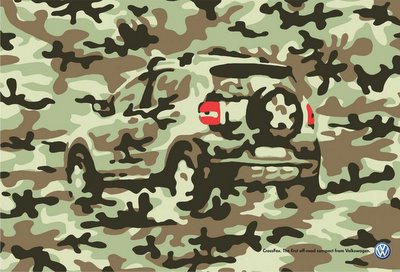
VW Crossfox. The first off-road compact from Volkswagen.
Almap BBDO, Sao Paulo. Graphics by 6B Estudio.

HMK

Monday, November 14, 2005

Awesome Recorder


PCM-D1, the professional microphone by Sony

Sony presents the PCM-D1, a microphone with 4Gb of internal memory that should provide you with the best recording possible and a reduction of the background noises.

As you can see, this device has 2 microphones that touch (and cross) each other. This setup allows you to get a very high quality recording and a considerable reduction of the ambient noise. this microphone also has SBM (Super-Bit Mapping) that makes the processing of the information faster which in its turn means that the background noise is detected and removed in a more efficient and faster way.

More Info at Akihabara News

That's Right,

HMK

New Shiny Cool Thing!


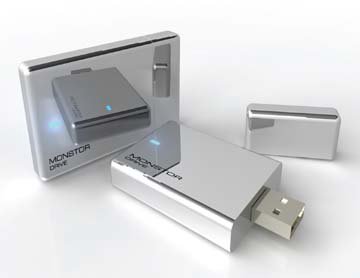
Dig these shiny stainless steel mini 2GB, 4GB and 6GB Monster Drives from US Modular


Go! US Modular

Lost & Found

Har Har!
Found by Steven Holt in Pismo Beach, California

Steven found this at Ocean View Elementary School in Pismo Beach. I think we'd all like to give a note like this to someone.

The folks at Found collect FOUND stuff: love letters, birthday cards, kids' homework, to-do lists, ticket stubs, poetry on napkins, telephone bills, doodles - anything that gives a glimpse into someone else's life. Anything goes...

Lose yourself at Found Magazine

That's Right,

HMK

Sunday, November 13, 2005

Not Just Another USB Flash Drive


Wow. Now you can actually turn your iBook into a digital TV and DVR. It’s the world’s most portable USB plug-n-play Freeview (DVB-T) receiver. You’ll now have the power to enjoy crisp, clean digital television from wherever your laptop can go.

The Mobix allows you to pause and rewind live digital TV, or record your favorite programs in advance so you can watch them later at your leisure. Sweet.

Source: Stuff Mag UK

Saturday, November 12, 2005

Japanese Superstitions


In Japan there are certain things one does not do because they are thought to cause bad luck. A few examples are:

*The number four:
The number four is considered inauspicious because it is pronounced the same as the word for death (shi). Therefore, one should not make presents that consit of four pieces, etc. In some hotels and hospitals the room number four is skipped.

*Stick chopsticks into the rice:
Do not stick your chopsicks into your food generally, but especially not into rice, because only at funerals, chopsticks are stuck into the rice which is put onto the altar.

*Give food from chopstick to chopstick:
This is only done with the bones of the cremated body at funerals.

*Sleeping towards the North:
Do not sleep towards the North beacause bodies are laid down like that.

*Funeral Car:
If a funeral car passes you should hide your thumb.

*Cut nails at night:
If you cut your nails at night, you will not be with your parents when they die.

*Lie down after eating:
If you lie down immedeately after eating, you will become a cow.

*Whistle in the night:
If you whistle in the night, a snake will come to you.

*Black cat:
There are also some imported superstitions such as the believe that black cats crossing the street in front of you cause bad luck.

In many shrines, temples and souvenir shops, amulets are sold that are supposed to bring luck, safety or good fortune. There are amulets for money, health, love, success on exams, safety on the streets, etc. Small pieces of paper (omikuji) that predict your future are also available. These pieces of paper are tied around the branch of a tree after reading; either to make the good fortune come true or to avoid the predicted bad fortune.

Good Luck!

HMK

Friday, November 11, 2005

Ad Of The Week


"More than 100 million children live on streets. And eat off it."
Unicef: Springer & Jacoby, Hamburg

Thanksgiving is only a few days away. Count your blessings.

That's Right,

And check out the awesome Sidewalk Art - talk about a potential cool campaign!

HMK

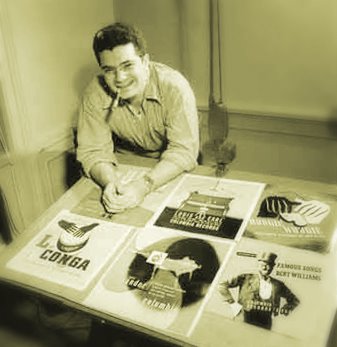
The Man Who Invented Album Covers


Most people who have bought any musical recordings over the past 60 years might have assumed they always came in covers, or sleeves, or jackets, that featured a colorful graphic designed to enhance the lure of the music.

They didn't. Album covers had to be invented. This was a task that largely fell to a Brooklyn kid named Alex Steinweiss.

Before Steinweiss entered the business in the 1930s, most 78-rpm records, the only kind that existed, were sold in plain brown sleeves, flimsy pieces of paper with a large round cutout so the label would show through. If the record company was ambitious, it might list other releases on the paper, as a kind of promotional afterthought.

This changed slightly around 1935, when record companies began bundling several 78-rpm discs in one package, with a cardboard outer jacket. An "album," this was called. But even then, to keep costs down, companies would mostly just stamp the name of the artist on the front.

Then in 1939, Columbia Records hired Steinweiss, a 22-year-old design whiz kid, to become its art department.

Technically, Steinweiss would recount in his 2000 autobiography, "For The Record," that he was hired to create catchy ads and promotional posters for store displays. But he had his eye elsewhere. The company was wasting its greatest promotional opportunity, he argued, by blandly stamping a name on the front of albums. They looked like tombstones, he said. Why not make 'em sing?

So he invented the album cover.

His bosses liked his designs from his very first project, a Rodgers and Hart collection. But what sold them wasn't art, it was numbers. After he redesigned the cover for an album of Beethoven's Ninth, sales rose 894% in six months.

That won him the green light to create cover designs for everything from Bartok to Broadway to Bessie Smith.

His designs were influenced by the art schools with which he had worked, but they were also his own: stylized images with clean lines and bold colors that often exaggerated some feature to highlight what Steinweiss, himself a deep fan, felt was the essence of the music.

For an album of boogie-woogie piano, he drew a keyboard played by two huge hands, one black and one white - a subtle but unmistakable acknowledgment that boogie-woogie brought together both sides of a racially divided country.

For a Kostelanetz recording of George Gershwin's "Rhapsody In Blue," he drew a small piano under a small street lamp, with a huge silhouette of a city skyline towering behind.

He did all this, moreover, with tools that were as primitive as 78-rpm records. Steinweiss worked with rulers, T-squares, pencils, paste and glue on a drawing table. He could use photographs only sparingly because they were expensive to reproduce, and printing technology severely limited his color palette.

But he didn't care. He knew exactly what he was doing because he'd been working up to doing it all his life.


Steinweiss was born March 24, 1917, on the lower East Side, the son of Eastern European immigrants who moved to Brooklyn when his father, Max, became established as a women's shoe designer and mother Betty as a seamstress. Max immersed young Alex in opera and classical music and in 1930 he enrolled at Abraham Lincoln High, where his visual-arts teacher was Leon Friend, a key figure in galvanizing a generation of graphic designers who would one day define the look of everything from pop culture to advertising.

Friend's students were known as "The Art Squad," and after Steinweiss graduated from Lincoln and then Parsons, he became one of the bright lights. He worked under various design stars and became somewhat well-known, though hardly rich. By the late 1930s, he was making just $30 a week, barely enough to support himself and his new bride, Blanche Wisnipolsky, whom he married in 1938 after a six-year courtship that began when they met at Brighton Beach.

Columbia hired Steinweiss as part of a bold marketing push that included selling 78-rpm albums for $1 instead of $2. Steinweiss' bold designs, the label hoped, would get this campaign noticed.

It did, though he soon turned his brush to a more-urgent cause: winning World War II. After he enlisted, the Navy decided he would be more valuable behind an art table than an anti-aircraft gun and he spent the war in New York turning out informational and morale-boosting posters.

One showed a group of black Navy recruits with the message: "Advance through training: Skill commands respect." Another said: "Hands off the Americas," and showed the body of a bloody-handed Nazi hanging from a scaffold.

When Steinweiss returned to Columbia after the war, engineers were finishing up the development of 331/3-rpm records, which soon would be sold in 12-inch jackets, which for his purposes simply meant a bigger canvas.


By now, every label had followed Columbia's lead and given their albums designed covers. Steinweiss began to freelance, and in 1954 he left Columbia. He worked in music, advertising, magazines and other design areas before retiring in 1972 to concentrate on his own art.

He was still around when album covers were downsized to compact disk and cassette covers, which he and other connoisseurs felt negated much of the impact. But, meanwhile, it helped build and sell the modern music biz.

You can find more info on Steinweiss here as well as this sweet little flash presentation from the Eisner Museum

Thanks to David Hinckley for help with the above.

That's Right,

HMK