Wednesday, August 16, 2006

Muy Caliente!


Todays Forecast

That's Right,

HMK

The Fiction That Anticipates The Fact


Authenticity: A User's Guide by Michael Bierut

I've always considered radio the most verite of news sources, but a recent piece on the weekly National Public Radio show On The Media, "Pulling Back the Curtain", exposed how much work goes into making NPR's reporting sound so, well, real. "The public is far less aware of editing on radio than on television or in print," said reporter John Solomon. "For example, to eliminate words, a TV producer has to use more visible means, such as a cutaway shot or jump cut. Newspaper reporters by form must put a break between non-consecutive quotations, among other constraints." Solomon then demonstrated how a radio producer, in contrast, could digitally alter a recording to tighten awkward pauses, eliminate words, restructure sentences, all to create a new, improved, seamless and utterly convincing version of reality.

The show's host, Brooke Gladstone, suggested in her introduction to the piece that some listeners might be shocked by these revelations. And perhaps some were. But I found it absolutely familiar. Faking it? It's what we designers do all the time.

No one loves authenticity like a graphic designer. And no one is quite as good at simulating it. Recently on Speak Up, Marian Bantjes described the professional pride she took in forging a parking permit for a friend. "And I have to say," she admitted, "that it is one of the most satisfying design tasks I have ever undertaken." This provoked an outpouring of confessions from other designers who gleefully described concocting driver's licenses, report cards, concert tickets and even currency.

Every piece of graphic design is, in part or in whole, a forgery. I remember the first time I assembled a prototype for presentation to a client: a two-color business card, 10-point PMS Warm Red Univers on ivory Mohawk Superfine. The half-day process involved would be incomprehensible to a young designer working in a modern studio today; with its cutting, pasting, spraying, stirring and rubbing, it was more like making a pineapple upside-down cake from scratch. But what satisfaction I took in the final result. It was like magic: it looked real. No wonder my favorite character in The Great Escape wasn't the incredibly cool Steve McQueen, but the bewhiskered and bespeckled Donald Pleasence, who couldn't ride a stolen motorcycle behind enemy lines, but could make an imitation German passport capable of fooling the sharpest eyes in the Gestapo.

And the illusion works on yet another level. Consider: that business card was for a start-up business that until that moment had no existence outside of a three-page business plan and the rich fantasy life of its would-be founder. My prototype business card brought those fantasies to life. And reproduced en masse and handed with confidence to potential investors, it ultimately helped make the fantasy a reality. Graphic design is the fiction that anticipates the fact.

At Disney World, where as one might expect the artifice is raised to Wagnerian levels, the designer in me has always preferred the ingenuity of a motion simulation ride like Star Tours (where you seem to be flying through space but you're actually sitting in a tilting chair) to Space Mountain (where you seem to be going up and down steep hills and, um, you actually are going up and down steep hills.) On another level of design experience, I remember arriving with a colleague for a stay at Disney's Wilderness Lodge, a staggeringly detailed evocation of the classic hotels built in the National Parks one hundred years ago by the Great Northern Railway, complete with pine trees, massive rock outcroppings, and piped-in wood smoke, all courtesy of modern-day Denver architect Peter Dominick. "To build something like this in the Rocky Mountains is nothing," said my friend. "But in the middle of a swamp in the center of Florida? That takes genius."

Designers have a love-hate relationship with our addiction to simulation. In the case of the late Tibor Kalman, it was mostly the latter. "What's going on here? Theft? Cheap shots?" he asked in a footnote to his legendary 1990 jeremiad "Good History/Bad History." "Parody? Appropriation? Why do designers do this? Is it because the designers don't have new ideas? Is it glorification of the good old days of design? Is it a way to create a sense of old-time quality in a new-fangled product? Are the designers being lazy, just ripping off an idea to save time and make for an easier client sell?"

Maybe all of the above. Maybe we just can't resist. And maybe familiar cues are simply the means by which people navigate through a confusing world. Tibor was obsessed with, among other things, spaghetti sauce packaging. In the eighties, Joe Duffy's elegant work for Classico particularly irritated him. I found the packages not only beautiful but useful (in their original incarnation, the sturdy jars were great to reuse) but Tibor was bugged by their seductive beauty, the way they conjured a siren song of ersatz Venetian landscapes and rustic Tuscan hills. But what would the alternative be? What would a jar of pasta sauce look like if it were entirely original? Would you know what it was if you saw it on the grocery store shelf? Would you trust it enough to put its contents on your spaghetti? Is that level of originality even possible?

One might consider the advice of another extremely quotable designer, Charles Eames: "Innovate as a last resort." Simulation, evocation, contextualism: call it what you will, but this thing that we designers are so good at seems to serve a basic human need. Although we hunger for authenticity, it's a hard thing to invent overnight. But that doesn't stop us from trying.

Thanks to Michael Bierut

Tuesday, August 15, 2006

Octopus!


Check out this awesome Pulp site - and start with the trippy collection of Octopus Covers!

And if you really want to enhance the mood while you're looking at all the cool covers, try listening to Yo La Tengo's The Love Life of the Octopus off of their The Sounds of the Sounds of Science.

That's Right!

HMK

Sunday, August 13, 2006

Eye Yi Yi!


Everything you've always wanted to know about B-movies, sci-fi/horror classics, fantasy and cult films of yesteryear with a specialty slant toward the 1950s.

Grab yourself a cold beverage and plan on spending a little time when you visit Exclamation Mark's Vintage SciFi/Horror Review


That's Right!

HMK

Tuesday, August 08, 2006

37% of All Advertising Is Wasted


The findings of 'What Sticks' are the result of five years of research on campaigns from 36 of the nation's top advertisers.

Five-Year Research Project Tracked $1 Billion in Spending by 36 Major Marketers

$1 billion tracked
While that's hardly good news, given that it still amounts to tens of billions of marketing dollars, a book that traces $1 billion in spending finds that it is at least possible to find out exactly what's wasted -- and how to get better performance from the other 62.7%, offering hope that battered business can rise from the mat.

The bold proclamations in "What Sticks: Why Most Advertising Fails and How to Guarantee Yours Succeeds," to be released next month by Kaplan Publishing, are the result of five years of research on campaigns from 36 of the nation's top advertisers. The book, penned by Rex Briggs, a veteran market researcher and founder of the firm Marketing Evolution, and Greg Stuart, CEO of the Interactive Advertising Bureau, may well be the most important advertising research since the "How Advertising Works" study of the early 1990s.

Marketing giants
Although its conclusions are based on number-crunching done with such marketing titans as Procter & Gamble, Johnson & Johnson, Unilever, Kraft Foods and McDonald's, the book is written accessibly enough to find an audience among all marketers and creatives. And it comes copiously praised in a foreword by Steven D. Levitt, author of the pop economics hit "Freakonomics."

The title reference to marketing's age-old scatological adage provides a flavor of what's inside. Sometimes-surprising findings from research conducted across a wide range of brands, industries and media are punctuated by shocking anecdotes and confessions illustrating how broken and dysfunctional the marketing industry truly is.
"I spent the first decade of my career as an agency media guy," Mr. Stuart said in an interview. "I felt like a charlatan the entire time. ... I knew in my heart of hearts that we collectively, not just Greg Stuart, did not know what we were doing in spending clients' money."

An ad exec's apology
The book is something of a marketing 12-step program for Mr. Stuart, who in a footnote actually apologizes to each of his clients from that era by corporate name, including American Express, PepsiCo's Frito-Lay, Apple and Sears.

Contained in the book's initial chapters are some remarkable revelations, including the allegation that two of the Big Three automakers used to base their annual media budgets on one another's prior-year measured-media spending. The authors discovered that many longstanding axioms of media planning were based on nothing more than hunch and legend. They reveal how frequently marketers disregard research when it doesn't jibe with their own opinions -- or seek out research that does.

When the authors presented their findings to one automaker's marketing team, according to the book, the company's research people said: "We don't believe anything our agency brings to us, this study included."

Unable to define success
Ad agencies, the target of nearly nonstop flagellation both self-inflicted and otherwise in the past decade, may find some solace in the book. It pins much of the blame for marketing's woes on marketers and their failure to even define success for campaigns at the outset -- much less measure it properly on the back end. Of the 36 marketers the authors researched, only two -- P&G and Cingular -- had a clear definition of success for each marketing effort at the outset, Mr. Briggs said in an interview.

The book actually comes across as remarkably hopeful amid a growing genre of "advertising is dying, and we're all going to get fired" literature. TV advertising clearly works, according to numerous studies reported in the book. It just may not deliver returns as good as those provided by other media overlooked because of organizational inertia or a lack of rigorous, ongoing

ROI tracking.
"No one ever got fired for using television," the book says, citing an internal J&J adage -- one that appears to have become outmoded of late as the company, since its work with Marketing Evolution, has increasingly branched into new media and creative approaches, not to mention that J&J sat out this year's upfront.

Fear of failure
The authors cite fear of failure -- and firing -- as possibly the biggest problem for marketers seeking to improve ROI. The core of the book is a description of and entreaty for a "commercial optimization process" covering messaging strategy, creative and media planning -- a sort of Six Sigma for marketing. But like any continuous improvement program, it requires analysis of failure, which has become almost impossible for some to admit for fear they'll be fired.

Mr. Briggs said the 36 marketers ranged from the highly analytical P&G and J&J to the highly instinct-driven Target, where he said Chairman-CEO Robert J. Ulrich makes snap judgments on creative executions displayed in the corporate lobby. Both approaches work, he said. "But what's been a common theme is that as the world becomes increasingly complex with media choices, it's harder and harder to do what Target's CEO does ... to use their gut that effectively."

That's Right!

HMK

Thanks to Jack Neff at Ad Age

Monday, August 07, 2006

Fast Talk: Clean Sheets


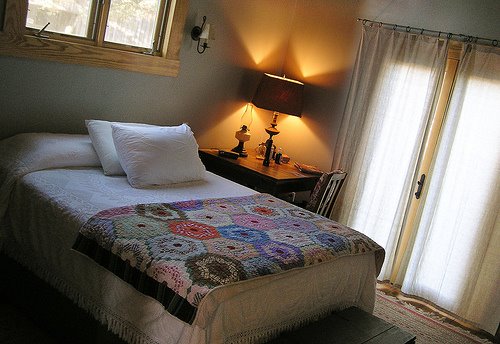
The master bed at the Flag Creek Inn, Fredericksburg, Texas.

Boutiques such as the W made hotels sexy. Now the concept's getting stale. Five next-generation innkeepers take the experience way beyond a mint on your pillow.

Adam Frank
Trevor Pearlman
Reagan Silber
Principals, Edge Group
Las Vegas, Nevada

Frank and company have a challenge: translating the W, the boutique-hotel world's gold standard, into a 3,000-unit hotel/residence and a 75,000-square-foot casino, slated to open on this spot in 2008.

"We're new to Vegas, where there's always a little luck involved. We knew we wanted to work with Starwood Hotels and Resorts, but it had been searching for a Vegas partner for six years. Only after we were able to buy our current plot of land at the entryway of what's known as the Harmon Corridor, the next frontier in Vegas, did we have the leverage to go back to Starwood and seal the deal.

The W won't open for a couple of years, so we have to try to predict where the Vegas hotel market is going and at the same time try to lead it there. Vegas has become the Hamptons of L.A. People now want to own a piece of Vegas, so we're offering a W condo. We also know that Vegas is becoming a popular business destination, so we've stressed the importance of spacious meeting areas and relaxing lounges.

Personal attention is the secret ingredient. Right now, we're working on a 'hotel within a hotel' concept at the W, where we'll be able to treat people as individuals even with our size. We have to think of ourselves not as businessmen but as producers. We're casting people from the hotel, casino, entertainment, and technology industries to keep our vision different, creative, and progressive. We've recruited Kevin Stuessi, who brought big-time chefs such as Todd English to the Bellagio and the Wynn. We also brought in Amanda Scheer Demme from Los Angeles, who's best known as the music supervisor for such films as Erin Brockovich and Mean Girls, to inspire our social scene. In terms of shopping, we're steering clear of the usual strip mall (no pun intended) and instead are going to offer up-and-coming designers the chance to open boutiques. If Steve Wynn's Wynn Las Vegas is Broadway, we want the W to be the Meatpacking District."


Vikram Chatwal
Owner, Dream hotel
New York, New York

Chatwal, 33, opened Dream with Preferred Hotels in 2004. Its hip, imaginative atmosphere has made the hotel a magnet for a mixed business, tourist, and artistic crowd.

"Dreams take you beyond what you think you can do in life. This idea is the basis of my Dream hotel. Early in my investment-banking career, I realized I was on a path that others had set out for me. This hotel opened a new business world to me--a world where my work and my personal interests combined. My Indian heritage plays a part because my culture is known for its hospitality, so in training the staff I took this reflection of kindness and care into account. Another passion I have is acting, which relates to my managerial style because when you're put under pressure, you have to perform.

Aesthetically, Dream speaks to my cultural and artistic background because it is very spiritual and surreal. The ethereal interior and neoclassical architecture are based on some of my own dreams, like the fish-tank column or the statues of Catherine the Great and Poseidon. People walk in and wonder about the thrift-store objects sitting on our coffee tables and why the lower level of my lobby seems like nighttime. There is no one answer. The point is, it makes you think. People are asking questions; they're interested.

As the Dream expands, the idea should constantly evolve as dreams always do. In Bangkok's Times Square, Dream will have a modern Asian surrealist feel mixed with the exciting temperament of that specific spot in the city. In London, Dream will be on the outskirts of the city, so I will give it a calmer temperament--more of a destination rather than an overnight spot."


Henriette Kibsgaard
Sales and marketing manager
Hotel Fox
Copenhagen, Denmark

"Our goal has been to create a hotel for the hotel guests of tomorrow. We asked a different artist to design and create each room in the hotel. Out of 3,000 applicants, 21 artist groups were chosen from 11 countries and 3 continents. At first we worried about targeting 18- to 25-year-olds. But we realized that we could attract people who wanted to experience something new and not just stay at a hotel--people young in mind and open in heart. Their accommodations could be a part of their Copenhagen experience.

To that end, when guests get here, we tell them about the artists and the creative inspiration behind each room, and give them a virtual tour on the computer. Then they pick and choose where they want to stay. It's the same with the amenities. When guests check in, we present them with a minibar bag that they customize. We have predefined lovers' bags, hangover bags, and movie bags, but we let them determine what's inside. We all prefer different things to eat, drink, or do; we all want to be treated as individuals. And what I want today may not be what I want tomorrow. Hotel Fox is the same way. Here, you have something to get inspired by.

This draws a diverse crowd: traveling students, chic couples from Milan or Barcelona, people with blue hair--and interestingly, we get a lot of businesspeople here. If they wake up in a corporate hotel every morning, they don't know if they're in Sydney, Berlin, or London. But when they wake up at Hotel Fox, they know exactly where they are."


Liz Lambert
Owner, Hotel San José
Austin, Texas

With her paradoxical loves--minimalism and color, serenity and excitement--Lambert, 42, has made the San José, below, an unassuming Texas-meets-Zen oasis.

"When I bought the San José, the neighborhood was full of $30-a-night joints for junkies and hookers. People thought I was crazy. Fact is, I had no idea what I was doing, but in the end that was probably a good thing. We made it up as we went. I never wanted to force the hotel into something that it wasn't, so I let it organically grow into itself. For example, when we opened, we didn't have art for the rooms. I pulled poetry from used paperbacks and tacked it up in the bathrooms. I didn't realize that it would turn into a signature until people would take what I had put up and leave something else.

My lack of experience also helped us think of a new way to do service. People love our staff because we don't pick cookie-cutter, polite peons. We pick people with other passions, from band members to former Peace Corps workers. You should feel like you're among friends.

This helps us attract a lot of great visitors, but I especially love how many people we get from Austin. It's because we're a part of the community. We have an elite cycling team, we hold free concerts in our parking lot, and we work with the area's disadvantaged youths. We're also dog friendly, which usually works out until some Fido starts swimming in the pool. But hey, you can't be all things to all people."


Stephen Westman
Vibe manager, Hard Rock Hotel
Chicago, Illinois

Westman, 27, is in charge of creating Hard Rock Chicago's atmosphere using music, infusing an upscale hotel with the irreverence of rock 'n' roll.

"Yes, 'vibe manager' is my actual job title. Here's the story. Music is our key differentiation. It's normal for a record store or radio promotional company to be on top of the music industry, but for a hotel, it's hot. So we have to do things that are cool and unique to offer something the other hotels can't. When I started, there would be a melodic folk rocker playing in the lounge, but before his performance, the music spinning in our public spaces was new-metal acts. The transition to this folksy rock didn't make sense, making what I considered a pretty lame vibe. So I identified our performances and preprogrammed the music in our public spaces to avoid this kind of awkward transition of music styles.

I have to be on top of what artists are hitting next, what genres of music are about to be popular. You see a lot of hotels selling their lobby tunes on a CD. Well, if that's the average, then I'm going to get one of those hard-drive sticks, have them preprogrammed, and put those in the guest rooms. I also look for promotional opportunities we can do to create unique experiences. Like this week, I'm working on a CD-release party with Warner Bros. for the new Madonna album, Confessions on a Dance Floor. This is a vibe experience because it gives the media a cool perception of the Hard Rock, and if you think about it, an album-release event has nothing to do with a hotel.

Music is a common thread through life. It's my job to make sense of this place day to day based on who's staying here. We want people to walk through the door and say, 'This is truly cool, and I am definitely coming back.' "

Thanks to Fast Company: Issue 102 | January 2006 | Page 21 | By: Stirling Kelso

Sunday, August 06, 2006

Wash Your Hands!

Click To Enlarge

Nice idea here from JWT Toronto for hand sanitizer Purell. The agency created warning stickers for magazines in doctors’ offices. The issue dates, often well in the past, are visible through holes in the stickers, creating lines like, “Thumbed through by sick people since September 2005.” The stickers point to WashYourHands.tv, which links to the Pfizer brand’s site.

After you check out this Purell TV Spot, part of the same campaign,
go Wash Your Hands!

That's Right,

HMK

Thursday, August 03, 2006

A Message Of Hope

In these difficult and mean-spirited times in which we live there needs to be a message of hope. 

A single image that speaks to us of love, harmony, peace and joy. 

An image that suggests the universal brotherhood of man.

I have found that image, and I ask that all of you take a moment to be inspired by it.


Click To Enlarge

Thanks Jane!

That's Right!

HMK

HMK

Wednesday, August 02, 2006

I'm Certified!

Official PayPal SealI'm PayPal Verified

Cool. So now if you want to send me money you can be sure everything regarding both the transaction and your identity totally secure.

Simply pay hmk@tg-o.com.

That's Right,

HMK

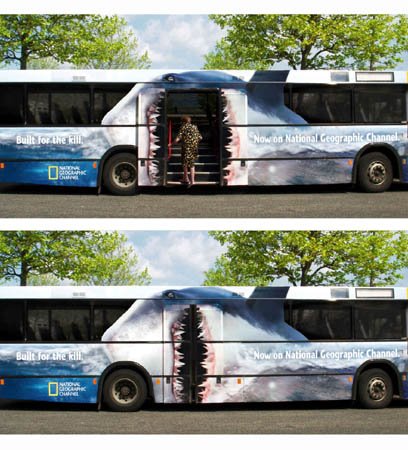
National Geographic Bus Ad


Agency: Amsterdam Advertising

That's Right,

HMK

Thursday, July 27, 2006

Ambigrams

My first exposer to ambigrams was a 1977 album by a band called Angel. (They opened up for Ted Nugent at the Convention Center Arena in San Antonio back in 1978, but that's another story for another blog...)


Ambigrams. Logos. Words as art.

As both an artist and a graphic designer, John Langdo specializes in the visual presentation of words.

Language, philosophy, and science are interwoven into the design of words, which are manipulated to create surprising illusions. This unique approach culminates in a wide variety of corporate logos, and in ambigrams– words that can be read equally well from more than one point of view.

Most of John's ambigrams read the same when turned "upside down," or rotated 180 degrees.

Check out Ambigrams


That's Right,

HMK

Sunday, July 23, 2006

Un, Du, Toi!


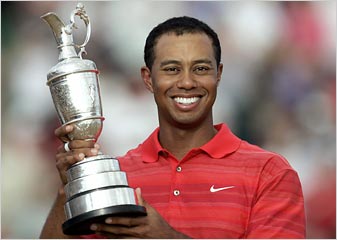
Seems 3 truly is the Magic Number for the U.S.A. Tiger Repeats as British Open Champion, his third British Open Victory and Floyd Landis became the 3rd American to win the Tour de France.

Tiger Woods made three straight birdies to turn away a spirited challenge by Chris DiMarco and win golf's oldest championship for the second straight year.


Landis becomes third American to win Tour de France

PARIS (AP) -- The highs and lows of Floyd Landis' nail-biter of a bike race ended without a hitch Sunday as he won the Tour de France and kept cycling's most prestigious title in American hands for the eighth straight year.

The 30-year-old Landis, pedaling with an injured hip, cruised to victory on the cobblestones of the Champs-ElysÄees, a day after regaining the leader's yellow jersey and building an insurmountable lead in the final time trial. "I kept fighting, never stopped believing," Landis said, shortly after he received the winner's yellow jersey on the podium, joined by his daughter, Ryan.

Landis picked up where another American left off last year, when Lance Armstrong completed his seventh and final Tour triumph. With the victory, Landis becomes the third American -- joining Armstrong and three-time winner Greg LeMond -- to win the Tour. "I'm proud and happy for Floyd," said Armstrong, who watched the finish on TV from a luxurious hotel room near the Champs-ElysÄees. "He proved he was the strongest, everybody wrote him off."

"I'm very proud that an American has won again," he added.

As the "The Star-Spangled Banner" played, Landis, cap in hand, stared solemnly at the crowd. But when the anthem ended, he broke into a smile and waved to the fans. Landis, who plans to undergo surgery this fall on an arthritic right hip injured in a 2003 crash, said he hoped he would be able to return next year. "Right now, that's the plan," Landis said. He dedicated the win to Andy Rihs, owner of his Phonak team.

Sunday's champagne and Landis' fifth yellow jersey of the Tour were possible thanks to a once-in-a-lifetime ride Thursday in the Alps that put the Phonak team leader back in contention, one day after a disastrous ride dropped him from first to 11th, more than eight minutes back.

Oscar Pereiro of Spain finished second overall at 57 seconds back, and Germany's Andreas Kloeden was third, 1:29 behind Landis. With Armstrong retired, the Tour was blown even more wide open on the eve of the July 1 start when prerace favorites Ivan Basso and Jan Ullrich, plus seven other riders, were sent home after they were implicated in a Spanish doping investigation.

Norway's Thor Hushovd won the final stage Sunday of the three-week race. He had also won the Tour prologue on July 1.

Assured of victory, Landis hoisted a champagne glass handed to him from his Phonak team car early in the 154.5-kilometer (96-mile) route from Sceaux-Antony to the capital.

A day earlier, Landis placed third in the Tour's last time trial, taking the yellow jersey from former teammate Pereiro and securing a 59-second lead over the Spaniard. The deficit was virtually impossible to overcome for Pereiro in the flat, short final stage because Landis and his team eyed the Spaniard closely to make sure he didn't try to break away.

Landis, a former mountain biker who toiled for three years as a U.S. Postal Service team support rider for Armstrong, had sought to apply the Texan's meticulous strategy for winning -- until what Landis called "disaster" struck on Stage 16 in the Alps on Wednesday.

His plan to allow Pereiro to take the yellow jersey temporarily as the race left the Pyrenees at the end of week two appeared to backfire after Landis lost the jersey in a second Alpine stage at La Toussuire.

With a stunning stage win in the last Alpine stage on Thursday, Landis erased more than 71⁄2 minutes of his 8:08 deficit to Pereiro -- putting him in a prime position to win by outpacing the Spanish rider in the final time trial Saturday.

For the finish Sunday, Russia's Viatceslav Ekimov, 40, led the peloton -- or rider pack -- as it arrived for the first of eight laps on the famed Paris avenue to honor him as the Tour's oldest rider. It was his 15th Tour -- one shy of Dutch cyclist Joop Zoetemelk's record.

Australia's Robbie McEwen won the green jersey given to the best sprinter for a third time, and Denmark's Mickael Rasmussen earned the polka-dot jersey awarded to the best climber for a second year. Italy's Damiano Cunego, 25, won the white jersey as the best young rider.

That's Right!

HMK

Friday, July 21, 2006

Movie Art


Dig Schaukasten: A blog dedicated to the aesthetic values of movie art beyond the screen.

Very cool.

That's Right!

HMK

Thursday, July 20, 2006

Wednesday, July 19, 2006

Ooh La Lance!


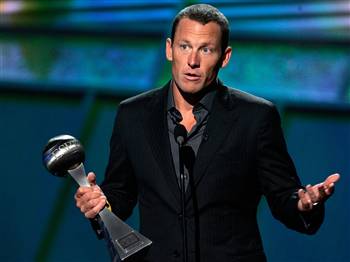
Seven-time Tour de France winner Lance Armstrong has had a love-hate relationship with the people of France recently, and his recent comments about the French soccer team probably won't help.

Serving as host for the ESPY Awards last week, Armstrong took a jab at the World Cup runners-up, saying "all their players tested positive ... for being assholes."

The Los Angeles Daily News first reported the comments; Armstrong later told the newspaper he didn't think the joke was that bad.

"Well, if they'd live with me and heard me at home, they'd know that was a step down," Armstrong said, the Daily News reported.

Armstrong has consistently said in the past that he enjoys living in France and has no problem with the French public, just the newspapers and doping officials who accuse him of wrongdoing.

That's Right!

HMK

Tuesday, July 18, 2006

Get A Life!


Step One: Get A Life.

Step Two: Post It!

Every one you knew, every place you've been to, everything you've done.

All in one place!

I'm gonna start mine out using my concert tickets as a springboard.

Once you really start to think about it, this is really a simple linear and visual approach to blogging.

I can see this used in multiple ways: A family tree, keeping track of family and friends birthdays, a house diary, or simply a linear blog or life of any person, object, movement or idea. It truly does, like life itself, go on and on.

Check out dandelife and have the timeline of your life!

That's Right!

HMK

Monday, July 17, 2006

Nice...


An open microphone caught President Bush in an unguarded moment Monday as the escalating crisis in the Middle East prompted him to use an expletive in a conversation with British Prime Minister Tony Blair.

Apparently not expecting an open mic to pick up his remarks, Bush told Blair: "See the irony is what they need to do is get Syria to get Hezbollah to stop doing this shit and it's over."

The president was expressing frustration at the United Nations' stance on the Israeli-Hezbollah conflict in Lebanon.

Bush and Blair were aware that an event at the Group of Eight summit was a photo opportunity, with media representatives present. Blair later turned off the microphone.

Listen Now!

That's Right!

HMK

Friday, July 14, 2006

Killer!


Killer use of magazine ad space.

Agency: Carillo Pastore Euro RSCG, Brazil.

That's Right,

HMK

Monday, July 10, 2006

Awesome Coke Spot!


Totally amazing Coke spot from Wieden + Kennedy and Psyop.

Check out the killer Coke Spot!

Pump It Up!


Looking for just the right music to make your spot or movie as truly impactful as it can possibly be?

What about hosting your band's music with some folks that can get you maximum exposure and maybe even use your music in the next killer Mentos commercial?

Founded in 2001, Pump Audio is a new kind of agent for independent musicians, digitally connecting them with buyers in the mainstream media. With Pump Audio, artists can license their music into productions without giving up any ownership, while TV and advertising producers can discover new music ready for use. With a growing catalog of tens of thousands of songs, all by independent artists from around the world, customers access music through Pump’s innovative search software and delivery device, the PumpBox™. Pump Audio is based in New York's Hudson Valley.

What are you waiting for?

Check out Pump Audio and make it happen!

That's Right,

HMK

Saturday, July 08, 2006

A Whole New Game Ball


The NBA is introducing a new Official Game Ball for play beginning in the 2006-07 season. The new ball, manufactured by Spalding, features a new design and a new material that together offer better grip, feel, and consistency than the current leather ball. This marks the first change to the ball in over 35 years and only the second in 60 seasons. In 1970, the ball was transitioned from a four panel to an eight panel ball. NBA Commissioner David Stern, Spalding Group Vice President Dan Touhey, NBA Sr. Vice President of Basketball Operations Stu Jackson, Boston Celtics’ Forward Paul Pierce, and NBA on TNT analyst and two-time NBA champion Kenny Smith unveiled the new Game Ball today at the NBA Store on Fifth Avenue prior to the 2006 NBA Draft.

The new ball features Spalding’s Cross Traxxion™ technology, a union of revolutionary design and breakthrough material. The design is comprised of two interlocking, cross-shaped panels rather than the eight oblong panels found on traditional basketballs. As a result, there is more material coverage. The material is a microfiber composite with moisture management that provides superior grip and feel throughout the course of a game. Additionally, the new composite material eliminates the need for a break-in period, which is necessary for the current leather ball, and achieves consistency from ball to ball.

The interlocking cross-panel design has one-third the channel area of the previous official ball to provide more material coverage and better grip.

The NBA and Spalding subjected the ball to a rigorous evaluation process that included laboratory and on-court testing. Every NBA team received the new ball and had the opportunity to use it in practice. The ball also was tested in the NBA Development League and was used in activities during NBA All-Star 2006 in Houston. NBA retired players Steve Kerr and Mark Jackson participated in testing the new ball as well.

“Spalding’s continual efforts to advance basketball technology have yielded the optimal ball, one that is worthy of the new Official NBA Game Ball designation,” said Spalding Group President and CEO Scott Creelman. “We are honored that the NBA collaborated with us to make this change.”

The ball will be used in all NBA events leading up to next season including summer leagues, preseason and training camps, and NBA Europe Live presented by EA Sports. All active players will receive a personalized ball, as will each player selected in the 2006 NBA Draft.

Fans will have an opportunity to see the new ball tonight during the 2006 NBA Draft televised live on ESPN at 7 p.m. EST. The ball will hit store shelves at major sporting goods outlets on October 31 coinciding with the tip-off of the 2006-07 season. A limited number of new balls will be available today at the world’s only NBA Store on Fifth Avenue in New York City. Fans can also pre-order their new ball online at NBAStore.com for delivery at the start of the 2006-07 season.

As the Official Game Ball supplier of the NBA since 1983, Spalding will continue to produce the only basketball used during all NBA practices, exhibitions, games and international competitions. Spalding maintains the exclusive rights to produce and sell a complete line of NBA and team-identified basketballs in all sizes including full, junior, youth and mini.

Thursday, July 06, 2006

iLuv At First Sight!


iLuv has just announced a sweet little dock that allows users to record videos directly to a fifth-generation iPod from from any video source (TV, DVD player, camcorder, etc.). The iLuv i180 iPod dock's got four recording time settings—30 min, 60 min, 120 min, 180 min—and basic record/stop and timer buttons.

According to the site, once a video is recorded, it can be found and played on the iPod under Videos > Video Podcasts > iLuv. The i180 also charges a docked iPod and has composite AV (RCA) and S-Video connections. Availability is set for mid-August and estimated damage is $200.

Sounds cool: iLuv.

That's Right,

HMK