Monday, August 07, 2006

Fast Talk: Clean Sheets


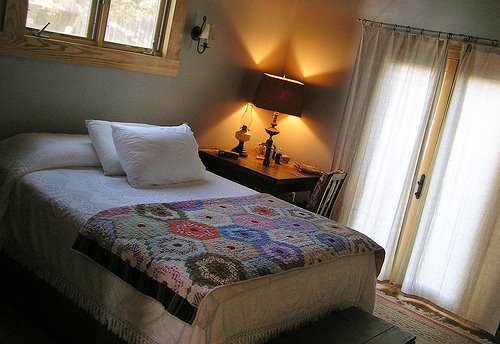
The master bed at the Flag Creek Inn, Fredericksburg, Texas.

Boutiques such as the W made hotels sexy. Now the concept's getting stale. Five next-generation innkeepers take the experience way beyond a mint on your pillow.

Adam Frank
Trevor Pearlman
Reagan Silber
Principals, Edge Group
Las Vegas, Nevada

Frank and company have a challenge: translating the W, the boutique-hotel world's gold standard, into a 3,000-unit hotel/residence and a 75,000-square-foot casino, slated to open on this spot in 2008.

"We're new to Vegas, where there's always a little luck involved. We knew we wanted to work with Starwood Hotels and Resorts, but it had been searching for a Vegas partner for six years. Only after we were able to buy our current plot of land at the entryway of what's known as the Harmon Corridor, the next frontier in Vegas, did we have the leverage to go back to Starwood and seal the deal.

The W won't open for a couple of years, so we have to try to predict where the Vegas hotel market is going and at the same time try to lead it there. Vegas has become the Hamptons of L.A. People now want to own a piece of Vegas, so we're offering a W condo. We also know that Vegas is becoming a popular business destination, so we've stressed the importance of spacious meeting areas and relaxing lounges.

Personal attention is the secret ingredient. Right now, we're working on a 'hotel within a hotel' concept at the W, where we'll be able to treat people as individuals even with our size. We have to think of ourselves not as businessmen but as producers. We're casting people from the hotel, casino, entertainment, and technology industries to keep our vision different, creative, and progressive. We've recruited Kevin Stuessi, who brought big-time chefs such as Todd English to the Bellagio and the Wynn. We also brought in Amanda Scheer Demme from Los Angeles, who's best known as the music supervisor for such films as Erin Brockovich and Mean Girls, to inspire our social scene. In terms of shopping, we're steering clear of the usual strip mall (no pun intended) and instead are going to offer up-and-coming designers the chance to open boutiques. If Steve Wynn's Wynn Las Vegas is Broadway, we want the W to be the Meatpacking District."


Vikram Chatwal
Owner, Dream hotel
New York, New York

Chatwal, 33, opened Dream with Preferred Hotels in 2004. Its hip, imaginative atmosphere has made the hotel a magnet for a mixed business, tourist, and artistic crowd.

"Dreams take you beyond what you think you can do in life. This idea is the basis of my Dream hotel. Early in my investment-banking career, I realized I was on a path that others had set out for me. This hotel opened a new business world to me--a world where my work and my personal interests combined. My Indian heritage plays a part because my culture is known for its hospitality, so in training the staff I took this reflection of kindness and care into account. Another passion I have is acting, which relates to my managerial style because when you're put under pressure, you have to perform.

Aesthetically, Dream speaks to my cultural and artistic background because it is very spiritual and surreal. The ethereal interior and neoclassical architecture are based on some of my own dreams, like the fish-tank column or the statues of Catherine the Great and Poseidon. People walk in and wonder about the thrift-store objects sitting on our coffee tables and why the lower level of my lobby seems like nighttime. There is no one answer. The point is, it makes you think. People are asking questions; they're interested.

As the Dream expands, the idea should constantly evolve as dreams always do. In Bangkok's Times Square, Dream will have a modern Asian surrealist feel mixed with the exciting temperament of that specific spot in the city. In London, Dream will be on the outskirts of the city, so I will give it a calmer temperament--more of a destination rather than an overnight spot."


Henriette Kibsgaard
Sales and marketing manager
Hotel Fox
Copenhagen, Denmark

"Our goal has been to create a hotel for the hotel guests of tomorrow. We asked a different artist to design and create each room in the hotel. Out of 3,000 applicants, 21 artist groups were chosen from 11 countries and 3 continents. At first we worried about targeting 18- to 25-year-olds. But we realized that we could attract people who wanted to experience something new and not just stay at a hotel--people young in mind and open in heart. Their accommodations could be a part of their Copenhagen experience.

To that end, when guests get here, we tell them about the artists and the creative inspiration behind each room, and give them a virtual tour on the computer. Then they pick and choose where they want to stay. It's the same with the amenities. When guests check in, we present them with a minibar bag that they customize. We have predefined lovers' bags, hangover bags, and movie bags, but we let them determine what's inside. We all prefer different things to eat, drink, or do; we all want to be treated as individuals. And what I want today may not be what I want tomorrow. Hotel Fox is the same way. Here, you have something to get inspired by.

This draws a diverse crowd: traveling students, chic couples from Milan or Barcelona, people with blue hair--and interestingly, we get a lot of businesspeople here. If they wake up in a corporate hotel every morning, they don't know if they're in Sydney, Berlin, or London. But when they wake up at Hotel Fox, they know exactly where they are."


Liz Lambert
Owner, Hotel San José
Austin, Texas

With her paradoxical loves--minimalism and color, serenity and excitement--Lambert, 42, has made the San José, below, an unassuming Texas-meets-Zen oasis.

"When I bought the San José, the neighborhood was full of $30-a-night joints for junkies and hookers. People thought I was crazy. Fact is, I had no idea what I was doing, but in the end that was probably a good thing. We made it up as we went. I never wanted to force the hotel into something that it wasn't, so I let it organically grow into itself. For example, when we opened, we didn't have art for the rooms. I pulled poetry from used paperbacks and tacked it up in the bathrooms. I didn't realize that it would turn into a signature until people would take what I had put up and leave something else.

My lack of experience also helped us think of a new way to do service. People love our staff because we don't pick cookie-cutter, polite peons. We pick people with other passions, from band members to former Peace Corps workers. You should feel like you're among friends.

This helps us attract a lot of great visitors, but I especially love how many people we get from Austin. It's because we're a part of the community. We have an elite cycling team, we hold free concerts in our parking lot, and we work with the area's disadvantaged youths. We're also dog friendly, which usually works out until some Fido starts swimming in the pool. But hey, you can't be all things to all people."


Stephen Westman
Vibe manager, Hard Rock Hotel
Chicago, Illinois

Westman, 27, is in charge of creating Hard Rock Chicago's atmosphere using music, infusing an upscale hotel with the irreverence of rock 'n' roll.

"Yes, 'vibe manager' is my actual job title. Here's the story. Music is our key differentiation. It's normal for a record store or radio promotional company to be on top of the music industry, but for a hotel, it's hot. So we have to do things that are cool and unique to offer something the other hotels can't. When I started, there would be a melodic folk rocker playing in the lounge, but before his performance, the music spinning in our public spaces was new-metal acts. The transition to this folksy rock didn't make sense, making what I considered a pretty lame vibe. So I identified our performances and preprogrammed the music in our public spaces to avoid this kind of awkward transition of music styles.

I have to be on top of what artists are hitting next, what genres of music are about to be popular. You see a lot of hotels selling their lobby tunes on a CD. Well, if that's the average, then I'm going to get one of those hard-drive sticks, have them preprogrammed, and put those in the guest rooms. I also look for promotional opportunities we can do to create unique experiences. Like this week, I'm working on a CD-release party with Warner Bros. for the new Madonna album, Confessions on a Dance Floor. This is a vibe experience because it gives the media a cool perception of the Hard Rock, and if you think about it, an album-release event has nothing to do with a hotel.

Music is a common thread through life. It's my job to make sense of this place day to day based on who's staying here. We want people to walk through the door and say, 'This is truly cool, and I am definitely coming back.' "

Thanks to Fast Company: Issue 102 | January 2006 | Page 21 | By: Stirling Kelso

Sunday, August 06, 2006

Wash Your Hands!

Click To Enlarge

Nice idea here from JWT Toronto for hand sanitizer Purell. The agency created warning stickers for magazines in doctors’ offices. The issue dates, often well in the past, are visible through holes in the stickers, creating lines like, “Thumbed through by sick people since September 2005.” The stickers point to WashYourHands.tv, which links to the Pfizer brand’s site.

After you check out this Purell TV Spot, part of the same campaign,
go Wash Your Hands!

That's Right,

HMK

Thursday, August 03, 2006

A Message Of Hope

In these difficult and mean-spirited times in which we live there needs to be a message of hope. 

A single image that speaks to us of love, harmony, peace and joy. 

An image that suggests the universal brotherhood of man.

I have found that image, and I ask that all of you take a moment to be inspired by it.


Click To Enlarge

Thanks Jane!

That's Right!

HMK

HMK

Wednesday, August 02, 2006

I'm Certified!

Official PayPal SealI'm PayPal Verified

Cool. So now if you want to send me money you can be sure everything regarding both the transaction and your identity totally secure.

Simply pay hmk@tg-o.com.

That's Right,

HMK

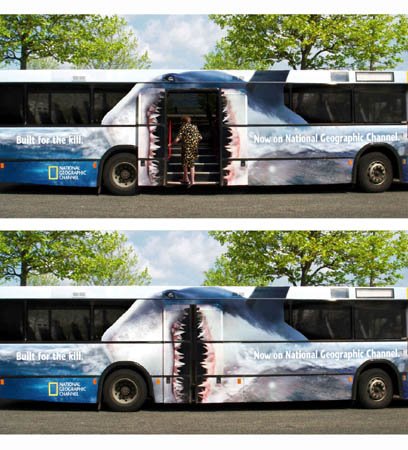
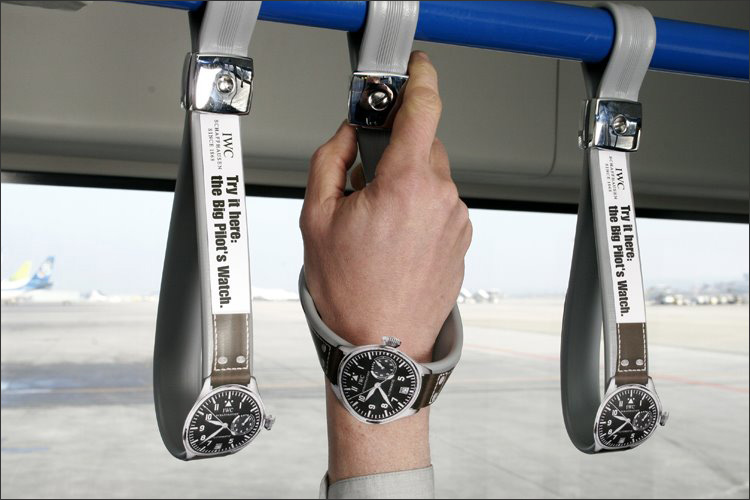
National Geographic Bus Ad


Agency: Amsterdam Advertising

That's Right,

HMK

Thursday, July 27, 2006

Ambigrams

My first exposer to ambigrams was a 1977 album by a band called Angel. (They opened up for Ted Nugent at the Convention Center Arena in San Antonio back in 1978, but that's another story for another blog...)


Ambigrams. Logos. Words as art.

As both an artist and a graphic designer, John Langdo specializes in the visual presentation of words.

Language, philosophy, and science are interwoven into the design of words, which are manipulated to create surprising illusions. This unique approach culminates in a wide variety of corporate logos, and in ambigrams– words that can be read equally well from more than one point of view.

Most of John's ambigrams read the same when turned "upside down," or rotated 180 degrees.

Check out Ambigrams


That's Right,

HMK

Sunday, July 23, 2006

Un, Du, Toi!


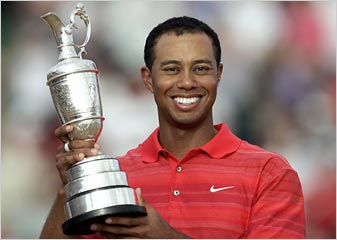
Seems 3 truly is the Magic Number for the U.S.A. Tiger Repeats as British Open Champion, his third British Open Victory and Floyd Landis became the 3rd American to win the Tour de France.

Tiger Woods made three straight birdies to turn away a spirited challenge by Chris DiMarco and win golf's oldest championship for the second straight year.


Landis becomes third American to win Tour de France

PARIS (AP) -- The highs and lows of Floyd Landis' nail-biter of a bike race ended without a hitch Sunday as he won the Tour de France and kept cycling's most prestigious title in American hands for the eighth straight year.

The 30-year-old Landis, pedaling with an injured hip, cruised to victory on the cobblestones of the Champs-ElysÄees, a day after regaining the leader's yellow jersey and building an insurmountable lead in the final time trial. "I kept fighting, never stopped believing," Landis said, shortly after he received the winner's yellow jersey on the podium, joined by his daughter, Ryan.

Landis picked up where another American left off last year, when Lance Armstrong completed his seventh and final Tour triumph. With the victory, Landis becomes the third American -- joining Armstrong and three-time winner Greg LeMond -- to win the Tour. "I'm proud and happy for Floyd," said Armstrong, who watched the finish on TV from a luxurious hotel room near the Champs-ElysÄees. "He proved he was the strongest, everybody wrote him off."

"I'm very proud that an American has won again," he added.

As the "The Star-Spangled Banner" played, Landis, cap in hand, stared solemnly at the crowd. But when the anthem ended, he broke into a smile and waved to the fans. Landis, who plans to undergo surgery this fall on an arthritic right hip injured in a 2003 crash, said he hoped he would be able to return next year. "Right now, that's the plan," Landis said. He dedicated the win to Andy Rihs, owner of his Phonak team.

Sunday's champagne and Landis' fifth yellow jersey of the Tour were possible thanks to a once-in-a-lifetime ride Thursday in the Alps that put the Phonak team leader back in contention, one day after a disastrous ride dropped him from first to 11th, more than eight minutes back.

Oscar Pereiro of Spain finished second overall at 57 seconds back, and Germany's Andreas Kloeden was third, 1:29 behind Landis. With Armstrong retired, the Tour was blown even more wide open on the eve of the July 1 start when prerace favorites Ivan Basso and Jan Ullrich, plus seven other riders, were sent home after they were implicated in a Spanish doping investigation.

Norway's Thor Hushovd won the final stage Sunday of the three-week race. He had also won the Tour prologue on July 1.

Assured of victory, Landis hoisted a champagne glass handed to him from his Phonak team car early in the 154.5-kilometer (96-mile) route from Sceaux-Antony to the capital.

A day earlier, Landis placed third in the Tour's last time trial, taking the yellow jersey from former teammate Pereiro and securing a 59-second lead over the Spaniard. The deficit was virtually impossible to overcome for Pereiro in the flat, short final stage because Landis and his team eyed the Spaniard closely to make sure he didn't try to break away.

Landis, a former mountain biker who toiled for three years as a U.S. Postal Service team support rider for Armstrong, had sought to apply the Texan's meticulous strategy for winning -- until what Landis called "disaster" struck on Stage 16 in the Alps on Wednesday.

His plan to allow Pereiro to take the yellow jersey temporarily as the race left the Pyrenees at the end of week two appeared to backfire after Landis lost the jersey in a second Alpine stage at La Toussuire.

With a stunning stage win in the last Alpine stage on Thursday, Landis erased more than 71⁄2 minutes of his 8:08 deficit to Pereiro -- putting him in a prime position to win by outpacing the Spanish rider in the final time trial Saturday.

For the finish Sunday, Russia's Viatceslav Ekimov, 40, led the peloton -- or rider pack -- as it arrived for the first of eight laps on the famed Paris avenue to honor him as the Tour's oldest rider. It was his 15th Tour -- one shy of Dutch cyclist Joop Zoetemelk's record.

Australia's Robbie McEwen won the green jersey given to the best sprinter for a third time, and Denmark's Mickael Rasmussen earned the polka-dot jersey awarded to the best climber for a second year. Italy's Damiano Cunego, 25, won the white jersey as the best young rider.

That's Right!

HMK

Friday, July 21, 2006

Movie Art


Dig Schaukasten: A blog dedicated to the aesthetic values of movie art beyond the screen.

Very cool.

That's Right!

HMK

Thursday, July 20, 2006

Wednesday, July 19, 2006

Ooh La Lance!


Seven-time Tour de France winner Lance Armstrong has had a love-hate relationship with the people of France recently, and his recent comments about the French soccer team probably won't help.

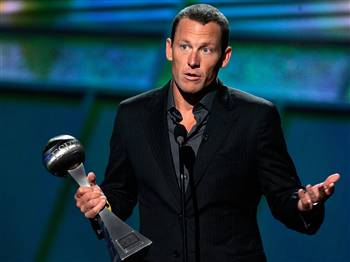
Serving as host for the ESPY Awards last week, Armstrong took a jab at the World Cup runners-up, saying "all their players tested positive ... for being assholes."

The Los Angeles Daily News first reported the comments; Armstrong later told the newspaper he didn't think the joke was that bad.

"Well, if they'd live with me and heard me at home, they'd know that was a step down," Armstrong said, the Daily News reported.

Armstrong has consistently said in the past that he enjoys living in France and has no problem with the French public, just the newspapers and doping officials who accuse him of wrongdoing.

That's Right!

HMK

Tuesday, July 18, 2006

Get A Life!


Step One: Get A Life.

Step Two: Post It!

Every one you knew, every place you've been to, everything you've done.

All in one place!

I'm gonna start mine out using my concert tickets as a springboard.

Once you really start to think about it, this is really a simple linear and visual approach to blogging.

I can see this used in multiple ways: A family tree, keeping track of family and friends birthdays, a house diary, or simply a linear blog or life of any person, object, movement or idea. It truly does, like life itself, go on and on.

Check out dandelife and have the timeline of your life!

That's Right!

HMK

Monday, July 17, 2006

Nice...


An open microphone caught President Bush in an unguarded moment Monday as the escalating crisis in the Middle East prompted him to use an expletive in a conversation with British Prime Minister Tony Blair.

Apparently not expecting an open mic to pick up his remarks, Bush told Blair: "See the irony is what they need to do is get Syria to get Hezbollah to stop doing this shit and it's over."

The president was expressing frustration at the United Nations' stance on the Israeli-Hezbollah conflict in Lebanon.

Bush and Blair were aware that an event at the Group of Eight summit was a photo opportunity, with media representatives present. Blair later turned off the microphone.

Listen Now!

That's Right!

HMK

Friday, July 14, 2006

Killer!


Killer use of magazine ad space.

Agency: Carillo Pastore Euro RSCG, Brazil.

That's Right,

HMK

Monday, July 10, 2006

Awesome Coke Spot!


Totally amazing Coke spot from Wieden + Kennedy and Psyop.

Check out the killer Coke Spot!

Pump It Up!


Looking for just the right music to make your spot or movie as truly impactful as it can possibly be?

What about hosting your band's music with some folks that can get you maximum exposure and maybe even use your music in the next killer Mentos commercial?

Founded in 2001, Pump Audio is a new kind of agent for independent musicians, digitally connecting them with buyers in the mainstream media. With Pump Audio, artists can license their music into productions without giving up any ownership, while TV and advertising producers can discover new music ready for use. With a growing catalog of tens of thousands of songs, all by independent artists from around the world, customers access music through Pump’s innovative search software and delivery device, the PumpBox™. Pump Audio is based in New York's Hudson Valley.

What are you waiting for?

Check out Pump Audio and make it happen!

That's Right,

HMK

Saturday, July 08, 2006

A Whole New Game Ball


The NBA is introducing a new Official Game Ball for play beginning in the 2006-07 season. The new ball, manufactured by Spalding, features a new design and a new material that together offer better grip, feel, and consistency than the current leather ball. This marks the first change to the ball in over 35 years and only the second in 60 seasons. In 1970, the ball was transitioned from a four panel to an eight panel ball. NBA Commissioner David Stern, Spalding Group Vice President Dan Touhey, NBA Sr. Vice President of Basketball Operations Stu Jackson, Boston Celtics’ Forward Paul Pierce, and NBA on TNT analyst and two-time NBA champion Kenny Smith unveiled the new Game Ball today at the NBA Store on Fifth Avenue prior to the 2006 NBA Draft.

The new ball features Spalding’s Cross Traxxion™ technology, a union of revolutionary design and breakthrough material. The design is comprised of two interlocking, cross-shaped panels rather than the eight oblong panels found on traditional basketballs. As a result, there is more material coverage. The material is a microfiber composite with moisture management that provides superior grip and feel throughout the course of a game. Additionally, the new composite material eliminates the need for a break-in period, which is necessary for the current leather ball, and achieves consistency from ball to ball.

The interlocking cross-panel design has one-third the channel area of the previous official ball to provide more material coverage and better grip.

The NBA and Spalding subjected the ball to a rigorous evaluation process that included laboratory and on-court testing. Every NBA team received the new ball and had the opportunity to use it in practice. The ball also was tested in the NBA Development League and was used in activities during NBA All-Star 2006 in Houston. NBA retired players Steve Kerr and Mark Jackson participated in testing the new ball as well.

“Spalding’s continual efforts to advance basketball technology have yielded the optimal ball, one that is worthy of the new Official NBA Game Ball designation,” said Spalding Group President and CEO Scott Creelman. “We are honored that the NBA collaborated with us to make this change.”

The ball will be used in all NBA events leading up to next season including summer leagues, preseason and training camps, and NBA Europe Live presented by EA Sports. All active players will receive a personalized ball, as will each player selected in the 2006 NBA Draft.

Fans will have an opportunity to see the new ball tonight during the 2006 NBA Draft televised live on ESPN at 7 p.m. EST. The ball will hit store shelves at major sporting goods outlets on October 31 coinciding with the tip-off of the 2006-07 season. A limited number of new balls will be available today at the world’s only NBA Store on Fifth Avenue in New York City. Fans can also pre-order their new ball online at NBAStore.com for delivery at the start of the 2006-07 season.

As the Official Game Ball supplier of the NBA since 1983, Spalding will continue to produce the only basketball used during all NBA practices, exhibitions, games and international competitions. Spalding maintains the exclusive rights to produce and sell a complete line of NBA and team-identified basketballs in all sizes including full, junior, youth and mini.

Thursday, July 06, 2006

iLuv At First Sight!


iLuv has just announced a sweet little dock that allows users to record videos directly to a fifth-generation iPod from from any video source (TV, DVD player, camcorder, etc.). The iLuv i180 iPod dock's got four recording time settings—30 min, 60 min, 120 min, 180 min—and basic record/stop and timer buttons.

According to the site, once a video is recorded, it can be found and played on the iPod under Videos > Video Podcasts > iLuv. The i180 also charges a docked iPod and has composite AV (RCA) and S-Video connections. Availability is set for mid-August and estimated damage is $200.

Sounds cool: iLuv.

That's Right,

HMK

Wednesday, July 05, 2006

It's All About The View


My buddy Jackie was kind enough to let me flop at his place on West 57th while he was working in New York last September. I took this from the living room on the 23rd floor overlooking Central Park. Yeah, it was pretty sweet.

The following is by Suzanne Slesin from yesterdays NY Times

An expansive, gorgeous view of Central Park. A lifelong dream for me.

Many years ago, while living in a 20th-floor apartment on East 79th Street, I would go out on our small terrace, look left and get a glimpse of a sliver of treetops. So the idea that I could have a magic-carpet view of The Park as I drank my coffee every morning was reason enough to propel me to 110 Central Park South, the new co-op (with condo bylaws) that's smack across from the southern tip of the park.

(I had also experienced the park from a similar vantage point when I went to a dentist years ago whose office was just down the street on a stretch of Central Park South known then as Valley of the Drills.)

Situated between the Avenue of the Americas and Seventh Avenue, 110 Central Park South is a 1920's building with a neo-Renaissance palazzo exterior, designed by James Edwin Ruthwin Carpenter, an architect known for such luxury residential projects as 810, 907 and 1115 Fifth Avenue.

Turned into the 25-story, 118-unit apartment hotel known as the Navarro in 1927, it subsequently was the site of the Ritz-Carlton and InterContinental Hotels. Now, Anbau Enterprises — run by the husband-and-wife team of Stephen Glascock and Barbara van Beuren — is converting it to co-ops.

There was no way the views could disappoint.

And Stacey Greenfield, the director of sales for the Sunshine Group Ltd. who met me in the small yet elegant sycamore-lined lobby, was the first to assure me of that.

Anbau and Sunshine each plan to give 0.5 percent from the sale of every apartment to the Central Park Conservancy. "I don't know how many sponsors do that," Ms. Greenfield said. "Giving back to the city is part of this project."

"I'm all for that," I say to myself, as I am swiftly led to the elevator, also lined in sycamore. (There's no attendant, but the building has 24-hour doormen.) We zip up to the sixth floor where the model apartments are on display.

While the prewar facade was retained, the interior of the building has been gutted and divided into 61 one-, two- and three-bedroom apartments. Costas Kondylis & Partners was the architecture firm, and Gustavo Martinez Design was responsible for the interiors.

"Because people are combining units," Ms. Greenfield said, "the total number of individual units will probably drop down to 50."

Three new floors were also added, and there are now full-floor apartments on the 22nd to 29th floors. "These were the first to be sold and range from $13 million to $15 million," said Ms. Greenfield, who added that her clients were "a lot of empty-nesters who are either buying large apartments, or scaling down, or people who did not have a park view."

We start by looking at 6B, a furnished three-bedroom with three full bathrooms, a powder room and about 2,400 square feet. Only two B-line apartments are still available: 9B ( $5,038,800, with a monthly maintenance of $6,778) and 5B ($4,467,600, with a monthly maintenance of $6,564).

"We sold as fast on the lower floors as the high ones," Ms. Greenfield said.

I take in what she is saying while feeling drawn like a magnet to the windows. The view of the treetops is as lovely as expected: an expanse of green shapes, framed by the towers on Fifth Avenue and Central Park West. I feel as if I'm in a scene right out of Ludwig Bemelmans or Raoul Dufy. I half expect to see children in sailor suits chasing after hoops.

Ms. Greenfield interrupts my little reverie. "You are in contact with the street," she said. "You have the lake — it's all very picturesque." I agree.

The combination living and dining room overlooks Central Park, of course. "We kept it all open," Ms. Greenfield said, "because that's the way people live today."

I'm already backing into the sleek kitchen, keeping my eyes on the view while admiring the Poggenpohl cabinets, the Miele oven and cooktop, the Viking wine cooler and the smooth quartz countertops. I like the idea of the breakfast niche that seats up to six people, but wonder why it's so close to the dining area.

We move to the private areas, slipping out the kitchen door and going down hallways and galleries to experience what Ms. Greenfield calls "the flow." No wide-open spaces here. Rather, I am noticing the nooks and antechambers that are meant to reflect the graciousness and formality of Old World residences.

Ms. Greenfield points out the nine-foot coffered ceilings, the Art Deco-inspired marble bathrooms, the dressing rooms, the solid doors, the chrome hardware, the sconces and the chandelier-ready ceilings.

"Even though everything is new, it has a solid feel to it as if you were in a real prewar apartment," she said. "You never walk directly into your bedroom. Every room has an entryway; every bedroom has its own bathroom. The apartment feels like a home — you're always walking, walking, walking."

But on the sixth floor, the quite spacious master bedroom at the back of the apartment faces a brick wall. The magical feeling of the front rooms is dimmed.

We move next door to visit the A apartment, with two bedrooms, two baths and a powder room and a total of about 1,850 square feet. It is smaller, yet somehow more appealing. The master bedroom is on the park, and although the kitchen lacks the dinette, it has a free-standing work counter that allows for an unobstructed view of the park. Not surprisingly, only two such units are still available: 4A ($3,857,700, with a monthly maintenance of $5,059) and 21A ($6,601,218, with a monthly maintenance of $5,924).

"Many people are combining the A and B units," Ms. Greenfield said.

Only one of the seven full-floor units is still available, Penthouse 23, on the 23rd floor. The apartment, with 4,184 square feet but no terraces, is priced at $14.35 million and has a monthly maintenance of $12,383.

The view is jaw-dropping — a lush green carpet unfurled as far as the eye can see, bordered with a procession of New York City buildings that look just out of a movie set.

So far, the space has been left open, interrupted only by a set of structural columns ("they could be made into great bookcases," Ms. Greenfield offered) and a maze of other rooms — bedrooms, dressing rooms, closets and bathrooms.

On the high floor, you pick up a western exposure with its view of the Time Warner Center, and to the south, a peek at the Empire State Building. Ms. Greenfield points out rooms that can be sealed off for privacy, bathrooms that can be enlarged, bedrooms that can be turned into studies. And of course, prewired corridors that cry out for sconces. Just bring on the decorator, I want to shout.

On the way down, I stop to take another look at my favorite A-line unit, in which one could wake up and see the park without getting out of bed. That would be nice, very nice.

And probably fabulous enough.

That's Right and thanks again Jackie!,

HMK

Tuesday, July 04, 2006

Cheers To Your Health


Karla is a new beer for women, marketed as improving health and well-being.

German brewer Karlsberg (not to be confused with Danish Carlsberg), is convinced that it can get more women to drink beer. In countries such as the UK and Spain, roughly equal percentages of men and women drink beer (around 40%). Surprisingly, this isn't the case in Germany, where women view beer as unhealthy, fattening, or unsophisticated.

So Karlsberg is taking a different angle with its introduction of Karla. Stressing that beer is a natural product, Karla is being promoted as a healthy drink for women. The mixed drink is attractively packaged, and comes in two varieties. Both are low in alcohol content (1%) and a blend of beer and fruit juices. Karla Balance claims to provide 'peace and balance' by mixing hops with lemon balm, an herb well-known for its sedative properties.

The other variety, Karla Well-Be, is also an offspring of the functional foods / nutraceuticals trend. Ingredients include soy-derived lecithin (which may positively affect cholesterol levels), folic acid (recommended for women considering pregnancy), and other vitamins.

Emphasis on health prompted an unusual distribution channel: Karla is sold through pharmacists. After a soft launch in 2005, Karlsberg recently teamed up with neutraceutical manufacturer Amapharm to distribute Karla to pharmacists across Germany. International expansion is in the works.

With health and wellness driving many consumers' food and drink choices, this could be a (niche) hit with health-concious consumers across the world, not to mention with women who actually enjoy watching soccer while knocking back a cold one.

Friday, June 30, 2006

Cannes Lions International Ad Festival


Along with the other purposes it serves, (excuses to eat, swim, drink and frolic) the Cannes Lions International Ad Festival is also a window on the best and most interesting TV commercials produced outside the U.S. each year. Check out 10 Spots from other countries that were standouts at this year's event.

That's Right,

HMK

Thursday, June 29, 2006

Right On Time


Agency: Jung Von Matt, Hamburg.

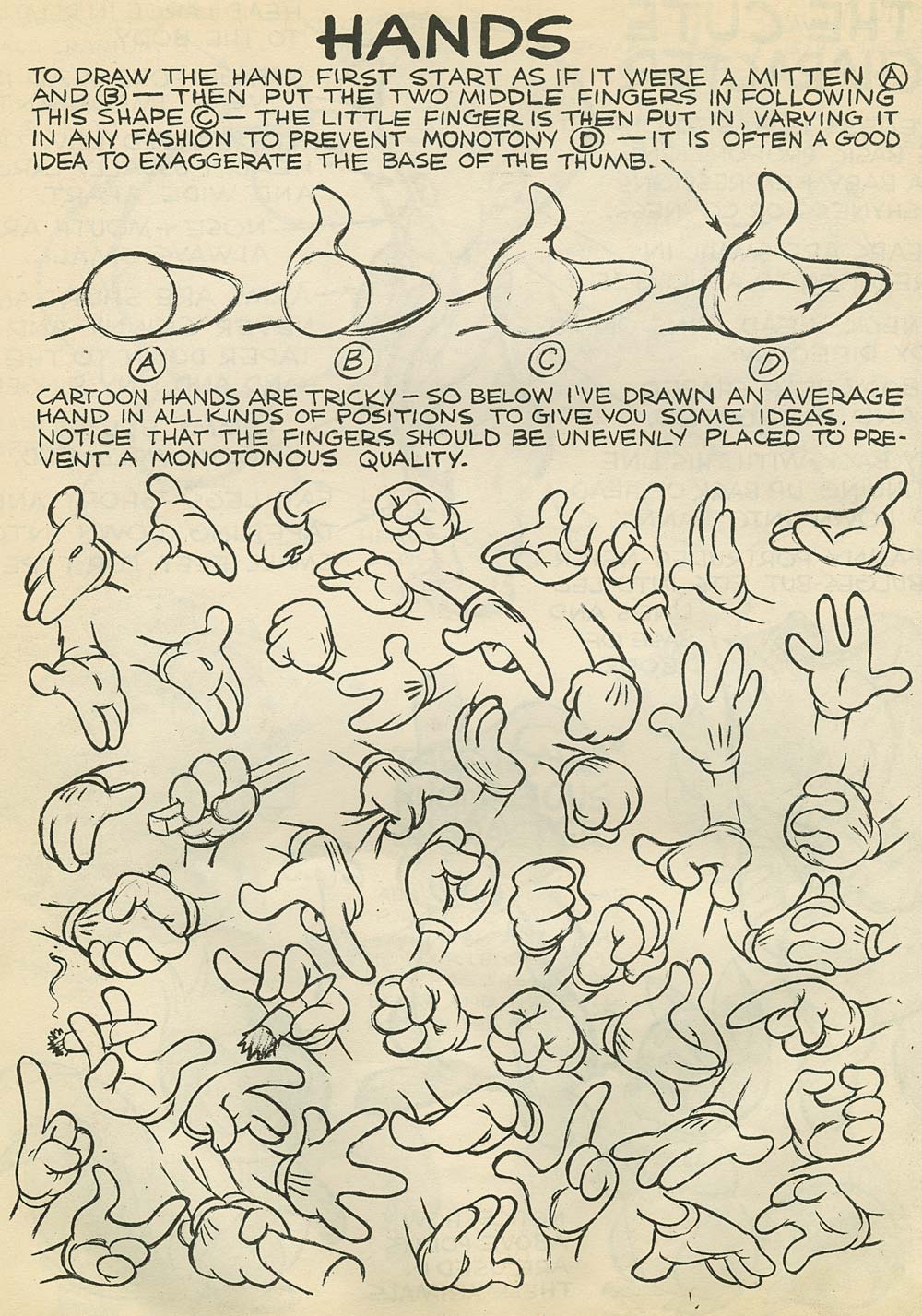
Animation Archive

Click To Enlarge

Just a small sample of some of the awesome animation and drawing tips at the International Animated Film Society.

The International Animated Film Society: ASIFA-Hollywood has embarked on an ambitious project to create an animation archive, museum, and library for the benefit of the animation community, students and general public. The first phase of this project involves the creation of a VIRTUAL ARCHIVE which will house images, movie clips and sound files pertaining to the art of animation.

Get your pencils out!

That's Right,

HMK

Tuesday, June 27, 2006

No Brainer


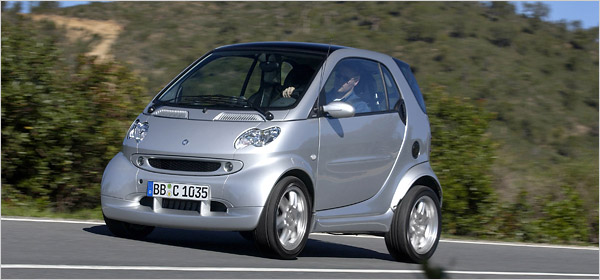
DaimlerChrysler will finally be selling its smallest Smart car, a minicar that fits on top of a regulation pool table, in the U.S as soon as 2008. It's about time...

That's Right,

HMK

Monday, June 26, 2006

The Mysterious Power of Context

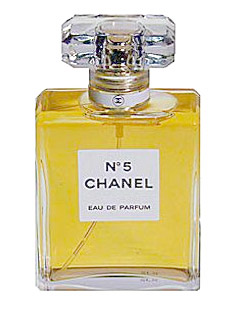
Label for Chanel No. 5, Gabrielle Bonheur "Coco" Chanel, 1921

Story thanks to Michael Bierut

A while ago, I was designing the identity for a large, fashion-oriented organization. It was time to decide which typeface we'd use for their name. Opinions were not hard to come by: this was the kind of place where people were not unused to exercising their visual connoisseurship. But a final decision was elusive.

We decided to recommend a straightforward sans serif font. Predictably, this recommendation was greeted by complaints: it was too generic, too mechanical, too unstylish, too unrefined. I had trouble responding until I added two more elements to the presentation. The first was a medium weight, completely bland, sans serif "C." "Does this look stylish to you?" I would ask. "Does it communicate anything about fashion or taste?" Naturally, the answer was no.

Then I would show the same letter as it usually appears as the first in a six-letter sequence: CHANEL. "Now what do you think?"

It worked every time. But how?

The answer, of course, is context. The lettering in the Chanel logo is neutral, blank, open-ended: what we see when we look at it is eight decades' worth of accumulated associations. In the world of identity design, very few designs mean anything when they're brand new. A good logo, according to Paul Rand, provides the "pleasure of recognition and the promise of meaning." The promise, of course, is only fulfilled over time. "It is only by association with a product, a service, a business, or a corporation that a logo takes on any real meaning," Rand wrote in 1991. "It derives its meaning and usefulness from the quality of that which it symbolizes."

Everyone seems to understand this intellectually. Yet each time I unveil a new logo proposal to a client, I sense the yearning for that some enchanted evening moment: love at first sight, getting swept off your feet by the never-before-seen stranger across the dance floor. Tell clients don't worry, you'll learn to love it and they react like an unwilling bride getting hustled into an unsuitable arranged marriage. In fact, perhaps designers should spend less time reading Paul Rand and more time reading Jane Austen: after all, it is a truth universally acknowledged that a corporation in possession of a good fortune must be in want of a logo, isn't it? Finding that one perfect logo is worth its own romantic novel.

All of this is compounded by the fact that designers themselves have very little faith in context. We too want the quick hit, the clever idea that will sell itself in the meeting and, even better, jump off the table in design competitions. More than anything, we want to proffer the promise of control: the control of communication, the control of meaning. To admit the truth — that so much is out of our hands — marginalizes our power to the point where it seems positively self-destructive. This is especially true in graphic design, where much of our work's functional requirements are minimal on one hand and vague on the other. "The pleasure of recognition and the promise of meaning" is a nice two line performance specification, but one that's impossible to put to the test.

Yet all around us are demonstrations of how effective a blank slate can be. It's just hard to learn from them. I'd like to think, for instance, that I'd see the potential of a red dot in a red circle if I was designing a logo for a company named Target. But in truth I'd probably say, "What, that's all?" and not let it into the initial presentation. How, after all, could you guarantee that the client would invest 40 years in transforming that blank slate into a vivid three-dimensional picture?

Appreciating the power of context takes patience, humility, and, perhaps in the end, a sense of resignation. You sense it in this account of designer Carolyn Davidson's disappointing presentation for her first big ($35) freelance project:

After sifting through the stack of drawings, Knight and the other men in the room kept coming back -- albeit with something less than enthusiasm -- to the design that looked like a checkmark.

“It doesn’t do anything,” Johnson complained. “It’s just a decoration. Adidas’ stripes support the arch. Puma’s stripe supports the ball of the foot. Tiger’s does both. This doesn’t do either.”

“Oh, c’mon,” Woodell said. “We’ve got to pick something. The three stripes are taken.”

That was the trouble, thought Davidson. They were all in love with the three stripes. They didn’t want a new logo; they wanted an old logo, the one that belonged to Adidas. Davidson liked [them] but found it disheartening to go out on her very first real job and get this kind of reception.

We all know the ending to this story: the client grudgingly accepted Carolyn Davidson's chubby checkmark, and the rest, as recounted here in Swoosh: The Unauthorized Story of Nike and the Men Who Played There is corporate identity history. The swoosh has proven durable enough to stand for the company's dedication to athletic achievement, its opponents' resistance to the forces of global capital, and a lot of things in between. Sometimes, the client is smarter than we think. Give Nike founder Phil Knight credit: he had the vision to admit, “I don’t love it. But I think it’ll grow on me."

Maybe he believed it. Or maybe he was just tired of trying to decide. Either way, context did the rest.

That's Right,

HMK