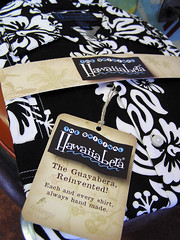
It happens all the time. A client, maybe an old one, maybe a new prospect calls with what, at first glance, appears to be a totally lame or mundane project. Most designers roll their eyes, dish it off to an intern or even worse, crank out a ho-hum solution. Sound familiar? But, what if...
What if, instead of dismissing the project as a no-brainer, you actually put some brainpower into it. What if you approached the project as something that you yourself would actually pick up and read. What if you could turn this predictable, boring nothing into something cool, fun, interesting and possibly great or even collectible. What if you got off your ass, stepped away from the computer and took the tried and true old school approach. That' right, the paper and pencil approach. To me, a blank computer screen is intimidating. Sure, you can easily set up a document, pick a nice font, throw in a picture and call it done, but then what? Any No Talent Ass Clown can do that - just look at all the people calling themselves designers simply because they have a computer. Where's the concept? Where's the idea? Where's the beef?
The computer can be a great tool to enhance any idea but the idea needs to come first. And ideas are funny things - they don't work unless you do. Starting any project in front of your computer is the first step to joining the masses of the NTAC. It's lazy, it's predictable and the results are about as interesting as made for TV movie. What if you started a project with an idea, your brain, a pencil and a blank piece of paper? You know, the work part. And yes, the hard part. Ideas building upon ideas until you arrive upon something that truly works. Most successful projects and ventures start this way so it's really no mystery as to why some things work and others just, well, suck. There's really no better way to approach a project or task, old or new, and the results are almost always worth the effort of actually doing it right. Who knows, you might even exceeded both the client's expectations and yours as well! Even if your big idea gets shot down, at least you'll be stretching your creativity muscles and perhaps one step closer to discovering a gem of a project for future use - either way, it's never wasted time. It's all in how you approach it. Lowly production job, or meaningful project? Half empty or half full. It's your monkey.
HMK
In Ron Suskind's best-seller The Price of Loyalty, Paul O'Neill recounts his first meeting as U.S. Treasury Secretary with President George W. Bush. As their conversation progresses, O'Neill is confounded by the President's obvious lack of engagement.
Late in the meeting, O'Neill says, "All right, Mr. President, maybe to finish up we could talk about global climate change ...." O'Neill had provided a booklet titled "Science, Politics & Global Climate Change" to prep the President for this discussion. "... O'Neill had sent over a booklet Alcoa had produced in 1998 with the text of an extensive speech he had given—a thorough analysis of the issue .... Bush seemed to indicate with a tilt of the head that he had read it. But, again, O'Neill wasn't certain."
I felt a rush of surprise reading this—not to learn that G.W. wasn't on the ball, but to realize that I had designed the booklet that the President of the United States had ignored.
Well, heck! That's cool. But there's a more interesting story to "Science, Politics & Global Climate Change"—and a good design lesson, too.
The job didn't start out as anything like a design project. My longtime Alcoa client called to say that O'Neill, then Alcoa's chairman, had given an important speech on one of his most passionate interests: global climate change. O'Neill wanted the speech printed and distributed. Could I set the text in a nice typeface?
This was truly more a skilled production job than a design project. A few days later, I delivered what was requested: nice type, nice paper, 8 1/2 x11in. But I also prepared an alternative: a small, 32-page book with an illustrated cover. I was betting there might be a difference between what my client requested and what O'Neill really wanted.
What did O'Neill say he wanted? A speech reprint. But what did he actually want? He wanted the print equivalent of his speech: an eloquent, compelling call to action on an urgent issue, meant to engage the mind, expand the reader's understanding and inspire change.
I proposed a chunky, 6x7in., perfect-bound mini-book with a cover illustration by Rob Day. O'Neill's words, so energetic in person, received equal impact in print through bold typography, bright subheads and readable layouts. A business guru once said, "Satisfy the unexpressed wish." "Science, Politics & Global Climate Change" satisfied O'Neill's unexpressed wish. Hearing what the client really wanted created a design project for me—when before there was none.
I've had other experiences in creating a project from nothing, frequently enough to have formed a few conclusions. First: Don't think about the money. Not your fees, not the budget, not the print costs. If the solution answers the need in a way that delights and surprises, the money often works out.
Second: Be sure to also present a solution that responds to the client's request. If you disregard what he specified, your client might take offense. Do what is requested and do what it ought to be.
Third: Don't presume your brilliant solution will be accepted. If it never gets out of the gate, your client will appreciate the extra effort nonetheless. And finally: Cultivate a mindset that constantly goes beyond the client's stated needs. Listen carefully and critically, and dream on your client's behalf. Satisfy the unexpressed wish.
Thanks to Rick Landesberg
Monday, September 20, 2004


Wednesday, September 15, 2004
Analog Your Ipod
Thanks to Nobuyuki Hayashia
In the back streets of Tokyo's upscale Aoyama district, there's a little antique store quite unlike all the others in the neighborhood. Located on the second floor of an old apartment building, And Up specializes in selling antique radios and, of all things, iPods.
The store's owner, 50-year-old Takeyuki Ishii, recommends plugging an iPod into an FM transmitter, such as Griffin Technology's iTrip, and listening to music through the speaker of an antique radio.
Ishii believes there is aural magic in the combination of the very old with the very new. Playing an iPod through an old radio or tube-driven amplifier gives it a special warmth and atmosphere, he says.
"What we are suggesting here is an old-and-new way to listen to music," Ishii said. "In electronics stores, you find the latest speakers with crisp, clear and accurate sounds. By contrast, most of the radios we have are not even stereo. The sounds are hardly clear. You might even hear some noises, and radios with tubes change their sounds as the tube warms up."
Ishii insists the antique equipment creates an atmosphere that has been forgotten. The softer tones ease listeners and make them feel warm and relaxed.
"Listening to their sounds, I can recall scenes from my childhood," he said.
Ishii also argues that the quality of CDs and today's speakers are so good, they simply reveal the limitations of poor recordings, especially older music.
By contrast, antique radios hide defects nicely with their vague but warm sounds.
Ishii, a former sculptor, wasn't always a fan of antique radios. He discovered their appeal when researching a way to listen to CDs in his classic Mercedes Benz.
Ishii didn't want to replace the original, aging audio system. A friend suggested he use an iPod with the iTrip transmitter. He loved how they worked, as well as the sound they produced.
He then tried the iPod/iTrip combination with his old stereo system and that was when he had the revelation. He loved it so much that he felt obliged to share the experience with more people.
In March, he opened And Up in Aoyama, a Tokyo neighborhood known for its many antiques stores. Ishii owns another Tokyo antiques shop selling Arita-yaki, a type of Japanese porcelain.
However, business at And Up has hardly been booming. Plenty of customers drop by the store, and despite loving the sound, few seem willing to buy the pricey antiques.
"It is hardly successful as a business," Ishii shrugged.
One customer listened intently to several antique radios but instead of buying one, asked Ishii where he could get his old stereo system repaired. Ishii promised to arrange it.
"That is only natural," said Ishii.
Ishii said instead of buying from him, some potential customers pick up bargain equipment on Internet auctions. Many of the shop's visitors are middlemen who prefer talking to buying, and will stay many hours telling stories of their favorite old radios. Ishii seems content with the arrangement.
"I am happy that they like the idea," he said.
Nonetheless, Ishii is hoping to attract a younger audience unfamiliar with the joys of his aural artifacts. He has a new tactic: pairing modern monitor speakers (the kind often used in recording studios) with antique amplifiers and iPods.
Younger customers, Ishii said, are greatly excited by the soft sounds and the glow of the tubes. It's all new to them, Ishii said.
"I want these kids to know the great culture we had as well as some of the great engineering and design work of the mid-20th century," he said. "The industrial goods of today become obsolete too fast. We aren't given enough time to digest them. I think now is a good time to stop, look back and learn from some of the great work we have begun to forget."
It may be working. Hiroaki Imai, a 30-something customer, said, "I like antique electronic stuff.... I think these radios have better aesthetics than today's gizmos."
That's Right,
HMK

In the back streets of Tokyo's upscale Aoyama district, there's a little antique store quite unlike all the others in the neighborhood. Located on the second floor of an old apartment building, And Up specializes in selling antique radios and, of all things, iPods.
The store's owner, 50-year-old Takeyuki Ishii, recommends plugging an iPod into an FM transmitter, such as Griffin Technology's iTrip, and listening to music through the speaker of an antique radio.
Ishii believes there is aural magic in the combination of the very old with the very new. Playing an iPod through an old radio or tube-driven amplifier gives it a special warmth and atmosphere, he says.
"What we are suggesting here is an old-and-new way to listen to music," Ishii said. "In electronics stores, you find the latest speakers with crisp, clear and accurate sounds. By contrast, most of the radios we have are not even stereo. The sounds are hardly clear. You might even hear some noises, and radios with tubes change their sounds as the tube warms up."
Ishii insists the antique equipment creates an atmosphere that has been forgotten. The softer tones ease listeners and make them feel warm and relaxed.
"Listening to their sounds, I can recall scenes from my childhood," he said.
Ishii also argues that the quality of CDs and today's speakers are so good, they simply reveal the limitations of poor recordings, especially older music.
By contrast, antique radios hide defects nicely with their vague but warm sounds.
Ishii, a former sculptor, wasn't always a fan of antique radios. He discovered their appeal when researching a way to listen to CDs in his classic Mercedes Benz.
Ishii didn't want to replace the original, aging audio system. A friend suggested he use an iPod with the iTrip transmitter. He loved how they worked, as well as the sound they produced.
He then tried the iPod/iTrip combination with his old stereo system and that was when he had the revelation. He loved it so much that he felt obliged to share the experience with more people.
In March, he opened And Up in Aoyama, a Tokyo neighborhood known for its many antiques stores. Ishii owns another Tokyo antiques shop selling Arita-yaki, a type of Japanese porcelain.
However, business at And Up has hardly been booming. Plenty of customers drop by the store, and despite loving the sound, few seem willing to buy the pricey antiques.
"It is hardly successful as a business," Ishii shrugged.
One customer listened intently to several antique radios but instead of buying one, asked Ishii where he could get his old stereo system repaired. Ishii promised to arrange it.
"That is only natural," said Ishii.
Ishii said instead of buying from him, some potential customers pick up bargain equipment on Internet auctions. Many of the shop's visitors are middlemen who prefer talking to buying, and will stay many hours telling stories of their favorite old radios. Ishii seems content with the arrangement.
"I am happy that they like the idea," he said.
Nonetheless, Ishii is hoping to attract a younger audience unfamiliar with the joys of his aural artifacts. He has a new tactic: pairing modern monitor speakers (the kind often used in recording studios) with antique amplifiers and iPods.
Younger customers, Ishii said, are greatly excited by the soft sounds and the glow of the tubes. It's all new to them, Ishii said.
"I want these kids to know the great culture we had as well as some of the great engineering and design work of the mid-20th century," he said. "The industrial goods of today become obsolete too fast. We aren't given enough time to digest them. I think now is a good time to stop, look back and learn from some of the great work we have begun to forget."
It may be working. Hiroaki Imai, a 30-something customer, said, "I like antique electronic stuff.... I think these radios have better aesthetics than today's gizmos."
That's Right,
HMK
Tuesday, September 14, 2004
Buffy: Form of BUNNY. Little Rabbit.
Check out this cool site that not only gives you a brief definition of your first name, it also lists the Top Ten most popular names starting from 1880 through 2003. According to the site, the name Henry has a number of different images: a frail, bookish nerd; an ambitious, independent entrepreneur; or a strong, easygoing farmer. Michael is described as a strong, handsome man who is both a smart, successful hardworker, and an easygoing, lighthearted family man. Hmmm. I guess that pretty much sums me up.
Find My Name
But Buffy? Is that even legal to have as your real name? I just can't see Buffy being taken seriously on something like a birth certificate, passport or a tombstone...
That's Right,
HMK
Henry Michael Karshis
Find My Name
But Buffy? Is that even legal to have as your real name? I just can't see Buffy being taken seriously on something like a birth certificate, passport or a tombstone...
That's Right,
HMK
Henry Michael Karshis
Monday, September 13, 2004
You're Getting Warmer...
Next time you're looking for a Hot Spot in Nice, Hong Kong, San Antonio or anywhere else on the planet, save yourself some time and check here first:
www.wi-fihotspotlist.com
www.wi-fizone.org
www.jiwire.com
www.wi-fi-zones.com
www.totalhotspots.com
www.nodedb.com
www.hotspothaven.com
www.geektools.com/geektels
That's Right,
HMK

www.wi-fihotspotlist.com
www.wi-fizone.org
www.jiwire.com
www.wi-fi-zones.com
www.totalhotspots.com
www.nodedb.com
www.hotspothaven.com
www.geektools.com/geektels
That's Right,
HMK
Thursday, September 09, 2004
Old School Rules!
A Digital Generation's Analog Chic
By JULIET CHUNG
When most people shop for a cellphone, considerations like aesthetics, size and features usually top the list. For most, the sleeker, the smaller and the more fully loaded the phone, the better.
But when Eugene Auh went trawling at eBay for a cheap cellphone last month, he searched for one with a decidedly anachronistic bent.
"I wanted the biggest cellphone I could find," said Mr. Auh, a 27-year-old investment manager in Philadelphia. His winning bid of $25.95 bought a Motorola DynaTac, a 1980's-era "brick" cellphone that fits more comfortably in a backpack than in a suit pocket.
Rather than subtracting from its charm, the phone's cumbersome size - it is roughly eight by two by three inches - is its main attraction, Mr. Auh said. Indeed, he plans to take the phone to work, to the gym and even to his nighttime haunts.
"Imagine this: I'll walk into a bar and ask for a girl's number, then break out my phone," he said. "How could you say no to that?"
While his attraction to digital relics may seem unusual, Mr. Auh is part of what appears to be a growing group of 20-somethings embracing yesterday's designs. These fans of retro technology are using ingenuity to find or fashion the perfect cellphones, gaming systems and computer cases - in effect ushering back a time they experienced only barely, if at all.
Take Ali Rahimi, 28, a graduate student at the Massachusetts Institute of Technology. Mr. Rahimi became so fed up last year with what he called the "impersonal, unthinking" nature of modern communication that he attached an old-fashioned handset to his cellphone. The result was a cellphone-handset whose receiver restored the deliberate nature of communication, he said.
"When you're talking to your grandma on an old-style handset, you're very aware of its presence," Mr. Rahimi said. "The handset has been going through about a hundred years of evolution in design and, pretty much for what they do, they have the perfect shape."
In contrast, he said, the rectangular design of modern cellphones encourages talking at the phone, rather than into it. "You just talk and the cellphone picks up the sounds," he said.
The easy, ironic social commentary that ownership of such a device allows caused Amanda McCorquodale to pay $36 for a Pokia handset in a kitschy avocado green. The Pokia line, an assortment of vintage handsets that plug into cellphones along the same creative lines as Mr. Rahimi's model, is produced in limited quantities in Britain and is sold at eBay.
Stating an opinion that might warm the hearts of an older generation, Ms. McCorquodale, 25, a textbook editor who lives in Brooklyn, said, "I just think people use their cellphones a ridiculous amount." The handset is an easy way of mocking the phone's ubiquity while also allowing her a quiet protest "against having to use a cellphone all the time, but not wanting to."
The popularity of retro technology simply reflects, in part, how sophisticated modern technology has become, said Steven Lubar, a Brown University professor of American civilization who specializes in the history of technology.
When the available technology converges at a certain performance threshold, Dr. Lubar said, consumers begin to base their choices on nontechnical considerations like fashion to express their identity. Thus the appeal of retro gadgets.
"There's something liberating about picking and choosing technological styles from the past as a means of self-expression," Dr. Lubar said by e-mail. "Perhaps there's a bit of self-conscious irony here, too."
For some, retro joy comes in bulkier, less technologically advanced packages. At eBay last year, John Henry Flood, a 21-year-old Harvard sophomore, bought the 1985 Nintendo Entertainment System along with the Atari 2600, a console that makes the Nintendo system appear positively cutting edge. Covered in wood-grain paneling and plastic molding, the first Atari 2600 made its debut in 1977 and was the first widely popular gaming system, used to play video games like Space Invaders and Asteroids.
Another reminder of its age is a switch that gives gamers the option to optimize color resolution for black-and-white televisions.
But the vintage nature of the machines means that games are cheap and easily grasped by a wide audience. Mr. Flood bought the first-generation consoles mainly so he could play video games with his college friends, who he said were more inclined to play low-tech games like Super Mario Brothers than to invest the time needed to play today's more complex games.
Then there is the "wow" factor.
"Everyone's like, oh my gosh, where'd you get these?" Mr. Flood said. While he also owns a Microsoft Xbox and a Sony PlayStation 2, the retro consoles see far more playing time in his dorm room, he said.
For those who prize the convenience of today's technology while preferring the look of their parents' gadgets, several manufacturers have stepped in with hybrid alternatives.
Polyconcept USA offers a line of retro turntables distinguished by the abundance of wood and vintage touches like analog radio dials. But closer inspection reveals discreet CD slots, light-emitting-diode displays and built-in stereo speakers.
The subtleness of the modern amenities is part of a larger effort to evoke the look of bygone eras, said Brian Tompkins, Polyconcept's national accounts manager for electronics. For example, the product teams that oversaw the design of the RCA Newport Turntable fussed over the smallest details - "down to the control knobs and the brass faceplates that have representative etchings and designs," Mr. Tompkins said.
The Victrola-style turntable even has a functioning metal horn, as well as a decorative crank (the turntable is AC-powered).
And for something retro to put into those CD slots, Verbatim has come out with a series of inky-black recordable compact discs that look like miniature 45-r.p.m. vinyl records, complete with the discs' grooved look and brightly colored labels.
A more homespun effort is being undertaken by Andrew Fader, 15, and Karthik Seshan, 16, two high school students in Briarcliff Manor, N.Y. The pair recently founded Facade Computer, which builds modern computers into retro casings.
Consumers can order desktops or laptops while customizing specifics like the size of the hard drive and memory. After ordering the components wholesale - Mr. Fader estimates that such customized computers would cost $500 to $1,000 depending on the specifics - the students build the parts into the customer's retro casing of choice.
"The idea is to get the aesthetics of older technology and mix it with the functionality of newer technology," Mr. Fader said.
"Companies today like to make you think that cases that are sleek and gray and beige look good, but they don't, really. It's things that look more natural, that go with your house and are made of wood, that are more appealing."
The pair's first conversion, at their Web site (facadecomputer.com), is of a computer built into the mahogany casing of a 1937 Emerson 215 tube radio that they rescued from Mr. Fader's attic. Other possibilities for casings include old briefcases, typewriters and televisions. "The idiom 'one man's trash is another man's treasure' really applies here," Mr. Fader said. "There's a lot of stuff that people really don't realize the value of."
The rebellion against today's gadgets may only go so far, though. For those who prefer vintage technology, a major drawback is the hassle of dealing with technology that is, well, vintage.
For Mr. Flood, that means blowing the dust out of old Nintendo game cartridges. Today's games, which come on CD's, do not require such exertions.
Mr. Auh, meanwhile, is holding off on his romantic overtures until he finds a service provider that can support his antiquated cellphone. But once he does, the women of Philadelphia will need to act quickly, Mr. Auh warned.
"This cellphone only stores nine numbers, ladies," he said, "so it's first come, first served."

By JULIET CHUNG
When most people shop for a cellphone, considerations like aesthetics, size and features usually top the list. For most, the sleeker, the smaller and the more fully loaded the phone, the better.
But when Eugene Auh went trawling at eBay for a cheap cellphone last month, he searched for one with a decidedly anachronistic bent.
"I wanted the biggest cellphone I could find," said Mr. Auh, a 27-year-old investment manager in Philadelphia. His winning bid of $25.95 bought a Motorola DynaTac, a 1980's-era "brick" cellphone that fits more comfortably in a backpack than in a suit pocket.
Rather than subtracting from its charm, the phone's cumbersome size - it is roughly eight by two by three inches - is its main attraction, Mr. Auh said. Indeed, he plans to take the phone to work, to the gym and even to his nighttime haunts.
"Imagine this: I'll walk into a bar and ask for a girl's number, then break out my phone," he said. "How could you say no to that?"
While his attraction to digital relics may seem unusual, Mr. Auh is part of what appears to be a growing group of 20-somethings embracing yesterday's designs. These fans of retro technology are using ingenuity to find or fashion the perfect cellphones, gaming systems and computer cases - in effect ushering back a time they experienced only barely, if at all.
Take Ali Rahimi, 28, a graduate student at the Massachusetts Institute of Technology. Mr. Rahimi became so fed up last year with what he called the "impersonal, unthinking" nature of modern communication that he attached an old-fashioned handset to his cellphone. The result was a cellphone-handset whose receiver restored the deliberate nature of communication, he said.
"When you're talking to your grandma on an old-style handset, you're very aware of its presence," Mr. Rahimi said. "The handset has been going through about a hundred years of evolution in design and, pretty much for what they do, they have the perfect shape."
In contrast, he said, the rectangular design of modern cellphones encourages talking at the phone, rather than into it. "You just talk and the cellphone picks up the sounds," he said.
The easy, ironic social commentary that ownership of such a device allows caused Amanda McCorquodale to pay $36 for a Pokia handset in a kitschy avocado green. The Pokia line, an assortment of vintage handsets that plug into cellphones along the same creative lines as Mr. Rahimi's model, is produced in limited quantities in Britain and is sold at eBay.
Stating an opinion that might warm the hearts of an older generation, Ms. McCorquodale, 25, a textbook editor who lives in Brooklyn, said, "I just think people use their cellphones a ridiculous amount." The handset is an easy way of mocking the phone's ubiquity while also allowing her a quiet protest "against having to use a cellphone all the time, but not wanting to."
The popularity of retro technology simply reflects, in part, how sophisticated modern technology has become, said Steven Lubar, a Brown University professor of American civilization who specializes in the history of technology.
When the available technology converges at a certain performance threshold, Dr. Lubar said, consumers begin to base their choices on nontechnical considerations like fashion to express their identity. Thus the appeal of retro gadgets.
"There's something liberating about picking and choosing technological styles from the past as a means of self-expression," Dr. Lubar said by e-mail. "Perhaps there's a bit of self-conscious irony here, too."
For some, retro joy comes in bulkier, less technologically advanced packages. At eBay last year, John Henry Flood, a 21-year-old Harvard sophomore, bought the 1985 Nintendo Entertainment System along with the Atari 2600, a console that makes the Nintendo system appear positively cutting edge. Covered in wood-grain paneling and plastic molding, the first Atari 2600 made its debut in 1977 and was the first widely popular gaming system, used to play video games like Space Invaders and Asteroids.
Another reminder of its age is a switch that gives gamers the option to optimize color resolution for black-and-white televisions.
But the vintage nature of the machines means that games are cheap and easily grasped by a wide audience. Mr. Flood bought the first-generation consoles mainly so he could play video games with his college friends, who he said were more inclined to play low-tech games like Super Mario Brothers than to invest the time needed to play today's more complex games.
Then there is the "wow" factor.
"Everyone's like, oh my gosh, where'd you get these?" Mr. Flood said. While he also owns a Microsoft Xbox and a Sony PlayStation 2, the retro consoles see far more playing time in his dorm room, he said.
For those who prize the convenience of today's technology while preferring the look of their parents' gadgets, several manufacturers have stepped in with hybrid alternatives.
Polyconcept USA offers a line of retro turntables distinguished by the abundance of wood and vintage touches like analog radio dials. But closer inspection reveals discreet CD slots, light-emitting-diode displays and built-in stereo speakers.
The subtleness of the modern amenities is part of a larger effort to evoke the look of bygone eras, said Brian Tompkins, Polyconcept's national accounts manager for electronics. For example, the product teams that oversaw the design of the RCA Newport Turntable fussed over the smallest details - "down to the control knobs and the brass faceplates that have representative etchings and designs," Mr. Tompkins said.
The Victrola-style turntable even has a functioning metal horn, as well as a decorative crank (the turntable is AC-powered).
And for something retro to put into those CD slots, Verbatim has come out with a series of inky-black recordable compact discs that look like miniature 45-r.p.m. vinyl records, complete with the discs' grooved look and brightly colored labels.
A more homespun effort is being undertaken by Andrew Fader, 15, and Karthik Seshan, 16, two high school students in Briarcliff Manor, N.Y. The pair recently founded Facade Computer, which builds modern computers into retro casings.
Consumers can order desktops or laptops while customizing specifics like the size of the hard drive and memory. After ordering the components wholesale - Mr. Fader estimates that such customized computers would cost $500 to $1,000 depending on the specifics - the students build the parts into the customer's retro casing of choice.
"The idea is to get the aesthetics of older technology and mix it with the functionality of newer technology," Mr. Fader said.
"Companies today like to make you think that cases that are sleek and gray and beige look good, but they don't, really. It's things that look more natural, that go with your house and are made of wood, that are more appealing."
The pair's first conversion, at their Web site (facadecomputer.com), is of a computer built into the mahogany casing of a 1937 Emerson 215 tube radio that they rescued from Mr. Fader's attic. Other possibilities for casings include old briefcases, typewriters and televisions. "The idiom 'one man's trash is another man's treasure' really applies here," Mr. Fader said. "There's a lot of stuff that people really don't realize the value of."
The rebellion against today's gadgets may only go so far, though. For those who prefer vintage technology, a major drawback is the hassle of dealing with technology that is, well, vintage.
For Mr. Flood, that means blowing the dust out of old Nintendo game cartridges. Today's games, which come on CD's, do not require such exertions.
Mr. Auh, meanwhile, is holding off on his romantic overtures until he finds a service provider that can support his antiquated cellphone. But once he does, the women of Philadelphia will need to act quickly, Mr. Auh warned.
"This cellphone only stores nine numbers, ladies," he said, "so it's first come, first served."
The Real Underground Cinema
Jon Henley in Paris
Wednesday September 8, 2004
The Guardian
Police in Paris have discovered a fully equipped cinema-cum-
restaurant in a large and previously uncharted cavern underneath the
capital's chic 16th arrondissement.
Officers admit they are at a loss to know who built or used one of
Paris's most intriguing recent discoveries.
"We have no idea whatsoever," a police spokesman said.
"There were two swastikas painted on the ceiling, but also celtic
crosses and several stars of David, so we don't think it's
extremists. Some sect or secret society, maybe. There are any number
of possibilities."
Members of the force's sports squad, responsible - among other tasks -
for policing the 170 miles of tunnels, caves, galleries and
catacombs that underlie large parts of Paris, stumbled on the complex
while on a training exercise beneath the Palais de Chaillot, across
the Seine from the Eiffel Tower.
After entering the network through a drain next to the Trocadero, the
officers came across a tarpaulin marked: Building site, No access.
Behind that, a tunnel held a desk and a closed-circuit TV camera set
to automatically record images of anyone passing. The mechanism also
triggered a tape of dogs barking, "clearly designed to frighten
people off," the spokesman said.
Further along, the tunnel opened into a vast 400 sq metre cave some
18m underground, "like an underground amphitheatre, with terraces cut
into the rock and chairs".
There the police found a full-sized cinema screen, projection
equipment, and tapes of a wide variety of films, including 1950s film
noir classics and more recent thrillers. None of the films were
banned or even offensive, the spokesman said.
A smaller cave next door had been turned into an informal restaurant
and bar. "There were bottles of whisky and other spirits behind a
bar, tables and chairs, a pressure-cooker for making couscous," the
spokesman said.
"The whole thing ran off a professionally installed electricity
system and there were at least three phone lines down there."
Three days later, when the police returned accompanied by experts
from the French electricity board to see where the power was coming
from, the phone and electricity lines had been cut and a note was
lying in the middle of the floor: "Do not," it said, "try to find
us."
The miles of tunnels and catacombs underlying Paris are essentially
former quarries, dating from Roman times, from which much of the
stone was dug to build the city.
Today, visitors can take guided tours around a tightly restricted
section, Les Catacombes, where the remains of up to six million
Parisians were transferred from overcrowded cemeteries in the late
1700s.
But since 1955, for security reasons, it has been an offence
to "penetrate into or circulate within" the rest of the network.
There exist, however, several secretive bands of so-called
cataphiles, who gain access to the tunnels mainly after dark, through
drains and ventilation shafts, and hold what in the popular
imagination have become drunken orgies but are, by all accounts,
innocent underground picnics.
The recent discovery of three newly enlarged tunnels underneath the
capital's high-security La Santé prison was put down to the
activities of one such group, and another, iden tifying itself as the
Perforating Mexicans, last night told French radio the subterranean
cinema was its work.
Patrick Alk, a photographer who has published a book on the urban
underground exploration movement and claims to be close to the group,
told RTL radio the cavern's discovery was "a shame, but not the end
of the world". There were "a dozen more where that one came from," he
said.
"You guys have no idea what's down there."
I'm There!
HMK
Wednesday September 8, 2004
The Guardian
Police in Paris have discovered a fully equipped cinema-cum-
restaurant in a large and previously uncharted cavern underneath the
capital's chic 16th arrondissement.
Officers admit they are at a loss to know who built or used one of
Paris's most intriguing recent discoveries.
"We have no idea whatsoever," a police spokesman said.
"There were two swastikas painted on the ceiling, but also celtic
crosses and several stars of David, so we don't think it's
extremists. Some sect or secret society, maybe. There are any number
of possibilities."
Members of the force's sports squad, responsible - among other tasks -
for policing the 170 miles of tunnels, caves, galleries and
catacombs that underlie large parts of Paris, stumbled on the complex
while on a training exercise beneath the Palais de Chaillot, across
the Seine from the Eiffel Tower.
After entering the network through a drain next to the Trocadero, the
officers came across a tarpaulin marked: Building site, No access.
Behind that, a tunnel held a desk and a closed-circuit TV camera set
to automatically record images of anyone passing. The mechanism also
triggered a tape of dogs barking, "clearly designed to frighten
people off," the spokesman said.
Further along, the tunnel opened into a vast 400 sq metre cave some
18m underground, "like an underground amphitheatre, with terraces cut
into the rock and chairs".
There the police found a full-sized cinema screen, projection
equipment, and tapes of a wide variety of films, including 1950s film
noir classics and more recent thrillers. None of the films were
banned or even offensive, the spokesman said.
A smaller cave next door had been turned into an informal restaurant
and bar. "There were bottles of whisky and other spirits behind a
bar, tables and chairs, a pressure-cooker for making couscous," the
spokesman said.
"The whole thing ran off a professionally installed electricity
system and there were at least three phone lines down there."
Three days later, when the police returned accompanied by experts
from the French electricity board to see where the power was coming
from, the phone and electricity lines had been cut and a note was
lying in the middle of the floor: "Do not," it said, "try to find
us."
The miles of tunnels and catacombs underlying Paris are essentially
former quarries, dating from Roman times, from which much of the
stone was dug to build the city.
Today, visitors can take guided tours around a tightly restricted
section, Les Catacombes, where the remains of up to six million
Parisians were transferred from overcrowded cemeteries in the late
1700s.
But since 1955, for security reasons, it has been an offence
to "penetrate into or circulate within" the rest of the network.
There exist, however, several secretive bands of so-called
cataphiles, who gain access to the tunnels mainly after dark, through
drains and ventilation shafts, and hold what in the popular
imagination have become drunken orgies but are, by all accounts,
innocent underground picnics.
The recent discovery of three newly enlarged tunnels underneath the
capital's high-security La Santé prison was put down to the
activities of one such group, and another, iden tifying itself as the
Perforating Mexicans, last night told French radio the subterranean
cinema was its work.
Patrick Alk, a photographer who has published a book on the urban
underground exploration movement and claims to be close to the group,
told RTL radio the cavern's discovery was "a shame, but not the end
of the world". There were "a dozen more where that one came from," he
said.
"You guys have no idea what's down there."
I'm There!
HMK
Wednesday, September 08, 2004
I Don't Mind The Gap
Here's the latest, thanks to ipodlounge.com. the site that confirms the fact that there are in fact bigger iPod freaks than I. Thank God! People are soooo into this bitchin' audio gizmo, and rightly so, it's crazy that I can walk around with 10,000 songs in my pocket. But, there are many that have the fever far worse than this music lover. And I'm praying for them and their families. There are also a lot of third party iPod venders and a quite a few of those are making a shitload of money thinking of ways to utilize, accessories, customized and, yes, capitalize (TR!), on this thing we call iPod.
-Back to our main story-
"Gapless Playback for Apple iPod" online petition
It says that iPod user Michael Barca has started a "Gapless Playback for Apple iPod" online petition. Gapless playback has been heavily discussed within the ipodlounge forums and Michael hopes that Apple will take notice.
Gapless playback is the playback of long songs or DJ mixes in a continuous stream without audible gaps.
I've never experienced this gap effect. And if this is about the memory buffer the iPod HD has to spin up on occasion, sfw? It's not like that gap you had between the 4 tracks on your 8 Track, (sounds like a line from a Deathray Davies song) or (Oh no, here comes another petition: we paid for a MONO 8 Track and you only gave us 4 tracks!)
But really, my Lani Makana, (G3 40 GB ipod) has a bunch of dj mixes that live in my supertikicoffeehouse Playlist, and I really don't notice any pause between songs. But, I do put a lot of custom and random transitions I've created/found, that are sort of auditory juxtapositions that keep things interesting and so, I guess I'm not really focusing on gaps as much as I anticipate them. (These cool transitions are great between just about anything, Know what I mean, Vern?) . Thus, MindGap:The Transition Blog premiering Winter 2004. More on that later...
THE PETITION
"We, the undersigned, are requesting that gapless playback be integrated into the iPod via a firmware upgrade in the near future.
We want to show you, Apple, that there exists a large amount of iPod owners and possible future iPod owners, who desperately want this to be supported in iPod.
Perhaps you don't realize how important this is to iPod owners, but by this petition we hope to show you how essential this feature is to any digital audio player."
END OFF PETITION (unless you're going to sign it.)
What?
I still feel this petition is missing something. I'll sign it if this means cross-fade as an option. And while you're at it Steve - what about the transfer of user-made equalizers? Then, we'd truly have iTunes To Go. Or iGo! Quick, somebody ©iGo!, NOW!
You heard that here first, folks!
That's Right,
HMK
-Back to our main story-
"Gapless Playback for Apple iPod" online petition
It says that iPod user Michael Barca has started a "Gapless Playback for Apple iPod" online petition. Gapless playback has been heavily discussed within the ipodlounge forums and Michael hopes that Apple will take notice.
Gapless playback is the playback of long songs or DJ mixes in a continuous stream without audible gaps.
I've never experienced this gap effect. And if this is about the memory buffer the iPod HD has to spin up on occasion, sfw? It's not like that gap you had between the 4 tracks on your 8 Track, (sounds like a line from a Deathray Davies song) or (Oh no, here comes another petition: we paid for a MONO 8 Track and you only gave us 4 tracks!)
But really, my Lani Makana, (G3 40 GB ipod) has a bunch of dj mixes that live in my supertikicoffeehouse Playlist, and I really don't notice any pause between songs. But, I do put a lot of custom and random transitions I've created/found, that are sort of auditory juxtapositions that keep things interesting and so, I guess I'm not really focusing on gaps as much as I anticipate them. (These cool transitions are great between just about anything, Know what I mean, Vern?) . Thus, MindGap:The Transition Blog premiering Winter 2004. More on that later...
THE PETITION
"We, the undersigned, are requesting that gapless playback be integrated into the iPod via a firmware upgrade in the near future.
We want to show you, Apple, that there exists a large amount of iPod owners and possible future iPod owners, who desperately want this to be supported in iPod.
Perhaps you don't realize how important this is to iPod owners, but by this petition we hope to show you how essential this feature is to any digital audio player."
END OFF PETITION (unless you're going to sign it.)
What?
I still feel this petition is missing something. I'll sign it if this means cross-fade as an option. And while you're at it Steve - what about the transfer of user-made equalizers? Then, we'd truly have iTunes To Go. Or iGo! Quick, somebody ©iGo!, NOW!
You heard that here first, folks!
That's Right,
HMK
Tuesday, September 07, 2004
Kon-Tiki To Sail Again!
OSLO, Norway (AP) -- Nearly 60 years after Thor Heyerdahl sailed across the Pacific Ocean in an epic journey aboard the balsa raft Kon-Tiki, a team that includes his grandson said they hope to repeat the feat next year -- with a 21th-Century twist.
In 1947, Heyerdahl and his team sailed the raft, with the most basic of equipment, 8,000 kilometers (4,900 miles) from Peru to Polynesia in 101 days to prove Heyerdahl's theory that ancient mariners may have migrated across vast stretches of ocean.
Heyerdahl, who died at the age of 87 in 2002, documented the harrowing voyage in the best-selling book "Kon-Tiki" and in an Oscar-winning documentary film, both of which helped make him one of the most famous Norwegians in contemporary history.
The new team, backed by Norway's Environment Ministry and endorsed by the Kon-Tiki museum, said Monday that they hope to follow the route of the epic voyage aboard a balsa raft named for Tangaroa, the Polynesian god of the ocean.
Although the Tangaroa will be primitive, expedition member Inge Meloey said it will showcase modern technology. The cabin roof will have solar panels affixed to it to generate electricity, he said, and the raft will have satellite navigation and communications, and transmit Internet updates throughout the voyage, set to start April 28, 2005.
"Kon-Tiki is one of the world's best-known expeditions," said team leader Torgeir Saeverud Higraff, a teacher and journalist, at the Kon-Tiki museum in Oslo. They wanted to carry on Heyerdahl's tradition, he said.
"It is difficult to follow in the footsteps of your childhood hero," said Meloey, 29.
Higraff, 31, said environmental change will be one of the greatest challenges to the 6.2 million kroner ($900,000) expedition, even before it starts.
For example, he said the rain forest in Peru where Heyerdahl harvested his balsa logs, is gone, and the river he used to float them to the sea has slowed to a trickle. The team plans to cut balsa trees in a nearby forest, starting in December.
The crew plans to take the same amount of time as the Kon-Tiki and, as on the first trip, the sailors will include five Norwegians, a Swede and a parrot.
The team wants to honor Heyerdahl and to draw attention to environmental threats on land and at sea. They plan to take scientific samples along the way, test new theories on ancient navigational techniques and make a contribution to Norway's celebration of the 100th anniversary of independence from Sweden in 1905.
"I had to say yes, to satisfy my sense of adventure," said Olav Heyerdahl, the famous Norwegian's 27-year-old grandson, who spoke near the original Kon-Tiki raft at the museum.
The younger Heyerdahl -- a carpenter, building engineer and diver _ will be responsible for building the raft and maintaining it during the trip.
At a news conference, the late adventurer's son, Thor Heyerdahl Jr., said his father would have been delighted by the project and "his own grandson being part of it would have made him very happy."
The original Kon-Tiki was largely subject to the whim of wind and currents because it was not possible to sail it against the wind. At the end of its journey, the raft crashed onto a reef because the crew couldn't change course.
The modern team has found techniques for steering the boat they hope will make it possible for them to steer it exactly where they want to go: Tahiti.
Meloey said they are also using all available technology to reduce the risks "but crossing 8,000 kilometers (4,900 miles) of water on a raft cannot be done without danger."
The Kon-Tiki trip had been intended to support Heyerdahl's theory that the South Sea Islands were settled by explorers from pre-Incan South America. The prevailing theory is that Polynesia was settled from Southeast Asia.
The team includes Swedish photographer-filmmaker Anders Berg, 41, and Norwegian biologist Dag Oppen-Berntsen, 44.
A sixth member is being sought, but the qualifications are likely to rule out most applicants: "A Norwegian to handle navigation and sails. A real Old Salt."

In 1947, Heyerdahl and his team sailed the raft, with the most basic of equipment, 8,000 kilometers (4,900 miles) from Peru to Polynesia in 101 days to prove Heyerdahl's theory that ancient mariners may have migrated across vast stretches of ocean.
Heyerdahl, who died at the age of 87 in 2002, documented the harrowing voyage in the best-selling book "Kon-Tiki" and in an Oscar-winning documentary film, both of which helped make him one of the most famous Norwegians in contemporary history.
The new team, backed by Norway's Environment Ministry and endorsed by the Kon-Tiki museum, said Monday that they hope to follow the route of the epic voyage aboard a balsa raft named for Tangaroa, the Polynesian god of the ocean.
Although the Tangaroa will be primitive, expedition member Inge Meloey said it will showcase modern technology. The cabin roof will have solar panels affixed to it to generate electricity, he said, and the raft will have satellite navigation and communications, and transmit Internet updates throughout the voyage, set to start April 28, 2005.
"Kon-Tiki is one of the world's best-known expeditions," said team leader Torgeir Saeverud Higraff, a teacher and journalist, at the Kon-Tiki museum in Oslo. They wanted to carry on Heyerdahl's tradition, he said.
"It is difficult to follow in the footsteps of your childhood hero," said Meloey, 29.
Higraff, 31, said environmental change will be one of the greatest challenges to the 6.2 million kroner ($900,000) expedition, even before it starts.
For example, he said the rain forest in Peru where Heyerdahl harvested his balsa logs, is gone, and the river he used to float them to the sea has slowed to a trickle. The team plans to cut balsa trees in a nearby forest, starting in December.
The crew plans to take the same amount of time as the Kon-Tiki and, as on the first trip, the sailors will include five Norwegians, a Swede and a parrot.
The team wants to honor Heyerdahl and to draw attention to environmental threats on land and at sea. They plan to take scientific samples along the way, test new theories on ancient navigational techniques and make a contribution to Norway's celebration of the 100th anniversary of independence from Sweden in 1905.
"I had to say yes, to satisfy my sense of adventure," said Olav Heyerdahl, the famous Norwegian's 27-year-old grandson, who spoke near the original Kon-Tiki raft at the museum.
The younger Heyerdahl -- a carpenter, building engineer and diver _ will be responsible for building the raft and maintaining it during the trip.
At a news conference, the late adventurer's son, Thor Heyerdahl Jr., said his father would have been delighted by the project and "his own grandson being part of it would have made him very happy."
The original Kon-Tiki was largely subject to the whim of wind and currents because it was not possible to sail it against the wind. At the end of its journey, the raft crashed onto a reef because the crew couldn't change course.
The modern team has found techniques for steering the boat they hope will make it possible for them to steer it exactly where they want to go: Tahiti.
Meloey said they are also using all available technology to reduce the risks "but crossing 8,000 kilometers (4,900 miles) of water on a raft cannot be done without danger."
The Kon-Tiki trip had been intended to support Heyerdahl's theory that the South Sea Islands were settled by explorers from pre-Incan South America. The prevailing theory is that Polynesia was settled from Southeast Asia.
The team includes Swedish photographer-filmmaker Anders Berg, 41, and Norwegian biologist Dag Oppen-Berntsen, 44.
A sixth member is being sought, but the qualifications are likely to rule out most applicants: "A Norwegian to handle navigation and sails. A real Old Salt."
Monday, September 06, 2004
Has Bin?
Official: Bin Laden Capture Close
9:35 am PST, 6 September 2004
A top U.S. counterterrorism official said Sunday al Qaeda leader Osama bin Laden is close to being captured, and that U.S. forces have moved closer to him in the past two months.
"If he has a watch, he should be looking at it because the clock is ticking. He will be caught," Joseph Cofer Black, the U.S. State Department coordinator for counterterrorism, told private Geo television network in Pakistan.
Black was asked if recent Pakistani arrests of a number of suspected al Qaeda operatives has led the U.S. closer to bin Laden. "Yes, I would say this," he answered.
"What I tell people, I would be surprised but not necessarily shocked if we wake up tomorrow and he's been caught along with all his lieutenants. That can happen because of the programs and infrastructure in place," Black said.
Black briefed a group of Pakistani journalists after talks with government officials Friday. He said he could not say exactly when bin Laden would be apprehended.
Pakistan has become a key U.S. ally in the war on terror, though initially critics said elements within the government were aiding and abetting al Qaeda and other terrorists.
Recent mass arrests by Pakistan of suspected al Qaeda operatives have led to valuable information for U.S. intelligence officials and agencies searching for bin Laden.
During talks last week, Pakistan asked the U.S. for more helicopters, surveillance gear and communications equipment to help its forces guard border areas near Afghanistan "more efficiently," a Pakistani official at the talks said.
Islamabad has deployed some 70,000 soldiers along its border with Afghanistan, and has also conducted a number of military operations this year in its lawless and largely autonomous tribal regions against al-Qaida suspects.
9:35 am PST, 6 September 2004
A top U.S. counterterrorism official said Sunday al Qaeda leader Osama bin Laden is close to being captured, and that U.S. forces have moved closer to him in the past two months.
"If he has a watch, he should be looking at it because the clock is ticking. He will be caught," Joseph Cofer Black, the U.S. State Department coordinator for counterterrorism, told private Geo television network in Pakistan.
Black was asked if recent Pakistani arrests of a number of suspected al Qaeda operatives has led the U.S. closer to bin Laden. "Yes, I would say this," he answered.
"What I tell people, I would be surprised but not necessarily shocked if we wake up tomorrow and he's been caught along with all his lieutenants. That can happen because of the programs and infrastructure in place," Black said.
Black briefed a group of Pakistani journalists after talks with government officials Friday. He said he could not say exactly when bin Laden would be apprehended.
Pakistan has become a key U.S. ally in the war on terror, though initially critics said elements within the government were aiding and abetting al Qaeda and other terrorists.
Recent mass arrests by Pakistan of suspected al Qaeda operatives have led to valuable information for U.S. intelligence officials and agencies searching for bin Laden.
During talks last week, Pakistan asked the U.S. for more helicopters, surveillance gear and communications equipment to help its forces guard border areas near Afghanistan "more efficiently," a Pakistani official at the talks said.
Islamabad has deployed some 70,000 soldiers along its border with Afghanistan, and has also conducted a number of military operations this year in its lawless and largely autonomous tribal regions against al-Qaida suspects.
Thursday, September 02, 2004
Space signal studied for alien contact
LONDON, England (Reuters) -- An unexplained radio signal from deep space could -- just might be -- contact from an alien civilization, New Scientist magazine reported on Thursday.
The signal, coming from a point between the Pisces and Aries constellations, has been picked up three times by a telescope in Puerto Rico.
There are other explanations besides extraterrestrial contact that may explain the signal. New Scientist said the signal could be generated by a previously unknown astronomical phenomenon or even be a by-product from the telescope itself.
But the mystery beam has excited astronomers across the world.
"If they can see it four, five or six times it really begins to get exciting," Jocelyn Bell Burnell of the University of Bath in western England told the magazine.
It was broadcast on the main frequency at which the universe's most common element, hydrogen, absorbs and emits energy, and which astronomers say is the most likely means by which aliens would advertise their presence.
The potentially extraterrestrial signals were picked up through the SETI+home project, which uses programs running as screensavers on millions of personal computers worldwide to sift through the huge amount of data picked up by the telescope.
The signal, coming from a point between the Pisces and Aries constellations, has been picked up three times by a telescope in Puerto Rico.
There are other explanations besides extraterrestrial contact that may explain the signal. New Scientist said the signal could be generated by a previously unknown astronomical phenomenon or even be a by-product from the telescope itself.
But the mystery beam has excited astronomers across the world.
"If they can see it four, five or six times it really begins to get exciting," Jocelyn Bell Burnell of the University of Bath in western England told the magazine.
It was broadcast on the main frequency at which the universe's most common element, hydrogen, absorbs and emits energy, and which astronomers say is the most likely means by which aliens would advertise their presence.
The potentially extraterrestrial signals were picked up through the SETI+home project, which uses programs running as screensavers on millions of personal computers worldwide to sift through the huge amount of data picked up by the telescope.
Tuesday, August 31, 2004
Very Sweet Story
Subject: Gift of TIME!
Here's a heartwarming story about the bond formed between a little
girl and some construction workers. This will make you believe that
we CAN make a difference when we give a child the gift of your time.
A young family moved into a house next door to a vacant lot. One day,
a construction crew came in and began building a house on the empty
lot. The family's 5-year-old daughter became interested in all the
activity going on next door and spent much of each day observing the
workers.
Eventually, the construction crew, all of them gems-in-the-rough,
more or less adopted her as a project mascot. They chatted with
her, let her sit with them while they took coffee and lunch breaks,
an gave her little jobs to do here and there to make her feel important.
At the end of the first week, the men presented her with a pay
envelope which contained 2.00. The little girl took this home to her
mother, who said all the appropriate words of admiration, and suggested
that they take the money she received to the bank to start a savings account.
When they talked to the bank teller, she was equally impressed and
asked the little girl how she had earned her very own paycheck at
such a young age. The child proudly replied, "I worked last week with
the crew building the house next door to us."
My goodness gracious," said the teller, "and will you be working on
the house again this week, too?" The little girl replied, "I will if those
assholes at Home Depot ever deliver the fuckin' sheet rock."
Aren't little girls precious...
Here's a heartwarming story about the bond formed between a little
girl and some construction workers. This will make you believe that
we CAN make a difference when we give a child the gift of your time.
A young family moved into a house next door to a vacant lot. One day,
a construction crew came in and began building a house on the empty
lot. The family's 5-year-old daughter became interested in all the
activity going on next door and spent much of each day observing the
workers.
Eventually, the construction crew, all of them gems-in-the-rough,
more or less adopted her as a project mascot. They chatted with
her, let her sit with them while they took coffee and lunch breaks,
an gave her little jobs to do here and there to make her feel important.
At the end of the first week, the men presented her with a pay
envelope which contained 2.00. The little girl took this home to her
mother, who said all the appropriate words of admiration, and suggested
that they take the money she received to the bank to start a savings account.
When they talked to the bank teller, she was equally impressed and
asked the little girl how she had earned her very own paycheck at
such a young age. The child proudly replied, "I worked last week with
the crew building the house next door to us."
My goodness gracious," said the teller, "and will you be working on
the house again this week, too?" The little girl replied, "I will if those
assholes at Home Depot ever deliver the fuckin' sheet rock."
Aren't little girls precious...

Friday, August 27, 2004
Can you just make that out to cash...
Want to know who your friends and neighbors are supporting? Here's a site that has calculations based on records filed with the FEC of contributions by all individuals totalling more than $200 (and some totalling less than $200) to a single Republican or Democratic presidential campaign or national committee between January 1, 2003 and July 31, 2004.
They gave how much to who?
That's Right,
HMK
They gave how much to who?
That's Right,
HMK
How Cool Is That!
Internet machine shop offers custom tooling.
It's the Internet Revolution meets the Industrial Revolution: a new program that lets people design 3-D objects like car parts and door knobs in metal or plastic then order them online.
Programs for computer-aided design, or CAD, have been around for decades, but eMachineShop.com appears to be the first service that checks whether a design can be made, tells the customer how much it will cost. If the customer wants the item the design goes to a "real world" machine shop for manufacturing.
The key to this enterprise is free design software provided by eMachineShop that aims to be simple enough for hobbyists and other non-engineers.
Prices won't be competitive with Wal-Mart, but Wal-Mart won't make ten copper door knobs, then sandblast them for you. EmachineShop charges $143 for that.
The company was created by Jim Lewis, a programmer and self-professed "tinkerer." One previous credit: "the world's hardest sliding block puzzle."
Even though the Midland Park, New Jersey, company, which has 19 employees, doesn't advertise, it has handled more than 1,000 orders for things like door signs, motorcycle seats, robot frames, car engine covers, guitar plates and camera parts.
The most expensive item it's sold since it began beta testing last year is a $4,011 aluminum, 26-inch diameter part for a high-powered laboratory magnet.
The customers range from large companies that make prototypes to hobbyists including Dennis J. Vegh of Mesa, Arizona, who had the company make metal parts for an airplane he's building after a 1929 design.
"I had to have the pieces made because they do not exist anywhere," Vegh said.
He found the software quick and easy to use. The quality of the finishing has varied a bit between orders, but has been acceptable, he said.
"Being able to sit at you home computer, draw up some parts, submit them and 30 days later they are on your doorstep, all without human contact, is mind-blowing," Vegh says.
Merging design and manufacturing
EMachineShop.com provides software that companies can use to design machine parts on a computer and have them manufactured.
Lewis, the company founder, estimates that with conventional methods, it takes about 40 hours to design a part, get a quote, straighten out manufacturing problems with the machine shop and put the order in.
Taylan Altan, professor at the College of Engineering at Ohio State University, agrees, saying the process can easily drag out to two weeks.
"One of the biggest problems we have today in American design and manufacturing is that designers know very little about manufacturing," he says.
As a result, designers draw parts that are hard to make and require several rounds of modification before they can be put in production, a problem eMachineShop aims to avoid by building the knowledge of a machinist into the design software.
For instance, if you're designing a part made of sheet metal, it won't allow you to include a bend too close to an edge -- the machinist needs enough surface to hold on to when bending.
Lewis is also working on Pad2Pad, an application that makes electronics. Manufacturers of printed circuit boards, like PCBExpress.com, are already online but Lewis aims to take the concept one step further by also attaching components like resistors, capacitors and chips to the boards.
Pad2Pad is taking orders, but is "a couple of years behind eMachineShop" in its development, Lewis says. One problem is stocking the components customers want.
Lewis also wants into branch into what is perhaps the least sexy segment of manufacturing: making cardboard boxes for packaging.
"My dream is essentially to become the Amazon in the manufacturing segment," Lewis says.

It's the Internet Revolution meets the Industrial Revolution: a new program that lets people design 3-D objects like car parts and door knobs in metal or plastic then order them online.
Programs for computer-aided design, or CAD, have been around for decades, but eMachineShop.com appears to be the first service that checks whether a design can be made, tells the customer how much it will cost. If the customer wants the item the design goes to a "real world" machine shop for manufacturing.
The key to this enterprise is free design software provided by eMachineShop that aims to be simple enough for hobbyists and other non-engineers.
Prices won't be competitive with Wal-Mart, but Wal-Mart won't make ten copper door knobs, then sandblast them for you. EmachineShop charges $143 for that.
The company was created by Jim Lewis, a programmer and self-professed "tinkerer." One previous credit: "the world's hardest sliding block puzzle."
Even though the Midland Park, New Jersey, company, which has 19 employees, doesn't advertise, it has handled more than 1,000 orders for things like door signs, motorcycle seats, robot frames, car engine covers, guitar plates and camera parts.
The most expensive item it's sold since it began beta testing last year is a $4,011 aluminum, 26-inch diameter part for a high-powered laboratory magnet.
The customers range from large companies that make prototypes to hobbyists including Dennis J. Vegh of Mesa, Arizona, who had the company make metal parts for an airplane he's building after a 1929 design.
"I had to have the pieces made because they do not exist anywhere," Vegh said.
He found the software quick and easy to use. The quality of the finishing has varied a bit between orders, but has been acceptable, he said.
"Being able to sit at you home computer, draw up some parts, submit them and 30 days later they are on your doorstep, all without human contact, is mind-blowing," Vegh says.
Merging design and manufacturing
EMachineShop.com provides software that companies can use to design machine parts on a computer and have them manufactured.
Lewis, the company founder, estimates that with conventional methods, it takes about 40 hours to design a part, get a quote, straighten out manufacturing problems with the machine shop and put the order in.
Taylan Altan, professor at the College of Engineering at Ohio State University, agrees, saying the process can easily drag out to two weeks.
"One of the biggest problems we have today in American design and manufacturing is that designers know very little about manufacturing," he says.
As a result, designers draw parts that are hard to make and require several rounds of modification before they can be put in production, a problem eMachineShop aims to avoid by building the knowledge of a machinist into the design software.
For instance, if you're designing a part made of sheet metal, it won't allow you to include a bend too close to an edge -- the machinist needs enough surface to hold on to when bending.
Lewis is also working on Pad2Pad, an application that makes electronics. Manufacturers of printed circuit boards, like PCBExpress.com, are already online but Lewis aims to take the concept one step further by also attaching components like resistors, capacitors and chips to the boards.
Pad2Pad is taking orders, but is "a couple of years behind eMachineShop" in its development, Lewis says. One problem is stocking the components customers want.
Lewis also wants into branch into what is perhaps the least sexy segment of manufacturing: making cardboard boxes for packaging.
"My dream is essentially to become the Amazon in the manufacturing segment," Lewis says.
Saturday, August 21, 2004
Democrat or Jackass?
CHARLESTON, West Virginia (AP) -- A man who heckled President Bush at a political rally was fired from his job at an advertising and design company for offending a client who provided tickets to the event.
The fired graphic designer said Saturday he won't try to get his job back.
"I'm mad less about losing the job -- I'm more mad about the reasons," said Glen Hiller, 35, of Berkeley Springs. "All I did was show up and voice my opinion."
Hiller was ushered out of Hedgesville High School on Tuesday after shouting his disagreement with Bush's comments about the war in Iraq and the search for weapons of mass destruction. The crowd had easily drowned out Hiller with its chant: "Four more years."
"He surrounds himself with people who support him," Hiller said of Bush. "Your opinion ... is viewed as right or wrong."
When he showed up for work at Octavo Designs of Frederick, Maryland, the following morning, he said he was told he'd embarrassed and offended a client who provided tickets to the event -- and that he was fired.
The client was a public relations worker who represents the Berkeley County school district, he said. "It's just bizarre that you disagree with them and it all turns evil," Hiller said.
Messages left with Octavo Designs were not immediately returned Saturday.
The father of two young girls had worked at the design firm for five months, doesn't plan to appeal the firing, and holds no grudge against his boss.
"To some degree I can see her point of view," Hiller said. "Advertising is all about having the perfect tan and driving a cool car. It's all about image."
Hiller said he now plans to pursue work as a registered nurse, a field in which he worked for 10 years before landing the design job.
Last month, Charleston City Council apologized to two protesters arrested for wearing anti-Bush T-shirts to the president's July 4 rally. The pair were taken from the event in restraints after revealing T-shirts with Bush's name crossed out on the front and the words "Love America, Hate Bush" on the back. Trespassing charges were ultimately dismissed.
"...is all about having the perfect tan and driving a cool car. It's all about image."
Dude, it was a political rally not another boring advertisng awards show - we're talking about America, not advertising. We're also talking about common courtesy, respect and appropriateness. As for the t-shirts - Love Democrats, Hate Jackasses!
peace,
HMK
The fired graphic designer said Saturday he won't try to get his job back.
"I'm mad less about losing the job -- I'm more mad about the reasons," said Glen Hiller, 35, of Berkeley Springs. "All I did was show up and voice my opinion."
Hiller was ushered out of Hedgesville High School on Tuesday after shouting his disagreement with Bush's comments about the war in Iraq and the search for weapons of mass destruction. The crowd had easily drowned out Hiller with its chant: "Four more years."
"He surrounds himself with people who support him," Hiller said of Bush. "Your opinion ... is viewed as right or wrong."
When he showed up for work at Octavo Designs of Frederick, Maryland, the following morning, he said he was told he'd embarrassed and offended a client who provided tickets to the event -- and that he was fired.
The client was a public relations worker who represents the Berkeley County school district, he said. "It's just bizarre that you disagree with them and it all turns evil," Hiller said.
Messages left with Octavo Designs were not immediately returned Saturday.
The father of two young girls had worked at the design firm for five months, doesn't plan to appeal the firing, and holds no grudge against his boss.
"To some degree I can see her point of view," Hiller said. "Advertising is all about having the perfect tan and driving a cool car. It's all about image."
Hiller said he now plans to pursue work as a registered nurse, a field in which he worked for 10 years before landing the design job.
Last month, Charleston City Council apologized to two protesters arrested for wearing anti-Bush T-shirts to the president's July 4 rally. The pair were taken from the event in restraints after revealing T-shirts with Bush's name crossed out on the front and the words "Love America, Hate Bush" on the back. Trespassing charges were ultimately dismissed.
"...is all about having the perfect tan and driving a cool car. It's all about image."
Dude, it was a political rally not another boring advertisng awards show - we're talking about America, not advertising. We're also talking about common courtesy, respect and appropriateness. As for the t-shirts - Love Democrats, Hate Jackasses!
peace,
HMK
Friday, August 20, 2004
Gosh!
How about make $15.9 million and counting, gosh!
If those lines mean nothing to you, you've yet to meet Napoleon Dynamite, the unlikely character behind summer's sleeper hit. The $400,000 Sundance hit has been lurking around theaters since June, luring teens and young adults to the story of an Everydork trying to make it through high school in Preston, Idaho.
The film, starring newcomers Jon Heder, Aaron Ruell and Efren Ramirez, has kids seeing it for the fourth and fifth time. They're quoting lines from the movie such as "Don't be jealous that I've been chatting online with babes all day." They're punctuating sentences with Dynamite's trademark "gosh!"
Not bad for a movie playing on fewer than 600 screens and that has yet to crack the top 10.
That won't last long, though. Distributor Fox Searchlight continues to expand screens in the hopes of reaching 1,500 theaters nationwide.
"It still amazes me how it's caught on," Searchlight's Steve Gilula says. "Nobody thought it would be this big."
Dynamite did it with a canny marketing campaign and by tapping into a "geek chic" that kids can identify with.
Don't believe it? Check out the Napoleon Dynamite T-shirts. Searchlight printed 100,000 of them and gave them to anyone willing to go to a free screening. Searchlight also took the unusual step of bringing those moviegoers back for second and third helpings with "frequent viewer cards." Every time someone came back (ideally, with a friend), he got more freebies, including pins, decals and Napoleon Dynamite lip balm that reads "My lips hurt real bad."
"We were giving the film away to anyone who wanted to see it," says Nancy Utley, Searchlight's marketing president. "Kids love free things."
They also love the movie's ultra-nerd aesthetics, from the wood paneling to brown polyester suits to Napoleon's moon boots. The film is playing strongest in the Midwest and the Bible Belt, Utley says. "Anywhere the land is flat."
Like Westland, Mich., where Michael Gladden, 15, has seen the movie three times. "Napoleon is a geek, but you still like him. I'd rather see movies about a guy like that than a Hollywood stud any day."
He may get more of his favorite geek: There's talk of a sequel. Utley says executives became certain Dynamite could become a franchise after Heder made an appearance at the Teen Choice Awards last week.
"Paris Hilton wanted his autograph," she says. "When Paris Hilton wants Napoleon Dynamite's autograph, you're on to something."
If those lines mean nothing to you, you've yet to meet Napoleon Dynamite, the unlikely character behind summer's sleeper hit. The $400,000 Sundance hit has been lurking around theaters since June, luring teens and young adults to the story of an Everydork trying to make it through high school in Preston, Idaho.
The film, starring newcomers Jon Heder, Aaron Ruell and Efren Ramirez, has kids seeing it for the fourth and fifth time. They're quoting lines from the movie such as "Don't be jealous that I've been chatting online with babes all day." They're punctuating sentences with Dynamite's trademark "gosh!"
Not bad for a movie playing on fewer than 600 screens and that has yet to crack the top 10.
That won't last long, though. Distributor Fox Searchlight continues to expand screens in the hopes of reaching 1,500 theaters nationwide.
"It still amazes me how it's caught on," Searchlight's Steve Gilula says. "Nobody thought it would be this big."
Dynamite did it with a canny marketing campaign and by tapping into a "geek chic" that kids can identify with.
Don't believe it? Check out the Napoleon Dynamite T-shirts. Searchlight printed 100,000 of them and gave them to anyone willing to go to a free screening. Searchlight also took the unusual step of bringing those moviegoers back for second and third helpings with "frequent viewer cards." Every time someone came back (ideally, with a friend), he got more freebies, including pins, decals and Napoleon Dynamite lip balm that reads "My lips hurt real bad."
"We were giving the film away to anyone who wanted to see it," says Nancy Utley, Searchlight's marketing president. "Kids love free things."
They also love the movie's ultra-nerd aesthetics, from the wood paneling to brown polyester suits to Napoleon's moon boots. The film is playing strongest in the Midwest and the Bible Belt, Utley says. "Anywhere the land is flat."
Like Westland, Mich., where Michael Gladden, 15, has seen the movie three times. "Napoleon is a geek, but you still like him. I'd rather see movies about a guy like that than a Hollywood stud any day."
He may get more of his favorite geek: There's talk of a sequel. Utley says executives became certain Dynamite could become a franchise after Heder made an appearance at the Teen Choice Awards last week.
"Paris Hilton wanted his autograph," she says. "When Paris Hilton wants Napoleon Dynamite's autograph, you're on to something."
Thursday, August 19, 2004
iPod Rules Japan
Dig this - Six of Top Eight Music Players In Japan Are iPods
The AP is reporting that the iPod has become so popular in Japan, despite the introduction of the Sony Walkman NW-HD1, that six of the top 8 selling music players in the country are iPod models. The AP cites Gfk Japan, a market research company for its figures. This information comes to us in an article about how the iPod has taken on the same cultural icon status it has achieved in the US. From the AP:
When Sony Corp. President Kunitake Ando showed off the new Walkman meant to counter the assault by Apple's iPod portable music player, he held the prized gadget at the gala event upside down.
That may have been a bad omen.
The iPod is proving a colossal hit on the Japanese electronics and entertainment giant's own turf. The tiny white machine is catching on as a fashion statement and turning into a cultural icon in Japan, much the same way it won a fanatic following in the United States.
There is much more information about the iPod's success in Japan in the full article, check it out:
iPod Rules Japan
Wow - Apple beating Sony in Japan - that's quite an awesome accomplishment. Sony's been the leader of all things electronics in Japan but seems to have totally dropped the ball in regard to the digital music player market. Not to mention the fact that none of the Sony gear is even mp3 compatible! I just don't understand how they can ignore an obvious, evergrowing format like mp3.
Rock on Apple!
HMK
The AP is reporting that the iPod has become so popular in Japan, despite the introduction of the Sony Walkman NW-HD1, that six of the top 8 selling music players in the country are iPod models. The AP cites Gfk Japan, a market research company for its figures. This information comes to us in an article about how the iPod has taken on the same cultural icon status it has achieved in the US. From the AP:
When Sony Corp. President Kunitake Ando showed off the new Walkman meant to counter the assault by Apple's iPod portable music player, he held the prized gadget at the gala event upside down.
That may have been a bad omen.
The iPod is proving a colossal hit on the Japanese electronics and entertainment giant's own turf. The tiny white machine is catching on as a fashion statement and turning into a cultural icon in Japan, much the same way it won a fanatic following in the United States.
There is much more information about the iPod's success in Japan in the full article, check it out:
iPod Rules Japan
Wow - Apple beating Sony in Japan - that's quite an awesome accomplishment. Sony's been the leader of all things electronics in Japan but seems to have totally dropped the ball in regard to the digital music player market. Not to mention the fact that none of the Sony gear is even mp3 compatible! I just don't understand how they can ignore an obvious, evergrowing format like mp3.
Rock on Apple!
HMK
Wednesday, August 18, 2004
Beer Necessities
Bear guzzles 36 beers, passes out at campground
SEATTLE, Washington (Reuters) -- A black bear was found passed out at a campground in Washington state recently after guzzling down three dozen cans of a local beer, a campground worker said on Wednesday.
"We noticed a bear sleeping on the common lawn and wondered what was going on until we discovered that there were a lot of beer cans lying around," said Lisa Broxson, a worker at the Baker Lake Resort, 80 miles (129 km) northeast of Seattle.
The hard-drinking bear, estimated to be about two years old, broke into campers' coolers and, using his claws and teeth to open the cans, swilled down the suds.
It turns out the bear was a bit of a beer sophisticate. He tried a mass-market Busch beer, but switched to Rainier Beer, a local ale, and stuck with it for his drinking binge.
Wildlife agents chased the bear away, but it returned the next day, said Broxson.
They set a trap using as bait some doughnuts, honey and two cans of Rainier Beer. It worked, and the bear was captured for relocation.
He's still smarter than the avereage bear.
HMK
SEATTLE, Washington (Reuters) -- A black bear was found passed out at a campground in Washington state recently after guzzling down three dozen cans of a local beer, a campground worker said on Wednesday.
"We noticed a bear sleeping on the common lawn and wondered what was going on until we discovered that there were a lot of beer cans lying around," said Lisa Broxson, a worker at the Baker Lake Resort, 80 miles (129 km) northeast of Seattle.
The hard-drinking bear, estimated to be about two years old, broke into campers' coolers and, using his claws and teeth to open the cans, swilled down the suds.
It turns out the bear was a bit of a beer sophisticate. He tried a mass-market Busch beer, but switched to Rainier Beer, a local ale, and stuck with it for his drinking binge.
Wildlife agents chased the bear away, but it returned the next day, said Broxson.
They set a trap using as bait some doughnuts, honey and two cans of Rainier Beer. It worked, and the bear was captured for relocation.
He's still smarter than the avereage bear.
HMK
Tuesday, August 17, 2004
Quick Henry, The Flit!
Before Theodore Seuss Geisel found fame as a children's book author, the primary outlet for his creative efforts was magazines. His first steady job after he left Oxford was as a cartoonist for Judge, a New York City publication. In 1927 one of these cartoons opened the way to a more profitable career, as well as greater public exposure, as an advertising illustrator. This fortuitous cartoon depicts a medieval knight in his bed, facing a dragon who had invaded his room, and lamenting, "Darn it all, another dragon. And just after I'd sprayed the whole castle with Flit" (a well-known brand of bug spray).
Read It All
HMK

Read It All
HMK
Monday, August 16, 2004
Does It Mean Anything?
My old phone number used to spell LeoPig2. Happy accident and meant absolutely nothing. Or did it...
What does your spell?
Hook me up!
HMK
What does your spell?
Hook me up!
HMK
Sunday, August 15, 2004
TakumiPodivoli?
"Wooden penetrate expression digital clock."
That's how "LED clock made of MDF" translates from Japanese. Loosely shaped like LED clocks from the seventies, that's where the resemblance ends, because they look like simple blocks of wood. Plug it in, see the LED numerals, set the time. The block of wood becomes a clock. Now, what if we hook-up this Takumi with a Tivoli and an iPod? Then, we'd have an awsome little speaker with an LED displaying the song info... Hmmmm... HMK
DESIGNER: Kouji Iwasaki
4Senses Interior

That's how "LED clock made of MDF" translates from Japanese. Loosely shaped like LED clocks from the seventies, that's where the resemblance ends, because they look like simple blocks of wood. Plug it in, see the LED numerals, set the time. The block of wood becomes a clock. Now, what if we hook-up this Takumi with a Tivoli and an iPod? Then, we'd have an awsome little speaker with an LED displaying the song info... Hmmmm... HMK
DESIGNER: Kouji Iwasaki
4Senses Interior
Saturday, August 14, 2004
Hour you know m'entendre? Spendthrift!
Ever wonder what you would get if you took an English phrase and translated it to French - back to English, then to German, back to English, then to Italian, then again, back to English, then to Portuguese, back to English, then to Spanish and then finally, back to English? Well, Lost in Translation has got an answer for you - and most likely a funny one at that! I entered: Dirty Deeds - Done Dirt Cheap" and after going through all of the above in a matter of seconds I got: Dirty contracts - the dirt gave the form economically!
Now try: Can you hear me now? Good!
Correct That's.
HMK
Now try: Can you hear me now? Good!
Correct That's.
HMK
Friday, August 13, 2004
Save The Liver!
"I think you should go shopping!" she said with a smile in that trademark voice of hers. She then told me to enjoy the day and was off. That was the advice legendary chef Julia Child gave me when I asked what I could make with my leftovers of bacon-bits, a pickle, cream cheese, half & half and a couple of beers - the contents of my fridge at the time. I lived across the street from my favorite chef in Cambridge, Massachusetts in 1991. I had the pleasure of hearing her "Hellooo." on occasion each morning on my way to the train. According to a statement from her publisher, Alfred A. Knopf, Julia Child has sadly passed away. She was 91.
Thanks for being sweet to me Julia! (that's what she insisted I call her.)
Say Hi to my Mom & Dad for me,
HMK
Thanks for being sweet to me Julia! (that's what she insisted I call her.)
Say Hi to my Mom & Dad for me,
HMK
Hacker takes bite out of Apple's iTunes
By Lars Pasveer
Special to CNET & That's Right
The Norwegian hacker famous for cracking DVD encryption says he has cracked Apple AirPort Express.
Jon Lech Johansen has revealed the public key that Apple AirPort Express, a wireless networking protocol, uses to encrypt music sent between iTunes and a wireless base station.
AirPort Express was released in June 2004 as a small wireless bridge from a personal computer to a stereo. Details of the AirPort Express codes were also published on Johansen's weblog, which is called So Sue Me.
In a double whammy for Apple, Johansen also wrote a program called JustePort, allowing software other than Apple iTunes to stream music to AirPort Express. As a result of Johansen's work, it's now only a matter of time before other popular software is capable of streaming music to the AirPort Express. Until now, a copy of iTunes 4.6 was required.
Johansen shot to fame over his controversial program that bypassed DeCSS encryption schemes on DVDs.
In 2003, he narrowly escaped criminal charges, brought by Hollywood, after a Norwegian court found him justified in developing the program to view legally bought DVDs on his Linux machine.
Lars Pasveer writes for ZDNet Netherlands
Special to CNET & That's Right
The Norwegian hacker famous for cracking DVD encryption says he has cracked Apple AirPort Express.
Jon Lech Johansen has revealed the public key that Apple AirPort Express, a wireless networking protocol, uses to encrypt music sent between iTunes and a wireless base station.
AirPort Express was released in June 2004 as a small wireless bridge from a personal computer to a stereo. Details of the AirPort Express codes were also published on Johansen's weblog, which is called So Sue Me.
In a double whammy for Apple, Johansen also wrote a program called JustePort, allowing software other than Apple iTunes to stream music to AirPort Express. As a result of Johansen's work, it's now only a matter of time before other popular software is capable of streaming music to the AirPort Express. Until now, a copy of iTunes 4.6 was required.
Johansen shot to fame over his controversial program that bypassed DeCSS encryption schemes on DVDs.
In 2003, he narrowly escaped criminal charges, brought by Hollywood, after a Norwegian court found him justified in developing the program to view legally bought DVDs on his Linux machine.
Lars Pasveer writes for ZDNet Netherlands
Thursday, August 12, 2004
You Are Not Alone: Soul Food
Ok. It's bedtime. You need something to read. You really don't feel like diving into one of the 3 books you're reading. The pile of magazines in the basket - done that. And you definitely don't want to read anything about technology, politics or Iraq. (That seems to be getting a lot more challenging than ever.) You need something not too long, thought provoking and substantive. A little something to ponder that just might assist in getting you a step or two closer to "what it all means". Or at least confirm the fact that you are not alone.
Enter Jugglezine.
Jugglezine is a sweet little site consisting of articles and essays for those of us that still believe that there is a better way of achieving some kind of balance in this crazy, fast paced, on-demand, spam filled, wi-fi, user id world we live in. In short, as the tagline says: Jugglezine is an unassuming e-zine about balancing work and life. Each article is also accompanied by these super fresh illustrations by Gianpaolo Pagni.
It's also goes great with that first morning cup of coffee. Do yourself a favor and check it out.
Feed Me!
Bon Appétit, HMK
Enter Jugglezine.
Jugglezine is a sweet little site consisting of articles and essays for those of us that still believe that there is a better way of achieving some kind of balance in this crazy, fast paced, on-demand, spam filled, wi-fi, user id world we live in. In short, as the tagline says: Jugglezine is an unassuming e-zine about balancing work and life. Each article is also accompanied by these super fresh illustrations by Gianpaolo Pagni.
It's also goes great with that first morning cup of coffee. Do yourself a favor and check it out.
Feed Me!
Bon Appétit, HMK
Subscribe to:
Posts (Atom)













 Posts
Posts